In Brief
The Euro 7 standard, expected by the end of 2026, is set to upend the European automotive industry by imposing extremely strict emission limits, covering both exhaust gases and wear from brakes and tires, as well as the durability of batteries. Several iconic internal combustion engines are at risk of disappearing, notably Audi’s 2.5-liter five-cylinder turbo, Mercedes’ V12, and many small gasoline and diesel engines without hybridization. For many manufacturers, adapting these technologies will not be cost-effective, speeding up the shift to electric propulsion. This change will mark a decisive milestone in the move toward cleaner vehicles.
The Euro 7 standard, which will govern vehicle emissions across Europe, is slated to take effect by year-end. Before it comes into force, many combustion engines are likely to vanish because they won’t meet the new requirements. Unfortunately for enthusiasts, several iconic engines could be affected.
Euro 7: regulations tougher than ever
The Euro 7 standard, which will begin to be implemented as early as November 2026, represents a significant step forward in reducing polluting emissions from vehicles. Its goal is to further lessen the environmental impact of thermal engines in circulation by imposing far stricter thresholds than Euro 6.
The main innovation is that emissions must be controlled not only during laboratory tests, but also in real-world driving conditions. Vehicles will be evaluated in a variety of scenarios, such as a cold urban drive, a load-accelerated highway climb, or even while towing. Pollution-control systems must prove their effectiveness in all of these circumstances, and for at least 200,000 km or 10 years, i.e., twice the current standards.
Another major change: Euro 7 does not stop at exhaust gases. It also imposes limits on particles from brake and tire wear, and it governs the durability of electric vehicle batteries. In short, it covers the entire lifecycle of a car.
Although this standard is viewed as an essential ecological advancement, it poses a huge challenge for manufacturers. Adapting or developing compliant internal combustion engines requires substantial investments. For some engines, especially small gasoline and diesel units, the cost of adaptation may outweigh the anticipated benefits. That is why several internal combustion powertrains could disappear in the years ahead.
The engines that are in danger
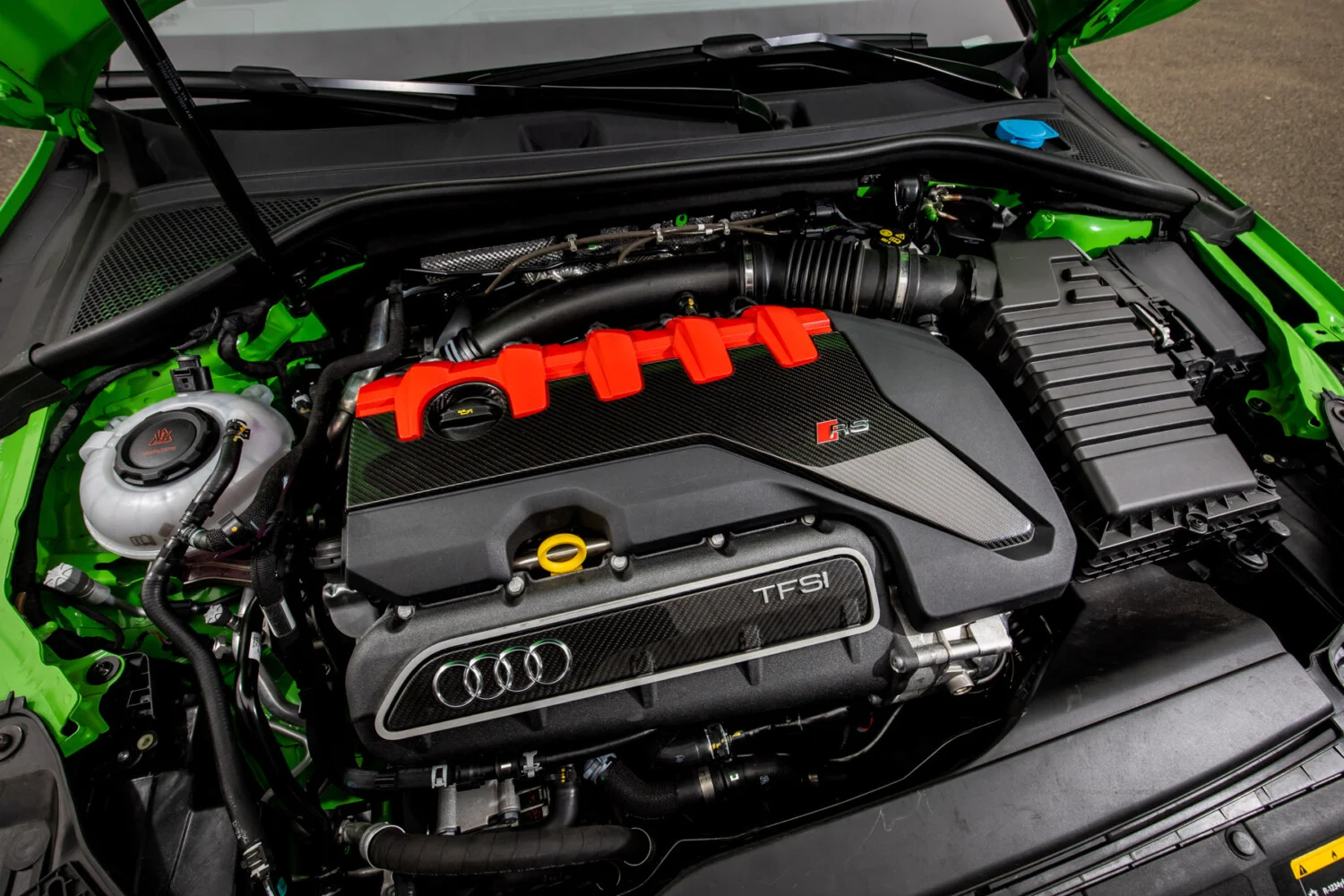
Among the engines likely to disappear is Audi’s famous 2.5-liter turbocharged five-cylinder. This engine, used in the RS 3 and TT RS models (the latter already out of production), is not expected to be modified to meet Euro 7 standards. Audi’s CEO Gernot Döhler explained that while technical adaptation is possible, “it’s a matter of scale and overall market demand.” In other words, sales of the RS 3 Sportback and RS 3 sedan aren’t high enough to justify the investment. Consequently, “the five-cylinder will probably end with Euro 7.”
That’s not all. With Euro 7 on the horizon, other engines in sports cars could also disappear. Mercedes’ V12, for example, might no longer be available in Europe, even though the brand remains strongly attached to that engine and aims to extend its life as much as possible, unlike Bentley and BMW, which have already moved to V8s. Yet, those engines don’t have a bright outlook either. Without hybridization, these engines won’t meet Euro 7 criteria. Six-cylinder engines are also at risk, but BMW has said it will do everything possible to preserve this iconic configuration in its history.
This situation affects not only the engines in luxury vehicles. The small non-hybrid diesels will also be abandoned, as will small turbocharged gasoline engines without hybrids. It’s not that these engines cannot be adapted, but manufacturers are increasingly turning to electric for this type of vehicle.
The year 2026 will therefore mark a major turning point in the automotive sector, accelerating the shift from internal combustion to electric powertrains in Europe.
What to remember
- The Euro 7 standard imposes emission limits significantly stricter than Euro 6.
- It will take effect starting in November 2026 for new vehicles.
- Emissions testing will now be conducted in real-world driving conditions.
- Emissions related to brake and tire wear and the durability of electric vehicle batteries will also be regulated.
- Several iconic, small internal combustion engines could disappear due to non-viable adaptation costs.
- Manufacturers are increasingly prioritizing electrification to meet the standard’s demands.
FAQ
Which engines are at risk under Euro 7?
The most at risk are Audi’s 2.5-liter turbocharged five-cylinder, Mercedes’ V12, the inline-6s, small non-hybrid diesels, and small turbocharged gasoline engines without hybrids.
When does Euro 7 take effect?
Euro 7 will be implemented starting in November 2026 for new vehicles in Europe.
What does Euro 7 add compared to Euro 6?
Euro 7 imposes stricter emission thresholds and monitors real-world emissions across the vehicle’s lifecycle, including brake and tire wear and electric-battery durability.
Why won’t some engines be adapted to Euro 7?
The cost of adapting internal combustion engines to Euro 7 requirements often exceeds the expected benefits, especially for low-volume engines.
What kinds of vehicles are also affected?
In addition to sports and luxury models, small vehicles with non-hybrid gasoline or diesel engines are also affected by the forthcoming disappearance of their ICE powertrains.