We all believed that Tesla would be a disruptive brand. Ten years later, it isn’t as disruptive as before, and it is the Chinese electric car brands — and those that sell gasoline or hybrid models — that are proving to be truly disruptive. With very low prices and technology that appears to be on par with that of the historic brands, Chinese manufacturers are tightening the screws on European and American automakers.
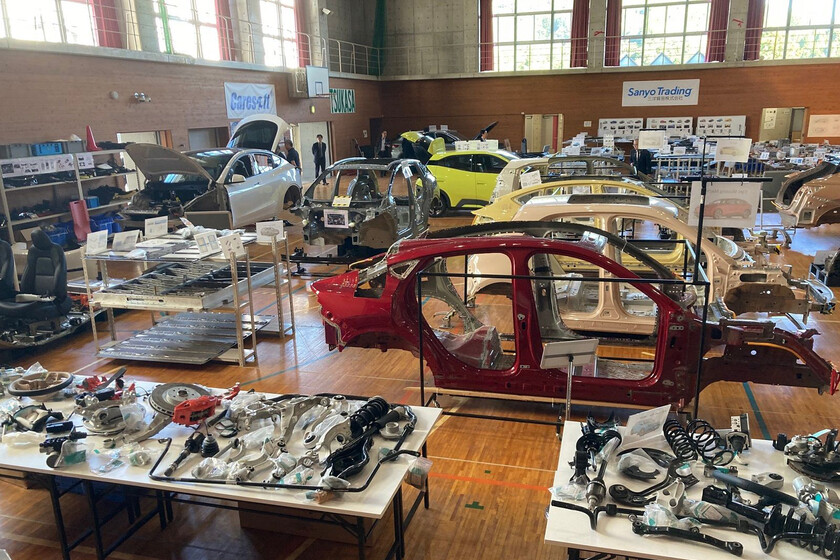
How have they achieved this? Chinese government subsidies, the low cost of labor and energy are only part of the explanation. The engineers at Caresoft, one of the world’s largest reverse-engineering firms, unveiled the secret of how Chinese brands can offer cars so cheaply and, in many cases, at the level of what European or Japanese manufacturers propose.
Aireando los secretos de las marcas chinas
“What we’re seeing from the Chinese is an existential threat,” explained Terry Woychowski, former General Motors manufacturing executive and president of Caresoft, while leading a tour of Caresoft’s U.S. headquarters in Livonia, Michigan. “I think this threatens the existence of some of these companies. I have no idea what will happen in five years. But I know what I see, and I can extrapolate. Things are going to change.”
This warning comes from one of the top executives at Caresoft, one of the world’s leading reverse-engineering firms. The company shows its clients, automotive executives and engineering directors at carmakers and suppliers, with meticulous detail, where they stand relative to their rivals.

Reverse engineering is a process aimed at understanding a product by working back from its design to determine its components, how they interact, and the manufacturing sequence. In other words, it reveals how rivals produce certain products. And in this reverse-engineering process, several secrets emerge about how Chinese brands manage to lower prices.
Extreme standardization. It should be noted that with a market of 25 million cars per year and with a strong drive to export as much as possible, the auto industry is a state matter in China. Thus, the Chinese government, through an organization called the China Automotive Technology & Research Center, collaborates with carmakers to draft industrial standards for common components.
This body, in collaboration with manufacturers, standardizes numerous components. It is a practice that reduces complexity, helps cut costs, and increases speed and efficiency by enabling a greater interchange of parts between competing brands.
If all brands, even rivals, use the same suspension arms, for instance, the cost of a suspension will be far cheaper in a Chinese car than in a European or North American car. It’s as if BMW, Cadillac and Mazda used exactly the same component. At first glance, it might seem illogical, but if it’s something the customer doesn’t notice and that most cases won’t be able to appreciate, it isn’t essential for the brand and allows car prices to come down.
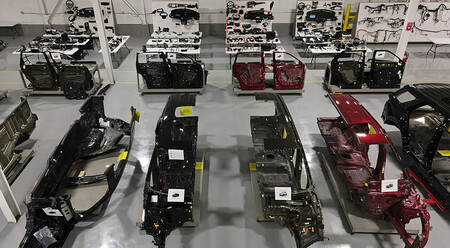
No es nada nuevo, es la economía de escala que aplican los grandes grupos como Volkswagen o Stellantis en su seno. También es algo que se aplica entre fabricantes europeos, pero en menor medida. Por ejemplo, algunos BMW y Peugeot usan los mismos motores de limpiaparabrisas, pero el proceso de fabricación y el control de calidad es más completo y por tanto más caro en el caso de una unidad destinada a BMW con respecto a una unidad enviada a Peugeot. Según Caresoft, todas las marcas chinas tienen exactamente el mismo componente, estandarizado al máximo.
Swift responsiveness. Another disruptive element is the fast reaction capability of Chinese brands. They are far more reactive than in Europe, insists Woychowski. “If I need to arrange a meeting with a German manufacturer, it takes two months. In China, it’s done in a week. It takes nine months to secure a purchase order from a historic brand. In China, it’s a month.”
And it’s not just about component standardization but about the competition fostered by the Chinese government. China has about a hundred car brands. They know many of these brands will not survive, but all fight and move to be one of the chosen ones.
Fewer parts with “good enough” as the goal. Finally, in the electric car segment there’s an extra edge where Chinese brands excel beyond the legacy brands, whether Western, Japanese or Korean. And it’s not about batteries alone; it’s simply about using fewer components.
For example, the dashboard support is metal and is screwed under the A-pillars in most vehicles. In Chinese electric cars or in a Tesla, that support can be plastic or a combination of thin metal with simple plastic clamps. But also at times, Chinese manufacturers are willing to take shortcuts.
“A Detroit-based manufacturer uses a dozen magnets with rare earths to secure the interior of the roof in one of its vehicles.” According to Woychowski, “each magnet costs a dollar. Since the roof is aluminum, steel supports have to be riveted to make the magnets stick. A Chinese manufacturer uses simple adhesive strips to hold the roof fabric. Cost: about one cent each.”
Which roof lining will detach first with time? It’s a question that Chinese manufacturers have never had to answer, nor do they worry about it.
Mantener el valor de sus coches en el mercado de segunda mano, con la promesa de una fiabilidad duradera a lo Toyota, nunca les ha preocupado. Sólo cuenta la venta de coches nuevos, los cuales se renuevan además a una velocidad vertiginosa para la clientela. Con que el coche cumpla con lo mínimo y dé el pego es suficiente, algo intrínseco a los fabricantes chinos desde sus inicios.
Are other brands in trouble? Not necessarily; the key lies in R&D and especially in software-defined cars. But what is already a reality is that global brands like Toyota are starting to acknowledge relaxing certain standards in elements that are not noticed at first glance to cut costs.
Fotos | Caresoft Global Technologies

Looking for your next electric car and feeling overwhelmed by so many options? It’s normal.
More than 45,000 readers have already tried it. And you?
Advice offered by the brand