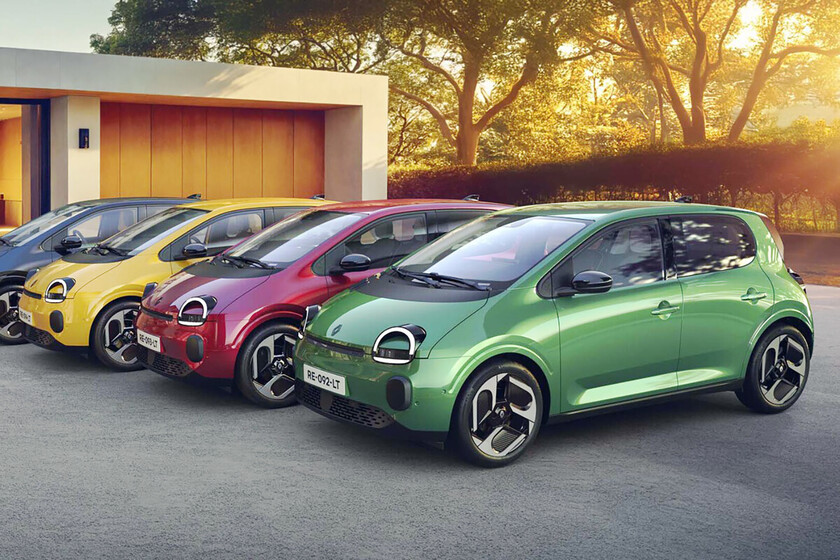
Renault has just unveiled a paradigm shift that could reorder the entire industry’s economy: its small electric cars deliver higher profit margins than its larger models. Until now, in this industry, the bigger or more expensive the car, the greater the margin.
The quote comes from François Provost, Renault’s chief executive, as reported by Les Echos. In the electric versions of the Twingo, the R5 and the R4, the brand achieves positive margins that are higher than those of the Mégane and the Scénic E-Tech, even though the latter occupy a higher segment and carry a much higher selling price.
Smaller and cheaper, but with higher profitability
City cars have always been the least profitable segment, with selling prices too tight to leave any real margin, which explains, to a large extent, the near disappearance of the city-car segment in Europe, as seen with models like the SEAT Mii, Peugeot 107, Toyota Aygo, or Renault’s own petrol Twingo. Provost argues that this logic no longer holds for electric vehicles.
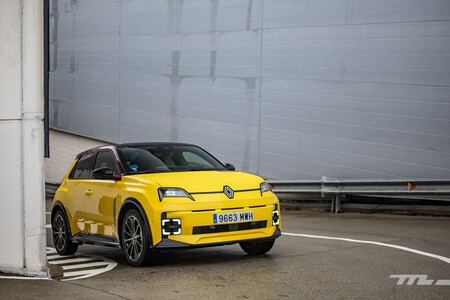
The reason, according to the CEO himself, lies in design and industrial execution. Cost rationalization, simplification of technical decisions, higher production speed, and a product image that pulls sales on its own explain this shift. The R5, with its neo-retro approach, has become the industrial engine of the Douai plant. In 2025, more than 100,000 units of the R5 were produced. The electric Twingo is following the same path.

It is true that the battery remains the weak link in the equation. The electric supply chain is not yet as optimized as the one for internal combustion, and the cost of cells and the pressures of supply continue to weigh on the balance sheet. Yet Renault appears to have found a balance where profitability no longer depends as much on the size of the vehicle.
If the pattern holds and spreads to the rest of the European market, competition could stop focusing on upscale tiering and shift toward who develops and manufactures faster and cheaper. Unsurprisingly, it is currently the Chinese manufacturers, and part of the rapid development of the Twingo was achieved in just two years thanks to an engineering study conducted in China.
The underlying objective is more ambitious. Renault aims to sell electric vehicles at the same price as its hybrid equivalents by 2030, without sacrificing a normal margin. Provost ties this to a European regulatory moratorium, arguing that much of engineering resources are today devoted to meeting accumulated regulations rather than reducing industrial costs.
“If we achieve that regulatory freeze (…) by 2030 we will be able to manufacture electrics at the price of hybrids, and full hybrids at the price of petrol cars. People want to buy cars. The main obstacle is price.”
Find your ideal electric car
If you have considered buying an electric car, this will interest you. We have created the Customized Electric Car Recommender, where in addition to seeing the models that fit your needs you will also have answers to the questions that tend to worry you most, such as price, range, or nearby charging points.

Are you looking for your next electric car and feeling overwhelmed by so many options? It’s normal.
More than 45,000 readers have already tried it. What about you?
Advice offered by the brand