There are cars that transcend generations and become etched in the collective memory. The Renault 4 E‑Tech is one of them. It is a reinterpretation of a model that was extremely popular in our country, to the extent that it even earned its own nickname: the legendary “4 latas.” Here, there isn’t much tin and metal, because this car arrives to bring to the 21st century everything that made its predecessor special: simplicity, versatility, and a distinctive character that is hard to ignore.
Undoubtedly Renault has become the brand specializing in reissues of iconic cars from the 80s and 90s. The success of the Renault 5 E-Tech, with its design faithful to the original model, has been resounding. To date, 4,123 units of the new Renault 5 have been sold in Spain, and it has already become the fashion car in the major cities, occupying a space that in the past was held by cars like the MINI or the Fiat 500.
Now arrives a bigger sibling, but built on the same base. The Renault 4 E-Tech starts with an advantage since its electric drivetrain has already been proven in the “five,” and it does so with the aim of being a 100% electric car that fuses nostalgia with current technology. It does so with a design that breathes history, a modern technical platform, and above all, a promise of everyday use without ostentation. We have driven it.
Design and presence: nostalgic, but with personality

Perhaps the front end is the least faithful to the original model
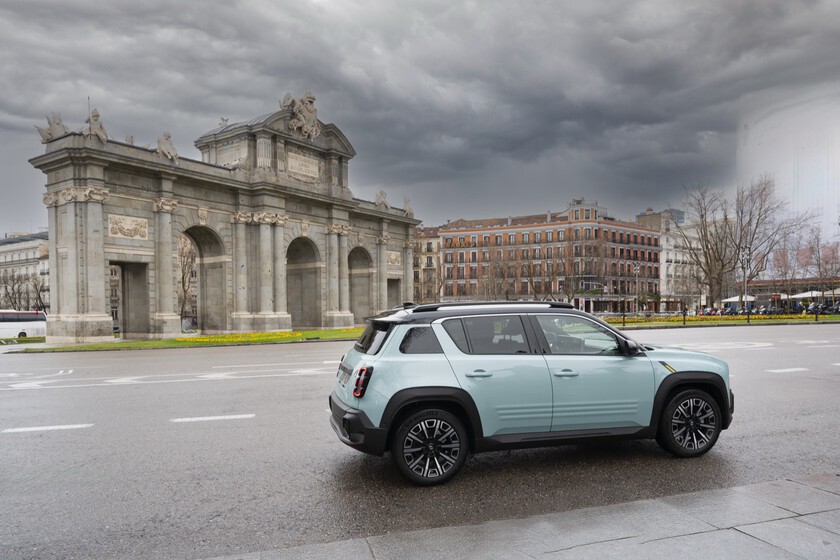
If a first glance reminds you of the classic Renault 4, it’s no accident. Renault has once again tinkered with the shapes and original proportions to distill a familiar aura, but without slipping into caricature.
The lines are clean, the illuminated front grille is a contemporary nod, and the vertical oval headlights at the rear maintain that cheerful, ingenuous spirit that many years of stories gave the “four cans” both in its passenger version and in the commercial version.
At first glance it seems larger than it is: at 4.14 m long and 1.80 m wide, it sits closer to a spacious B-segment utility than to a simple city car, and it is practically on par with a Renault Captur in physical presence.
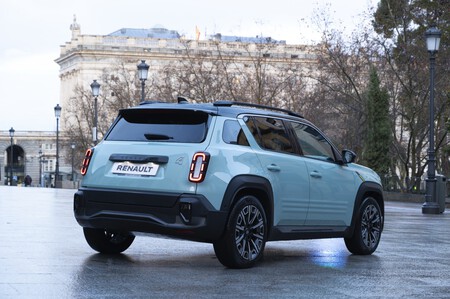
The ground clearance is high for an electric vehicle, and the pronounced wheel arches contribute to that look of a modern urban SUV, not demanding off-road prowess but with enough visual bite to stay noticeable.
Interior: practical, technological, and surprisingly coherent
Upon entering, the impression is of a vehicle prioritizing functionality. Renault has opted for a clear, orderly interior design that echoes the Renault 5 E-Tech, with its dual 10″ screens and the OpenR Link software with Google integrated for infotainment, maps, and voice assistants, making everyday life more comfortable and intuitive.
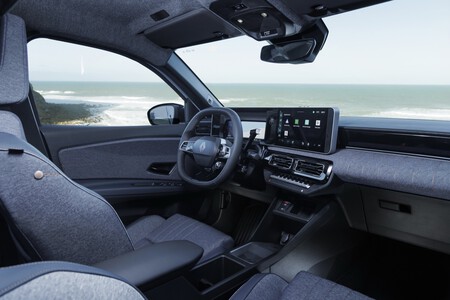
The space is surprisingly usable for a car in its class. The boot starts at 420 L, and by folding the rear seats it can exceed 1,400 L of capacity, rivaling compact cars in higher segments.
From the original Renault 4 it also inherits practicality. That’s why the trunk lid is wide, extends quite low, and this allows the boot floor to sit flush with the base so you can load items easily, with the floor remaining very low at just 607 mm from the ground.
A wide glazed surface, mode selectors mounted to the steering column, and an interior that we could consider friendly in general, though it’s worth noting that with this car size and boot, the rear seats aren’t overly spacious.
Electric platform
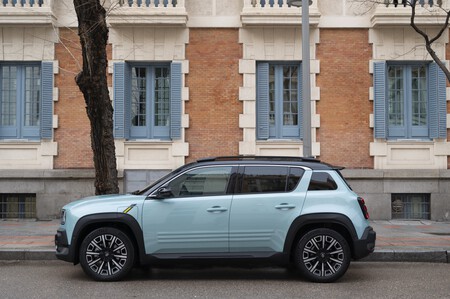
As with its sibling the Renault 5, the new Renault 4 arrives exclusively with 100% electric propulsion and two main battery options: the Urban version of 40 kWh with 120 HP and up to around 308 km WLTP range, and 52 kWh with 150 HP and up to around 408 km WLTP in combined cycle.
So we are talking about a car primarily for urban and interurban use, designed for day-to-day life in major cities and not fearing range even for those who rack up many kilometers in these urban settings.
Furthermore, if anyone is worried about charging, the DC fast charging at 100 kW allows going from 15% to 80% in about 30 minutes, which translates into convenience for trips outside the city.
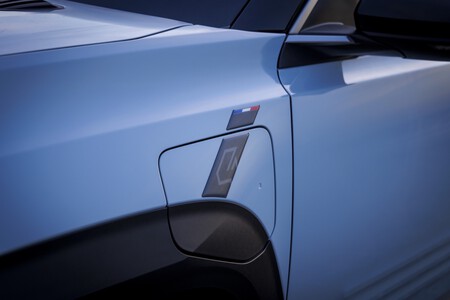
On conventional AC charging it charges at 11 kW. The charging port is located on the left front fender, and from there the V2L system also operates, enabling you to charge other devices using the car’s battery capacity.
Driving impressions
We were able to test it mainly on urban stretches during one of those days of torrential rains that have accompanied us in recent months in Spain, so heavy traffic was our main companion.
In practice, with the more capable version, the response is more than satisfactory for an urban-highway car: the 150 HP engine has enough shove to move agilely in the city and on secondary roads, and offers light, progressive driving.
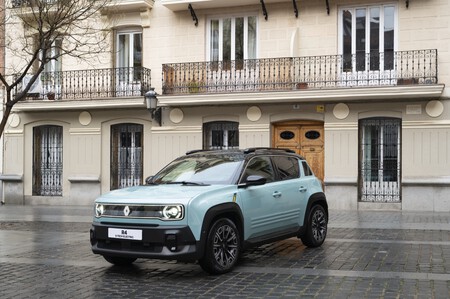
Strolling through the city with the Renault 4 E-Tech, it stands out as an agile and well-conceived car for everyday use. You shift to D, lift off the brake, and the car glides with a smoothly calibrated ease, responding to your input through the accelerator pedal.
In the city it conveys a sense of lightness, with immediate throttle response typical of a good electric that makes moving between traffic lights feel natural and low-stress, exactly what you expect from an electric with a practical vocation.
The power delivery is progressive and highly dosed, even in the more performance-oriented drive modes. It does not aim to wow with explosive accelerations, but it does offer enough thrust to merge confidently or complete short overtakes without effort. The instant torque typical of EVs is present, though Renault has managed to filter it so it doesn’t feel abrupt, reinforcing that idea of a friendly and easy-to-drive car from the very first kilometer.
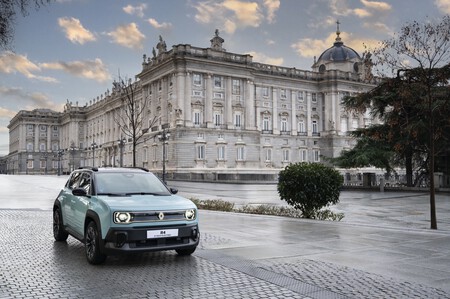
One of the great allies in urban surroundings is regenerative braking. The system enables near one-pedal driving, especially in dense traffic, reducing the need to resort to conventional braking. The transition between regeneration and hydraulic braking is well integrated and does not create artificial pedal responses, something that remains a weakness in many mainstream electric cars and which here is handled with notable accuracy.
When we take it out on the highway, the Renault 4 maintains that sense of a well-settled car. The steering is light, clearly assisted, but sufficiently precise to place the car with confidence. It doesn’t convey a lot of information, but that isn’t its aim: it’s designed to facilitate relaxed driving and reduce fatigue on long journeys, rather than chase sporty or incisive handling.
On faster roads and motorways, the cabin noise is well controlled, with a good manage of road and aerodynamic noise up to legal speeds. Ride comfort stands out particularly thanks to the suspension tuning, which effectively filters out bumps, expansion joints, and rough asphalt without harsh rebounds or uncomfortable reactions. It’s clear the emphasis is on comfort, reinforcing its role as a versatile daily car.
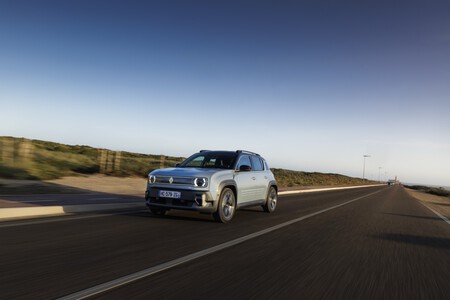
On secondary roads, its more balanced side emerges. It isn’t a car meant to attack corners, but it surprises with good control of body movements considering its height and setup. The chassis responds nobly, without strange reactions, allowing you to keep up a lively pace with total safety, always within a calm and predictable approach. It’s a car that invites relaxed driving, not one that asks you to demand more than it promises.
Overall, the driving sensations of the Renault 4 E-Tech fit perfectly with its philosophy. It doesn’t thrill with performance or pure dynamism, but it convinces with coherence, comfort, and ease of use. It’s one of those cars that doesn’t seek the spotlight when you drive it, but rather accompanies you with discretion, and that is precisely why it’s so pleasant: everything seems to be where it should be, with no complications or unnecessary artifices.
Returning to the present with the soul of the past
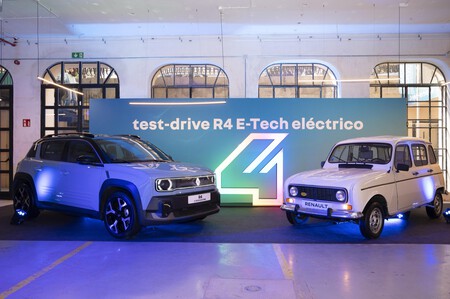
In many ways, this new Renault 4 E-Tech is a sensible reinterpretation of a legend that was manufactured for 30 years. While it is still early to know whether this new generation is capable of attracting both those who grew up with the original and those who simply seek an electric car with character, space, and its own style, the truth is that it is a good alternative that complements the R5.
The recognitions it has received for its design indicate that Renault has hit the mark in aesthetic execution and in the emotional connection with the public, establishing itself as the brand specialist in reissues of iconic cars in modern times. And watch out, the Twingo will arrive soon.
Prices of the Renault 4 E-Tech range
|
trim |
power |
battery |
range |
Recommended MSRP |
MSRP with discounts |
|---|---|---|---|---|---|
|
evolution |
120 HP |
40 kWh |
308 km |
29,950 euros |
28,602 euros |
|
evolution |
150 HP |
52 kWh |
409 km |
32,950 euros |
31,632 euros |
|
techno |
150 HP |
52 kWh |
409 km |
34,950 euros |
33,552 euros |
|
iconic |
150 HP |
52 kWh |
409 km |
36,950 euros |
35,472 euros |
Conclusion of the Renault 4 E-Tech
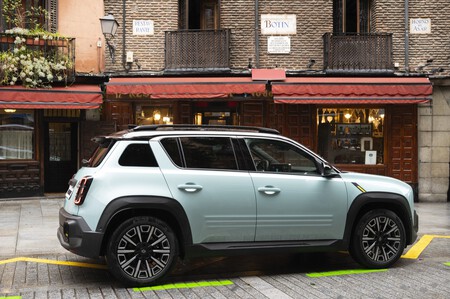
The new Renault 4 E-Tech is a statement of intent: to renew an icon without betraying it, adapting it to electrification and to the modern lifestyle.
With a charming design, a practical interior, and smooth, capable driving, it becomes an appealing option within the thriving segment of urban and compact electric cars, and it will also bring back very good memories to everyone who had a Renault 4 at home, including me.
It is one of the most coherent, with a personality hard to ignore. A worthy successor to the “Four Cans” myth that, now, steps on electrified pavement with resolve.