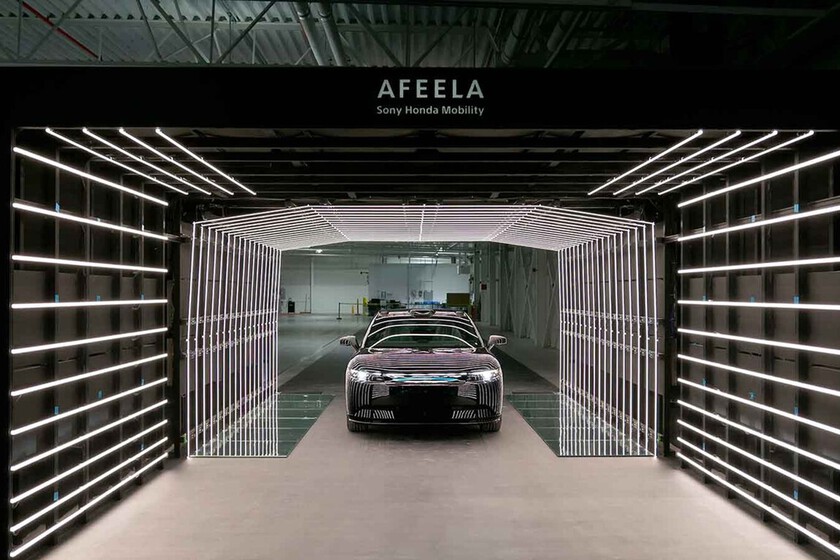
Honda is the second-largest car manufacturer in Japan, and although its motorcycle division has been breaking records, it is hitting a hard wall when it comes to selling electric cars profitably. The best illustration is the project Honda shared with Sony: the Afeela 1 was set to outperform Tesla in terms of deliveries, with deliveries planned by the end of the year, but it has been canceled.
The result has been four consecutive quarters of losses in its automotive division, the worst streak since the Fukushima earthquake and tsunami 15 years ago, and the first annual loss since going public in the 1950s.
Motorcycles are Honda’s lifeline: the brand has invested too much money into electric cars, and too late
Although Honda’s motorcycle division achieved record sales volume and operating profit, the automobile division experienced a decline, mainly in China and Southeast Asia. Honda’s projected net profit slumped by 70.1%, to 250,000 million yen, about 1.35 billion euros, while revenues are expected to fall 6.4%.
The data shows that forecasts are not looking good at all: it warned of losses of up to 2.5 trillion yen (13.64 billion euros) over two years due to a re-evaluation of its electrification strategy. This means it is the first time Honda has recorded annual net losses since going public in the 1950s.
“Looking ahead, we will carefully assess the impact of tariff policies and expand recovery measures, while seeking higher operating profit growth,” the company said in its presentation.
To put it in perspective, Honda only offers four hybrid models and one pure electric in the US (the Prologue), compared with Toyota’s 29 hybrids. It was CEO Toshihiro Mibe who broke with Honda’s long-standing tradition as an expert in internal combustion engines, but the electrification strategy has faded and all the money invested in proprietary technology—platform, batteries—has proved futile.

The 25% tariffs that the US has imposed on imported vehicles have dealt a hard blow to the Japanese brand because the US is its most important market: roughly 40% of the models Honda sells in the US market are imported. According to Reuters, in March Honda decided to manufacture its next-generation Civic Hybrid in the US state of Indiana, rather than in Mexico, to avoid possible tariffs on one of its best-selling car models.
But without a doubt the biggest setback has been the Afeela 1. It was going to be a cutting-edge electric sedan, with more than 500 km of range to surpass the sour taste left by the Honda e. The first units were already built—in Ohio, USA—and deliveries in California were even taking reservations at around $103,000. However, Trump’s tariff policies and opposition to electric vehicles have sunk the project in the US, leading to its cancellation, as well as its second car, a newly unveiled electric SUV: the Honda 0 SUV.
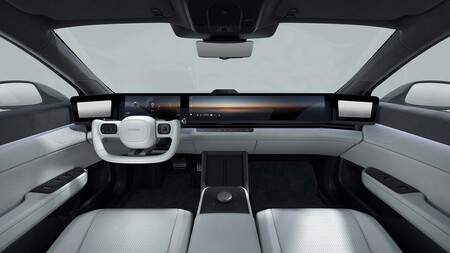
Also canceled were the Honda 0 Sedan and the Acura RSX. “Honda could not offer products with a better price-performance ratio than the newest electric-vehicle makers, which resulted in a loss of competitiveness,” the company added.