
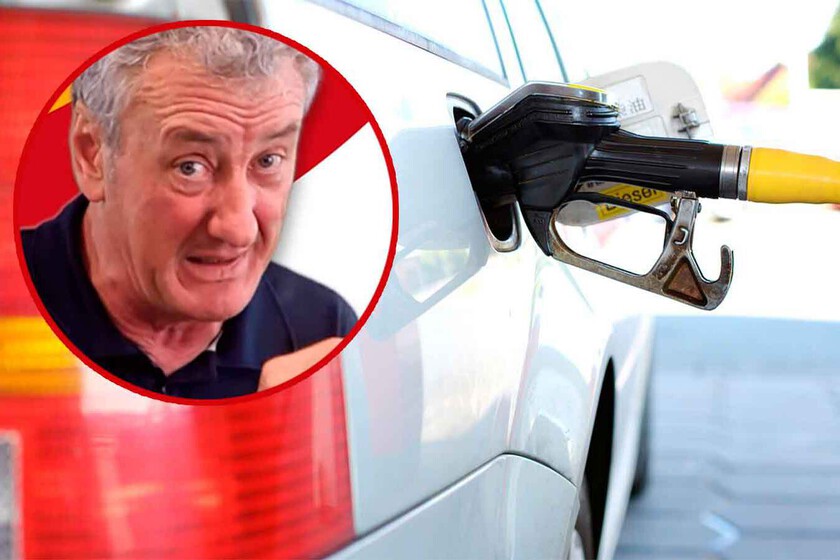
Before the war in Iran and the closure of the Strait of Hormuz, the price per liter of gasoline at service stations hovered around €1.50 per liter and diesel at €1.40. These prices surged rapidly when the conflict broke out, with both fuels dangerously approaching €2 per liter.
The fuel tax cut that has been in place for more than 15 days has helped to keep the prices at which we refuel in check. But the question we ask is how do gas stations really set prices and whether they are taking advantage of the situation to earn more by inflating prices. The key lies in how operators purchase the fuel and the margins they apply. Even so, they can still adjust the prices.
Prices in the short and long term
The refined fuel that is dispensed at gas stations is purchased through two methods: spot and Platts. And this affects the final price at service stations, though it is not the only factor, as explained by Joseba Barrenengoa, CEO of the low-cost gas station network EasyGas.
Spot. Purchases are made daily or even several times a day. Fuels are acquired at the price they have at that moment in the international quotation, with immediate delivery. This option is highly sensitive to price fluctuations: it allows taking advantage of occasional drops but also exposes to sharp rises.
It is a more flexible option, but more volatile and risky. If an international conflict drives prices up, the impact is felt immediately at the pump. And vice versa. It tends to be the usual method used by low-cost gas stations, such as Ballenoil, Plenergy, or EasyGas itself.

Platts. The fuel is bought with reference to the daily prices published by S&P Global Platts. From these prices, operators calculate an average over a period, which can be monthly or weekly, and that is materialized in contracts (platts weekly or platts monthly). In these contracts, costs for logistics (transport, storage, etc.) and other operating expenses are added, plus the operator’s margin.
This option, being the one used by mainstream oil companies such as Repsol, Moeve or BP, allows for the most stable prices for several days. For example, if purchases were made before the Iran war, it enables those gas stations to keep prices lower despite the rise: even though they do not pay in advance, they do pay at an average price of that period.
Do gas stations really earn less when the price of fuels rises?
The price at which gas stations buy the fuel is just a portion of the final price we pay at the pump. The other part is how margins and taxes are applied, which together account for roughly half of the final price, though this has recently been exceptionally reduced.
View this post on Instagram
Nolan Kessler
I focus on performance-driven cars, emerging technologies, and the business forces shaping the automotive industry. My work aims to deliver clear, relevant insights without unnecessary noise, with a strong attention to detail and accuracy. I follow the evolution of mobility daily, with a particular interest in what defines the next generation of driving.