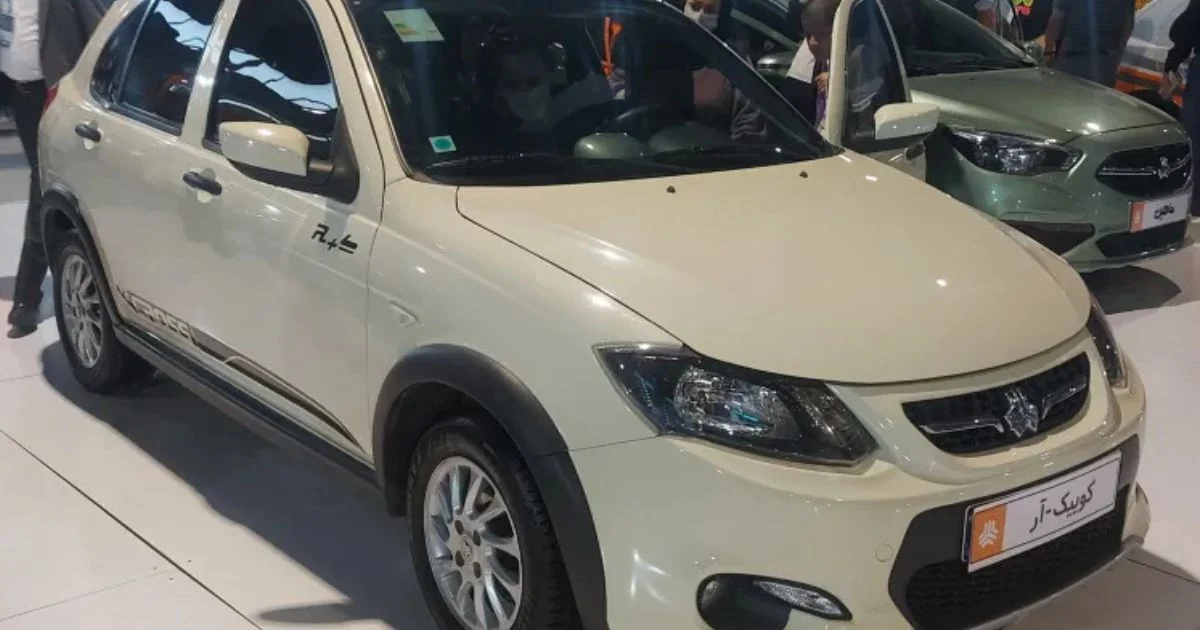
In Iran, a new car can cost about $4,300, a little over €4,000. On paper, that’s cheaper than a small used city car in France. But for most Iranian households, these cars remain out of reach: access goes through an automobile lottery in Iran, set against a backdrop of hyperinflation and a parallel market where prices skyrocket.
The country nonetheless hosts a real automotive industry, largely subsidized, with manufacturers such as Iran Khodro, Saipa, Pars Khodro, Modiran Vehicle Manufacturing, Bahman Motor, and Kerman Motor. Industry analyst Mordor Intelligence estimates the value of the Iranian auto market in 2026 at “$45.38 billion” (around €42 billion) and says it could surpass $70 billion by 2031. In this landscape, a small city car like the Saipa Quick S, priced at factory around $4,300, has become the symbol of a paradox: a brand-new car that is incredibly cheap on paper, yet out of reach for most buyers.
A new car at $4,300 in Iran, but incomes that don’t keep up
The architecture of this Iranian automotive market is perplexing. On one side, abundant local offerings: sedans from Iran Khodro, Saipa compact cars, Zamyad light trucks derived from the 1970s Nissan Junior, and Chinese-made models produced under license by Farda Motors. On the other, official prices kept very low for certain models, set by the state to remain “statistically affordable.” The Saipa Quick S is the clearest example: a small 87-horsepower model derived from the old Kia Pride, theoretically available for the equivalent of $4,300, i.e., about €4,000.
That figure stands out in Europe. At that price, a French motorist would typically buy a compact car with well over a decade of mileage. In Iran, the economic reality is different. Al Jazeera details the case of a modest-income office worker who drives an “old manual Peugeot 206.” The outlet estimates he could sell his car for about 10 billion rials, or roughly $4,350, i.e., just over €4,000. A Peugeot 207 automatic “could cost him 28 billion rials (about $12,170),” which would require “more than 20 months of his entire salary” to move up, after selling his 206. And even then he’d still be stuck in an old compact, far from a brand-new car at $4,300.
Iran’s automobile lottery: winning the right to buy at factory price
To understand why this new car at $4,300 in Iran remains so scarce in everyday life, you have to look at the system of “factory lottery prices.” These prices, set by the state, serve as official references to paint a picture of affordability for the statistics. But demand far outstrips supply at these rates. The result: Iran has implemented a national lottery that grants the right to purchase at the subsidized factory price.
Applicants sign up online and often must freeze a substantial sum in a blocked account, around 230 million tomans, or roughly $4,000 and just under €3,700. In a 2025 campaign, more than 6 million applications arrived for around 73,000 cars offered, yielding a success rate of roughly 1.2%. In practice, only households with significant savings can afford such a deposit. The more modest households are left out, even though the sticker prices for a Quick S or a small Saipa 151 appear comparatively low on paper.
Factory price, parallel market, and imported cars priced like a supercar
This two-tier system creates a wide gap between official prices and real-world costs. Beyond the “factory lottery prices,” the same models trade on the free market at a hefty premium. A national compact Shahin costs more than 31 billion rials ($13,480), about €12,500, while a Reera crossover is listed at more than 43 billion rials ($18,700), around €17,500. In a country where the minimum wage hovers around $70 to $120 per month, even the tiny SAIPA 151, advertised at roughly $4,468 (a little over €4,100), represents more than three years of a full salary in many cases.
Inflation and the depreciation of the rial turn the car into a genuine financial asset. The currency has shed most of its value against the dollar, and annual inflation runs above 50% according to several market analyses. In this climate, a car no longer simply loses value; it can actually appreciate in nominal terms after a few years. Lottery winners buy at factory price and then sometimes resell immediately on the free market, pocketing a sizable gain as a result. Al Jazeera sums up the situation by noting that “the prices of locally produced cars have risen by 40 to 80% since the war began, while some vehicles are selling for more than 130% above their September 2025 price.”
Imports add yet another layer to Iran’s car paradox. A handful of Toyota models and Chinese SUVs like Chery are present, but access remains highly restricted. Only a few state-connected firms can obtain import licenses, and duties, VAT, and various fees can push the final price up by as much as 200%. Al Jazeera cites a striking example: “a Shahin sedan costs more than 31 billion rials ($13,480), a Reera crossover more than 43 billion rials ($18,700)… a 2026 Toyota Land Cruiser VXR is currently offered at around 660 billion rials ($287,000) in Iran, while the same model is available for about $86,000 in the United Arab Emirates.” In practical terms, that SUV approaches €270,000 in Iran, versus about €80,000 across the Gulf.
- Saipa Quick S: around $4,300 at factory price, a little over €4,000.
- Shahin: more than $13,480 on the Iranian market, around €12,500.
- Reera: more than $18,700, or nearly €17,500.
- Toyota Land Cruiser VXR 2026: $287,000 in Iran, around €270,000, versus about $86,000 (€80,000) in the United Arab Emirates.
More recently, announcements of a partial opening for sales without the lottery have appeared for certain Saipa and Iran Khodro models, including the Saipa Quick S. However, order books can stretch into 2027, keeping upward pressure on market prices. And as long as the gap remains so wide between official tariffs, inflation, and purchasing power, the car in Iran will continue to be both a vital mobility tool and a highly coveted asset—comparable in desirability to gold or foreign currencies.