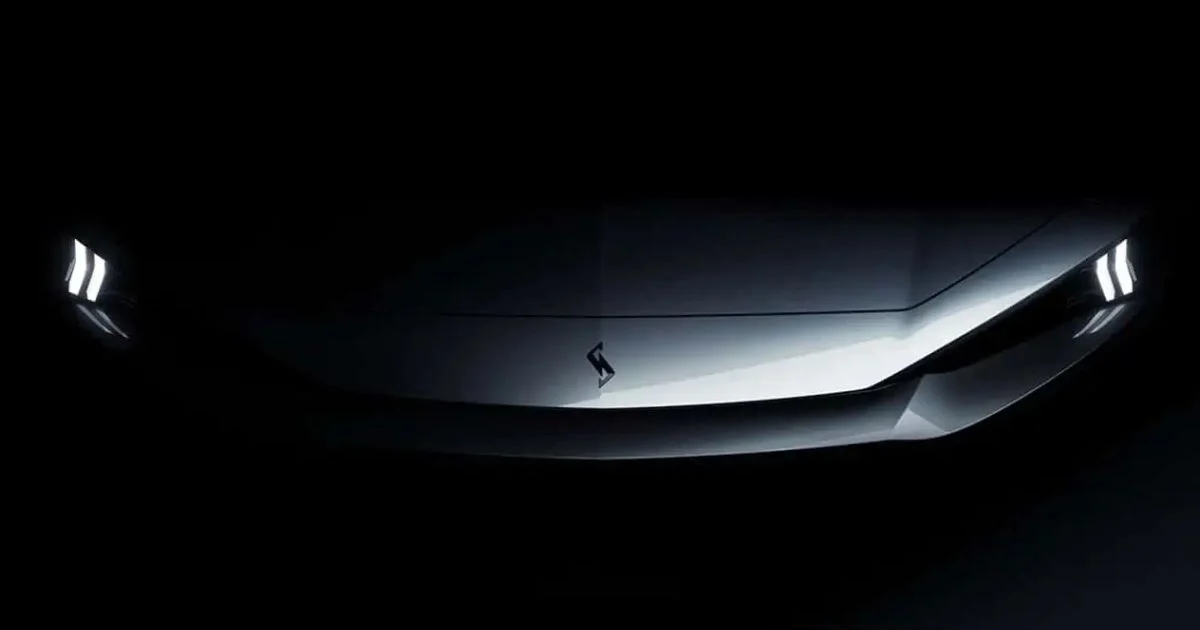
For years, Skyline fans wondered whether the name would truly return on a new sedan, and probably not this soon. Nissan has finally weighed in: the 14th generation Skyline, code-named V38, will be unveiled in December 2026, well ahead of what rumors suggested. After more than a decade on the current V37, launched in Japan in late 2013, the Japanese automaker is about to turn a significant page in its history. Behind this announcement isn’t merely the comeback of a legendary name, but a shift in tempo for Nissan as a whole.
Because this new Nissan Skyline will have needed roughly 26 months to go from a blank sheet to a production model, a timeline nearly halved from the roughly 55 months required for the V37. Nissan says the acceleration came largely from leveraging generative artificial intelligence and by using fully digital design and simulation tools. Ivan Espinosa, Nissan’s chief executive, even described the sedan as “one of the emblematic signs of Nissan’s renaissance,” he told Nikkei Asia. The question remains how this ultra-fast development translates into the actual 2026 Skyline.
New Nissan Skyline 2026: A Return Faster Than Expected
For years, observers bet the replacement would come in 2027 or even 2028, given how long the current generation has soldiered on. The V37, on sale since November 2013 and deeply revised in 2019 with the arrival of the twin-turbo VR30 V6, kept the possibility of a Skyline’s future in doubt. By stating plainly that a December 2026 debut is on the books, Nissan ends the rumors of the name’s outright abandonment. The chosen window lines up with the Nismo Festival at Fuji Speedway on December 6, 2026, a timing that fuels fans’ predictions, even though the company does not confirm this event as the official reveal stage.
Tech-wise, Nissan has already confirmed that this December Skyline will be a high-performance gasoline-powered sedan. However, the brand hasn’t released details on the engine architecture, number of cylinders, or transmission choices; no specifics are provided on that front. Rumors point to rear-wheel drive, a V6, and even a manual gearbox, but all of that remains the realm of enthusiasts’ speculation. The V38 platform is also slated to underpin a future Infiniti sports sedan, the replacement for the current Infiniti Q50, teased for the 2028 model year, though no official schedule has been confirmed by the maker.
Nissan Skyline V38: 26 Months of Development Through AI
To develop the Nissan Skyline V38, Nissan cites a development cycle of roughly 26 months, about half the time the previous generation took to reach production. Espinosa stresses that this speed is almost as important as the car itself in the brand’s turnaround narrative. “The Skyline is an icon of speed, not only as a car, but also as Nissan’s first to undergo an accelerated development process,” he explains. He adds that the project serves as a showcase for the automaker’s engineering capabilities and inaugurates a new way of designing models. The Skyline acts as the first case study in a broader strategy to reduce development times from about 55 to 26 months on key models and to roll out these AI-boosted tools across nearly 90% of Nissan’s future programs.
Practically, this time savings was achieved through a heavy reliance on digital tools: design and tuning rely on virtual models, simulations, and digital prototypes rather than a sequence of physical iterations. The next Skyline is expected to ride on an evolution of the FM platform with a front-mid-engine layout, with a propulsion architecture close to that of the Z, and several sources point to production at the Tochigi plant, though no official confirmation exists yet. Beyond the tech, Nissan emphasizes the Skyline’s heritage, dating back to 1957 and set to celebrate nearly 70 years in existence when the V38 hits the market. The Japanese model is also poised to give birth to a new Infiniti Q50 intended for other regions, evidence that this sporty sedan remains a cornerstone of the brand’s global strategy. We will still have to wait until December 2026 to see the final design, the selected powertrains, and any potential higher-performance variants, as no official details have yet been released.