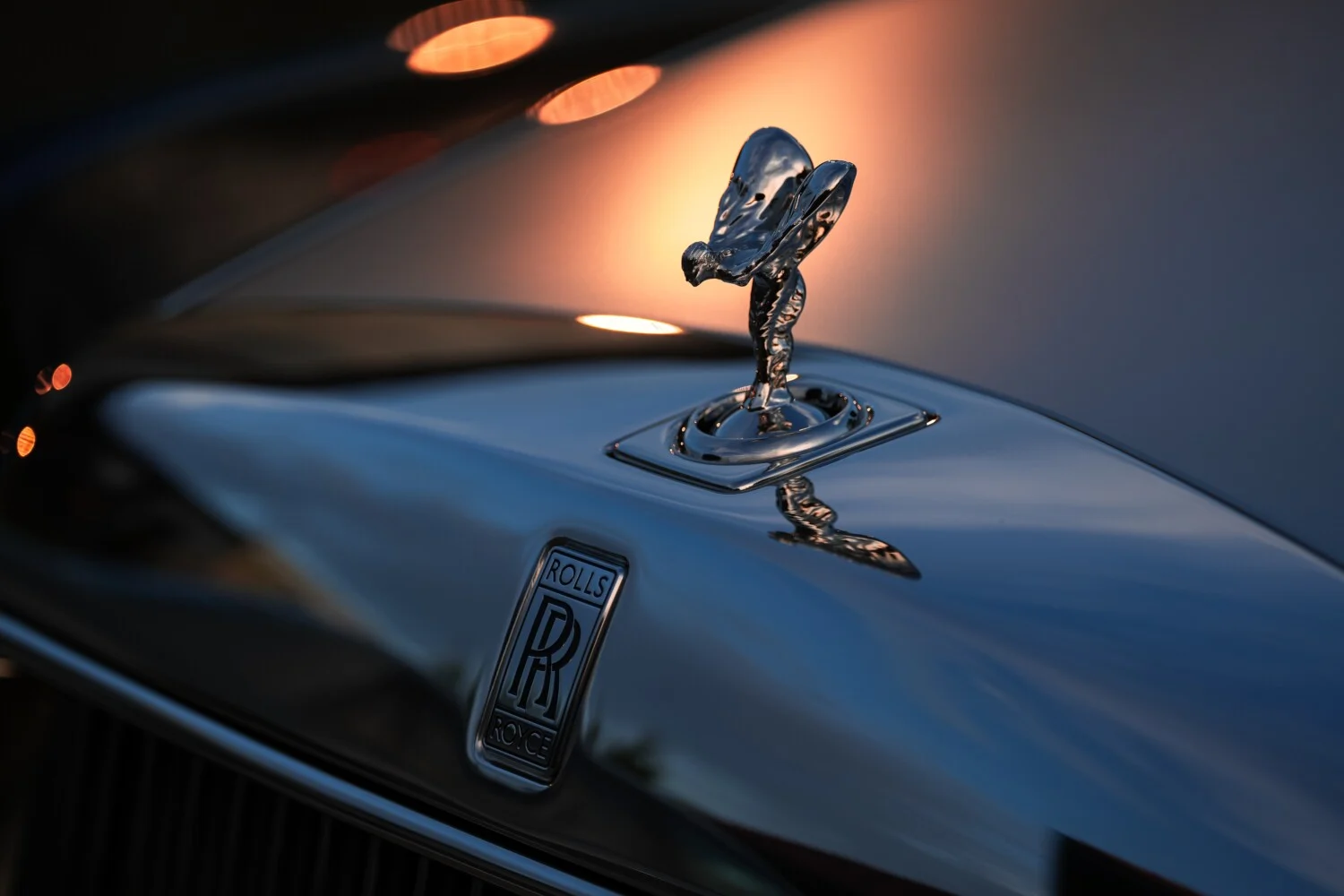
On a Rolls-Royce, the ritual is well known: the Spirit of Ecstasy flares up from the tip of the hood, then glides away softly into the grille. A small luxury show, almost invisible to the driver, made possible by a very sophisticated retractable mechanism. And it is precisely this mechanism, charged with concealing the brand’s emblem, that sits at the center of a bankruptcy proceeding in Germany.
Behind this millimeter-perfect motion lies Paragon, a German equipment maker specializing in electronics and precision mechanics, a discreet supplier to automakers such as BMW, Porsche and Rolls-Royce Motor Cars. The company requested the opening of insolvency proceedings at the German court in Paderborn, affecting 552 employees across six sites in Germany, even as its order book remains full. For Rolls-Royce, Paragon manufactures the electronic mechanism that retracts the Spirit of Ecstasy, nicknamed Emily, a part whose full kit (figurine and mechanism) runs around €4,661. And this small stainless steel statue polished since 2003 is now at the heart of a case that reveals the fragility of the ultra-high-end supply chain.
Paragon, the Hidden Supplier Behind the Spirit of Ecstasy
For the general public, the name Paragon GmbH & Co. KGaA doesn’t ring a bell. In the industry, though, it’s a well-established player, with six factories in Germany and operations in Croatia and China, focused on embedded electronics and precision components. The company closed 2025 with roughly €110 million in revenue, while having reduced its debts to suppliers by more than 64% in a few years, according to its own data. On nearly 94% of that volume, Paragon acts as an almost exclusive supplier, making it a highly exposed but also highly sought-after link for premium automakers.
For Rolls-Royce, the Paragon movasys subsidiary, notably at the Landsberg am Lech site, manufactures the electronic mechanism that hides the mascot Spirit of Ecstasy in the hood and prevents it from being stolen. This system, presented by Paragon as one of its most exclusive automotive projects, governs the ascent and descent of the emblematic figurine. In a factory setting, the polished stainless steel figurine delivered with its retractable mechanism costs around €4,661, far from the price of a simple classic hood.
A €12 Million Promise That Shakes a Profitable Tier-One Supplier
If Paragon ends up in bankruptcy, it isn’t due to collapsing orders. The group pointed to healthy activity, a profit in 2025, and a full order book, largely thanks to Rolls-Royce. The turning point came from a financing agreement signed on June 19, 2026 with the Indian company Tejascore Techsystems, which had committed in writing to inject €12 million: €5 million by the end of June, €7 million by the end of July, along with a supplementary €6 million credit line. None of the promised payments were made, and Paragon now cites potential deception by the investor. Without that short-term liquidity, the company could not settle all supplier invoices and, on September 8, 2026, filed for insolvency at the Amtsgericht Paderborn.
The consequences are very real for the 552 employees across six German sites, including more than 250 at Suhl, the group’s largest site, and about 120 at Landsberg am Lech, directly tied to the Emily mechanism for Rolls-Royce. A court-appointed administrator has been named, production continues to fulfill orders that customers consider urgent, while a long-term solution is being sought for the entire group. Salaries in Germany are covered through 2028 by the insolvency payment system, Insolvenzgeld, which temporarily eases the risk of wage nonpayment for workers. Paragon’s units in Croatia and China are not part of the insolvency proceeding and continue their operations as usual. And in a landscape where many European suppliers confront not only softer demand but rising costs and customers delaying or trimming orders, Paragon’s case shows that a single missing funding injection can be enough to topple a supplier that its own accounts have deemed solid.