
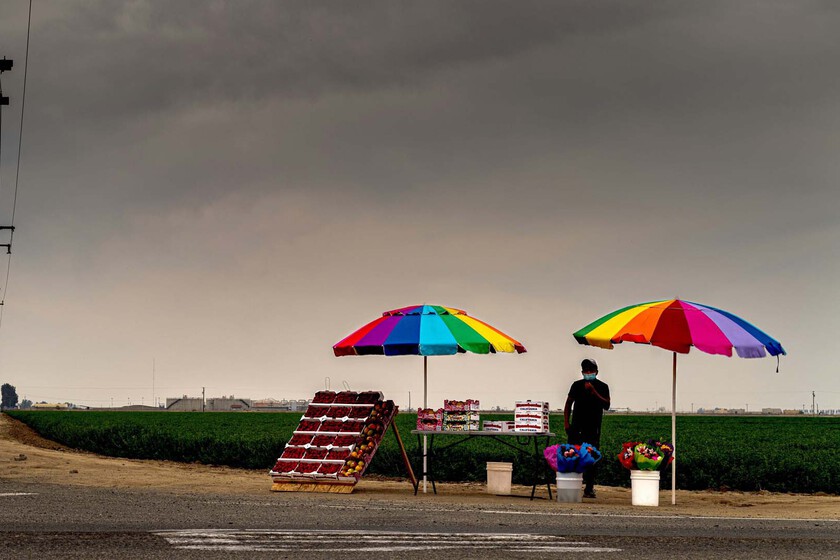
Farmers who sell their seasonal fruits and vegetables at small roadside stands. It’s a common sight on roads across Spain: those who want to buy stop, purchase, and leave, without intermediaries, whether it’s a sack of potatoes, a melon, or a watermelon. This has been done for as long as anyone can remember because it’s a way to give outlet to the garden’s harvest and not to waste it, just as many neighbors swap boxes of potatoes for tomatoes or eggs in the villages.
Well, for a Catalan farmer, putting up signs for his farm shop and boxes of apples by the roadside has earned him a fine of €10,000.
“They Keep Laying Down Obstacles Everywhere”
When you drive across Spain, it’s very common to encounter roadside stalls selling fruit and other garden produce. They’re usually run by local farmers who set up these stalls to sell part of what they’ve harvested, to avoid wasting it and, in the process, to make a bit of money. Drivers benefit because these products are often of good quality, typically priced well, and it’s convenient to buy them without having to deviate from the route.
From an ecological standpoint, this is ideal because no food goes to waste and it represents near-field consumption that avoids transports and intermediaries, so everything is simpler and quicker. From the garden to the trunk of your car and from there to your table. Pure practicality, common sense, and support for local produce.

It makes sense and this has been done this way for decades, but the world we live in today is nothing like the one of yesteryear, among other reasons because there are regulations for everything. One of them is what has justified that the Generalitat of Catalonia, through the Catalan Traffic Service, fined the agronomist and farmer Pere Puigbert €10,000.
The law states that it is prohibited to carry out any commercial activity without a permit on a road and its shoulders because they are public domain areas. Nor can obstacles be placed without administrative authorization. In this case, moreover, the argument is that the signs and the apple boxes Pere has been placing there for years distract drivers and could cause an accident.
According to Pere on his X account, they gave him 10 days to dismantle and remove a new sign he placed on the access road to his Ventalló shop because the law prohibits it. They issued him a 10,000-euro fine for four signs and two boxes of apples.
That plus four more signs advertising our roadside agrobot shop has cost me a €10,000 fine, with no right to protest; we’ve paid €6,000. What harm do they do if they’ve been there for 15 years?
— pere puigbert 🍏🍎🍐🍒🍊 (@puigbert) May 7, 2026
“It turns out that 15 years ago I put up a sign and two little boxes of apples next to the road; apparently that’s not allowed. We were trying to promote an activity in a small town so there could be life and work, and all they do is keep obstructing everything,” Pere says on X. Pere also notes that this practice is allowed in France.
Former Catalan president Quim Torra has taken up the case as well, via his X account: “In Switzerland it’s customary to be able to buy farm products directly from farmers, even on roads. I’ll bring his case to the Counselor. We forget too quickly that farming is essential,” he notes.
But Pere doesn’t only have trouble with roadside signs and apple boxes. He has already been fined for that, but there are two other possible penalties as well: selling “ugly” apples and using recycled boxes to sell them.
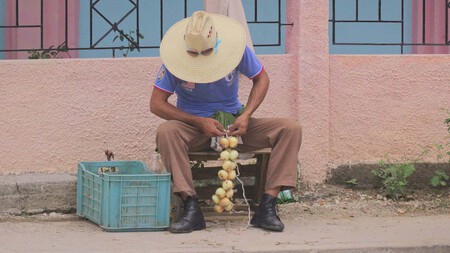
Pere explains on Rac1 and argues that for decades fruit has been sold “touched” to the town’s people to avoid waste, but now the law does not allow it: “I know I can’t sell second-class ugly apples, but city folks have been doing it all their lives. Some inspectors came and found several offenses. And now what? Why can’t I sell these apples? They must be discarded or used for juice. That’s what the law says.”
Given this backdrop, it seems those roadside farmer stalls selling fruit that are so typical on Spanish roads have their days numbered.
Images | Unsplash and X (Pere Puigbert)