In Brief
XPeng launches mass production of its autonomous robotaxi, illustrating China’s ambition to dominate the global autonomous-taxi market. The company stands out by building the vehicle end-to-end—from chips to AI—and is pursuing Level 4 autonomous driving without LiDAR sensors. The contrast with Europe, and especially France, is stark, as Europe lags in this space and relies heavily on Chinese players. China’s stance is strengthening while Europe hesitates to commit fully to autonomous mobility.
China dominates the electric-vehicle market as the result of a strategy well established many years ago. But now, the goal has shifted: autonomous taxis. This is how XPeng has just launched mass production of its forthcoming Level 4 autonomous vehicle.
XPeng Builds the Entire Autonomous Vehicle
On May 18, 2026, XPeng made a bold move in the field of autonomous taxis. It positions China as a serious challenger to the dominance of a market that is set to grow strongly in the near term. It is in its Guangzhou factory that XPeng will manufacture its forthcoming robotaxi. It also becomes the first Chinese automaker to mass-produce a robotaxi developed entirely in-house. Indeed, the Chinese firm handles everything from the chip to the software.
That is the point at which one can talk about a future Chinese domination of the autonomous-taxi market. For the vehicle XPeng presented, there is an integration of the technologies necessary to meet the standards for Level 4 autonomous driving.
This level of autonomous driving means the vehicle can drive itself in a defined space set in advance. No human intervention is required to complete the trip. To accomplish this feat, the vehicle is equipped with four Turing chips, all developed in-house by XPeng.
What About France in This Market?
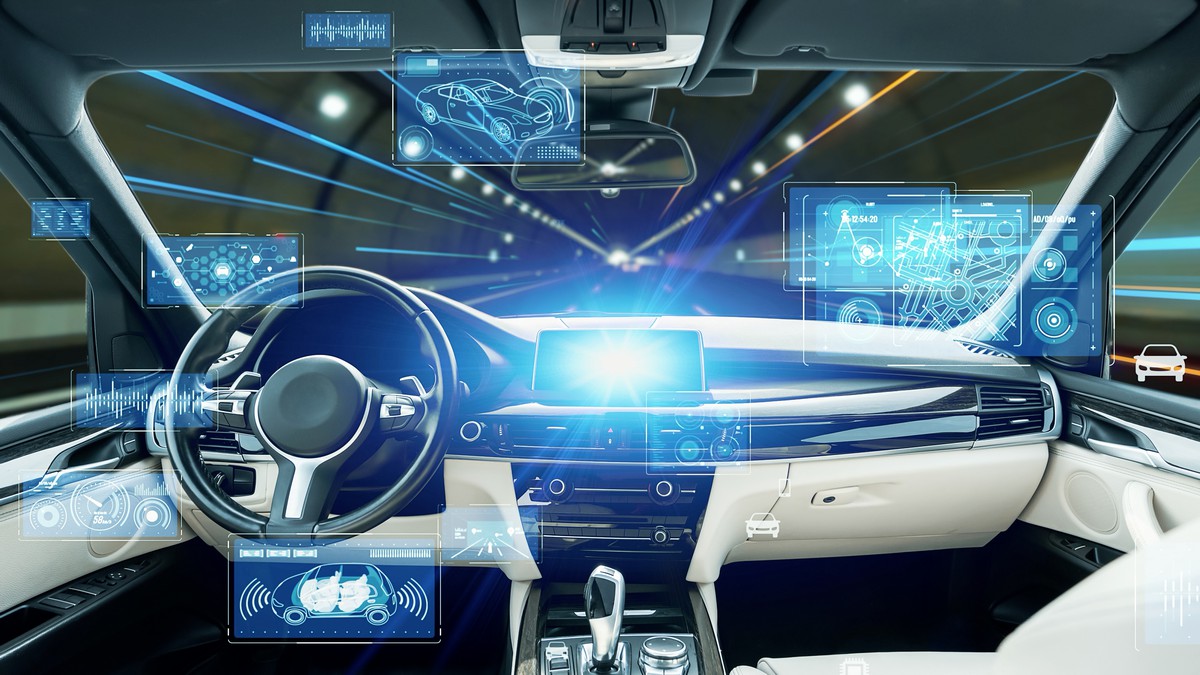
Where XPeng sets itself apart from the competition is that the vehicle’s system relies on a “pure vision” approach. This means there are no LiDAR sensors or high-definition mapping. The vehicle depends on the AI system, namely the VLA 2.0 system. A system, once again, developed in-house by XPeng.
But while China appears determined to dominate the autonomous-taxi market, what about France’s position in this domain? And the answer is not great. Thomas Matagne, the president-founder of Eco, described the situation by saying: “Europe will once again be placed in a position of digital colonialism, and Europeans will depend on foreign players to move about safely or to exploit their mobility data.”
A situation that strongly recalls the state of the electric-car market. European brands relying heavily on Chinese players for the production of certain parts. According to him: “autonomous vehicles are a reality. We must acknowledge that thousands of robo-taxis are already operating at scale; in China and the United States, that is not yet the case in France or in Europe.”
Europe continues to hesitate to dive into autonomous driving. The difficulties Tesla has faced in getting its renowned FSD approved serve as a proof point.
Key Takeaways
- XPeng becomes the first Chinese automaker to mass-produce a robotaxi designed entirely in-house.
- The vehicle targets Level 4 autonomous driving, operating without human intervention in a defined space.
- XPeng bets on a “pure vision” approach and proprietary technologies, with no LiDAR sensors or high-definition mapping.
- The VLA 2.0 system, developed by XPeng, drives the vehicle’s autonomy.
- France and Europe are significantly behind in this space compared with China and the United States.
- Europe’s reliance on foreign technologies echoes the situation in the electric-vehicle market.
FAQ
What is Level 4 autonomous driving?
Level 4 autonomous driving allows the vehicle to move without human intervention in a defined environment.
How does XPeng stand out in the robotaxi market?
XPeng designs and manufactures its robotaxi entirely in-house, from hardware to software, without relying on LiDAR or HD mapping.
Where is XPeng’s robotaxi built?
XPeng’s robotaxi is produced at its Guangzhou plant in China.
What is France’s stance on autonomous driving?
France is currently lagging behind and still heavily dependent on foreign players in this field.
What is XPeng’s VLA 2.0 system for?
The VLA 2.0 system is XPeng’s internal artificial intelligence enabling autonomous driving based solely on “pure vision.”