
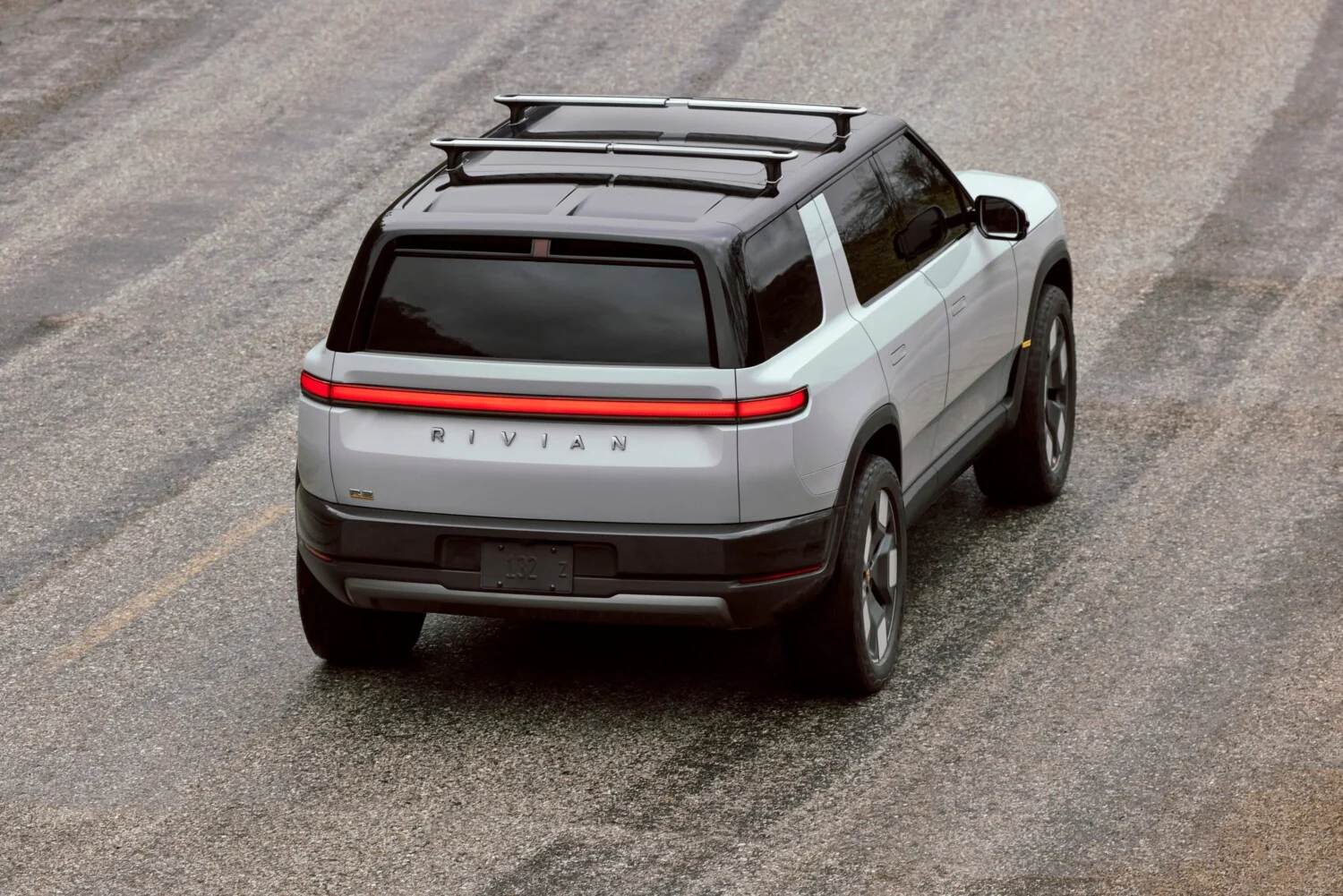
Would you let your 16-year-old behind the wheel of a 1,025-horsepower electric pickup that can sprint from 0 to 60 mph in 2.5 seconds, and weighs roughly 5,100 to 7,050 pounds? On paper, the Rivian R1T and R1S pack everything needed to thrill an enthusiast… and unsettle a parent. Even the upcoming R2 crossover, more “mainstream”, climbs to 656 hp, a figure that gives pause when you think about a newly licensed teen driver.
In the face of this equation—insane power plus a bulky footprint plus drivers who are sometimes very young—the American manufacturer is preparing a 100% software-driven response. In an interview, its Chief Software Officer confirmed the arrival of a new Teen Mode, designed to throttle the car when a teen is at the wheel, and a Valet Mode intended for chauffeurs and other casual drivers. Two features that will hinge on a new architecture for the digital key and user profiles, and that are slated to land on the R1T, R1S, and R2 as early as early 2027. And the way Rivian plans to roll them out says a lot about the future of family EVs.
Why Rivian is creating a Teen Mode for its overpowered electric vehicles
For Wassym Bensaid, Rivian’s Chief Software Officer, parents know all too well what these two-ton-plus machines are capable of when they accelerate like supercars. He says he has repeatedly heard from customers who want better ways to supervise younger users: “We’ve heard this feedback from the community. The only reason we haven’t offered it yet is that we wanted to do it right, and it will build on the entire digital key integration framework we have,” Bensaid told The Drive. A way of saying the company chose to wait for solid software foundations rather than cobble together a mere power limiter.
At the heart of the system is the idea of tying the driver’s age (or status) to their profile in the Rivian app. “When kids sign up, if they enter their true age, the app will behave as Teen mode,” he explained. But Bensaid knows very well that a teen might be tempted to “lie” about their birth date. Hence a second level of parental control: “As the owner, you can pair and say my first child is a Teen profile, my second child is not a Teen profile,” he noted. The owner will be able to create multiple profiles, tailored not only to age but also to the maturity level of each family driver.
Digital Key, Profiles, and Valet Mode: how Rivian will limit its cars
Behind the Teen Mode, Rivian is building a new architecture for managing keys and profiles, designed to enable a wide range of fine-grained adjustments. “I think the magic here comes from this new digital-key management framework and what we call the new user-profile architecture; we’ll be able to define tons of preferences. Some of them will be that we limit power or restrict access to off-road modes,” detailed Bensaid. He stresses that parents won’t get a simple horsepower slider, but blocks of preset parameters: “Here’s a great question. We’ll also offer options on how you want to configure it. So you won’t necessarily get to dial it to 500 or 600 horsepower with a slider, but there will be a category that limits power. There will be another category that cannot limit the stability control, another category that is all-terrain, yes or no? And then, with five to ten parameters, we’ll basically let the owner configure it generically for about ten months. That’s one of the reasons we want to do this right, because we think it will offer so much flexibility and control to parents,” he added. The interface will resemble the in-house RAD Tuner, with on-screen sliders and switches to enable or disable each category.
Still, a key question remains for a parent: can a teen bypass these limits? Again, Rivian is betting on software security. “The beauty of the digital key is that you can’t get out of it unless you have a password. The physical key and the card won’t grant access to the default settings. That means we’ll give you the option, in the profile menu, to say I associate the card or key fob with a specific profile,” Bensaid stressed. In other words, even with a key or a card in hand, it’s impossible to switch to a “free” profile without the code chosen by the parents. Alongside Teen Mode, the company is preparing a distinct Valet Mode: “We’ll give you the ability to lock certain latches, not allow trunk access, not allow access to the glove boxes”, he explained. This should curb the curiosity of a valet or a parking lot attendant, while also limiting their wheel-time, once these new modes reach the entire lineup starting in early 2027.