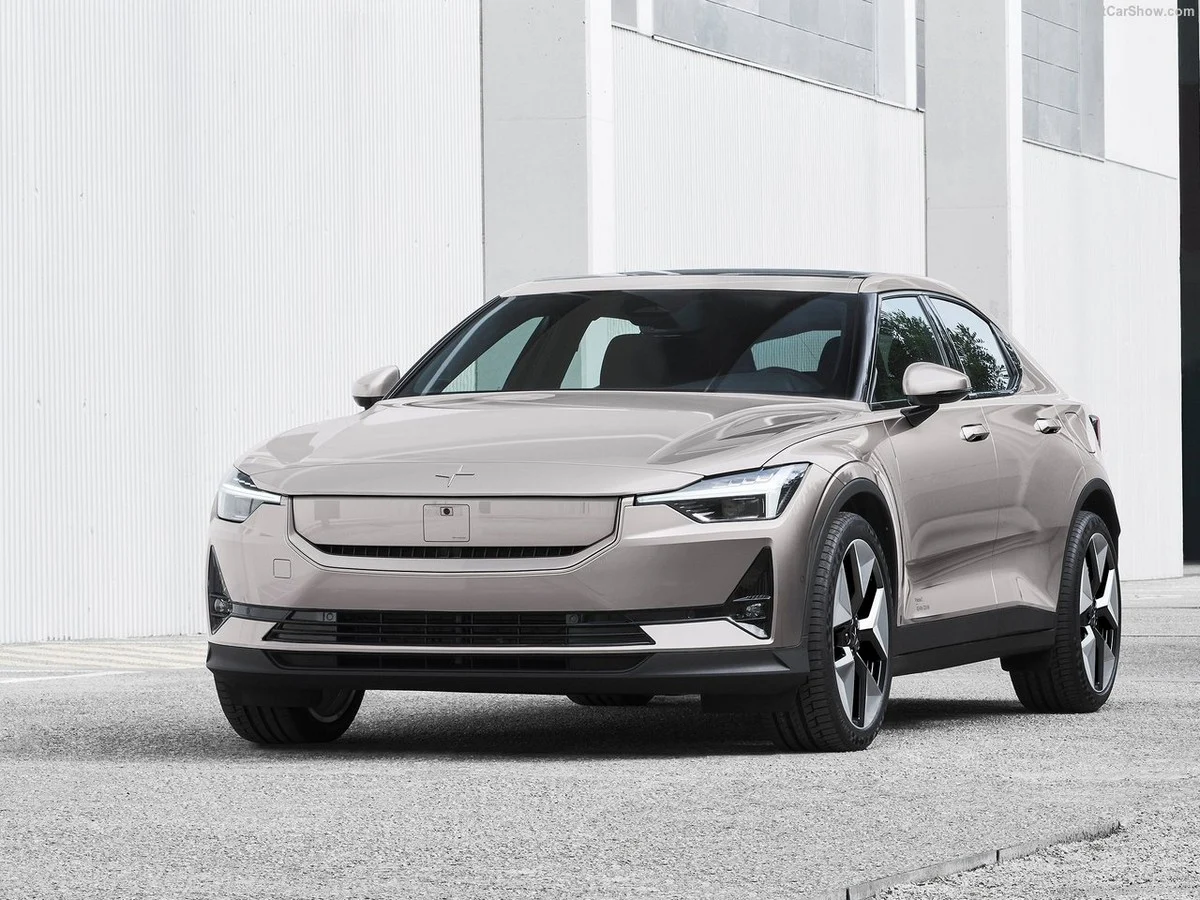
And what if the next Polestar 2 had little in common with the one you know? That’s exactly what the Swedish brand is preparing, a second generation fully redesigned for 2027. The stated objective: turn the electric compact into a true sport sedan and go head-to-head with the BMW i3. Design, platform, software, range—everything has to evolve to lift this new Polestar 2 2027 to benchmark status.
Because the next Polestar 2 will no longer be a lifted fastback, but a longer, lower sedan. It will ride on a new electric platform shared within the Geely group, shared with the forthcoming Polestar 7. Michael Lohscheller, Polestar’s chief, wants to use this moment to streamline architectures that have grown too numerous. The brand sold only about 60,000 cars in 2025. Facing this, the new BMW i3, a Neue Klasse sedan expected for autumn 2026, serves as the target for Polestar’s engineers. The question remains: will the next Polestar 2 truly have the means to shake up the competition on all fronts?
New Polestar 2 2027: an electric sedan built for the duel
Today, the Polestar 2 sports a tall, compact look with raised ground clearance and a steep-fastback profile. The second generation, by contrast, is set to adopt a genuine sedan body, lower and longer by roughly 100 millimeters. German press outlets talk of a length close to 4.75 m, about 2.85 m of wheelbase, and a height of around 1.48 m. This footprint places the Polestar 2 squarely in the family electric-sedan segment. It will face the BMW i3 and Tesla Model 3, as well as the upcoming Mercedes C-Class Electric. A starting price rumored to be under £50,000 in the UK translates to roughly $60,000 in the United States, with sales slated to begin in summer 2027, according to released information.
For Michael Lohscheller, this transformation begins with a thorough industrial reset. “In the long run, I want to harmonize architectures, because we have too many of them.” This line, spoken to Auto Express, sums up a desire to reduce the number of platforms. The new base will be flexible enough to accommodate models of different lengths, widths and heights. It will serve the future Polestar 2 and Polestar 7, which will share the same electric underpinnings. “I’m happy to be at a time when we want to share platforms and give our brands clear directions to avoid a ‘horse race’ mentality,” said Philipp Römer, head of design. “It’s the same thing within the Volkswagen Group: models share the same platforms, but a Volkswagen is completely different from an Audi.” For him, the idea is to share the underlying tech without erasing the unique identities of each brand.
Polestar 2 vs BMW i3: tech, range and dynamics in the crosshairs
Beyond styling, the battle with the BMW i3 will hinge on tech and software. “We need state-of-the-art software stacks and a central computing backbone,” notes Michael Lohscheller. In other words, the next Polestar 2 will adopt a software-defined vehicle architecture, with a very powerful central computer. Polestar is aiming for an 800-volt architecture and DC fast charging above 300 kW. The goal is to exceed 500 miles of range, i.e., more than 800 km. “All of this is possible, but it will require good organization.” Lohscheller emphasizes, underscoring the time required to roll out these new architectures. On the other hand, the BMW i3’s spec sheet sets a very high bar. BMW talks of up to 900 km WLTP in certain versions. In the i3 50 xDrive, the battery would be around 109 kWh, with charging up to 400 kW, according to known data. The range for that variant is estimated at about 440 miles (roughly 708 km), according to American press. All this for a starting price that should edge just above $50,000.
Facing those numbers, Polestar bets on the handling characteristics of its sedan to differentiate itself from the BMW i3. “We are going to beat [the new i3]; it’s an obligation” declares Joakim Rydholm, head of road-holding and chassis tuning. The plan is to borrow lessons from the larger Polestar 5 and focus on damping and steering precision to deliver a finer road feel. BMW counters with its central system, “Heart of Joy”, designed to coordinate motors, brakes and suspension to preserve the brand’s dynamic signature. Between a meticulously tuned Nordic sedan and the ultra-tech Neue Klasse, the stage is set for a true-size, face-to-face showdown.