
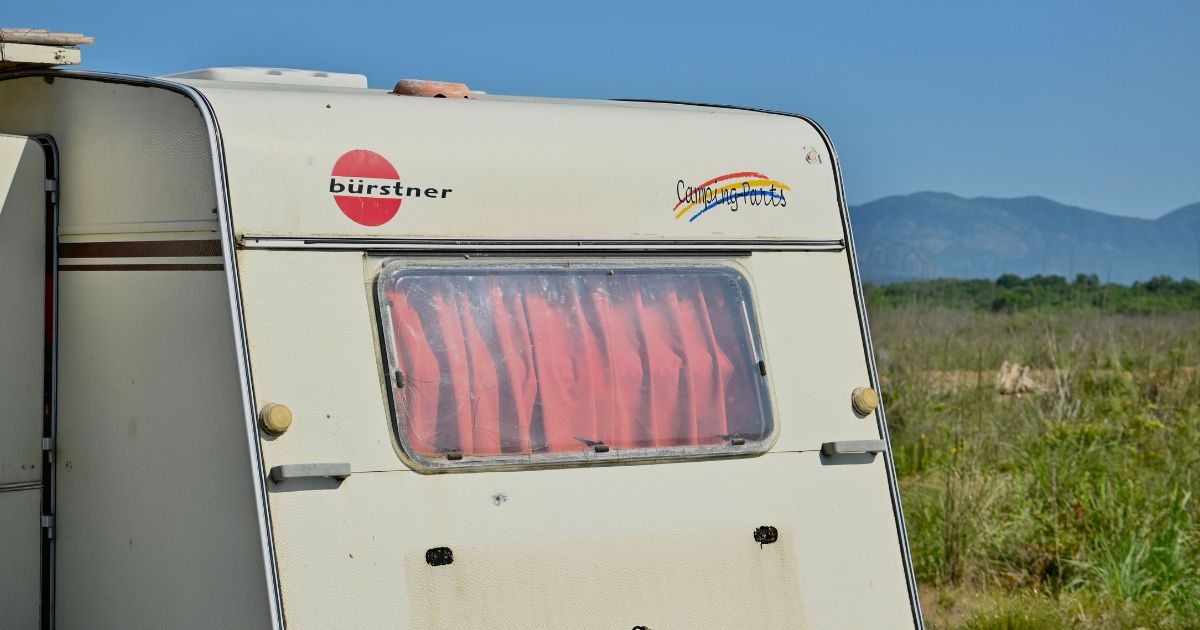
At the Louvigné-du-Désert market in the French department of Ille-et-Vilaine, eyes briefly lift away from baskets of vegetables to settle on a small, prettily decorated caravan. Inside, there are no vacation souvenirs, just a grinding wheel, leather discs, and neatly arranged tools. This is where a nearly forgotten trade hides: the itinerant sharpener and cutler, set up for the day between two stalls. The low hum of the wheel and the sparks on the steel intrigue passersby, who often draw near out of curiosity before pulling their old knives from their bags.
At 57, Stéphane Guérard has transformed this “quirky caravan” into a rolling workshop and travels roughly 250 miles per week to sharpen knives, scissors, and garden tools across the Fougères region. “It’s an economical and practical solution, but above all it’s fun. It draws the eye. We’ll always need this trade unless we keep tossing our tools without thinking,” the craftsman told Actu.fr, as a customer handed him her old pruner. This former postman turned itinerant sharpener in Brittany is among the very few professionals still active in the field. And many discover with him that a well-sharpened knife can outlast a cheap new model by a long shot.
A Caravan-Workshop That Turns Heads at Breton Markets
Originally from Manche, Stéphane Guérard started modestly under a simple canopy on the roadside and village squares. For just the past two weeks, he’s been crisscrossing the region behind the wheel of his caravan, in which he has installed his machines. “Some people come to the market just to see it,” he smiles, watching curious onlookers circle his setup. “I built it myself: I bought it, added two workbenches, and decorated it,” he says with pride, proof that his rolling workshop attracts as much attention as the whir of his wheel.
In a typical week, this itinerant sharpener-knife maker covers about 250 miles to follow his well-tuned route: Ducey-les-Chéris on Tuesday, Saint-Hilaire-du-Harcouët on Wednesday, Le Teilleul on Thursday, Louvigné-du-Désert on Friday, and Bagnoles-de-l’Orne on Saturday. At each stop, residents bring their dull blades. On Friday, August 4, in Louvigné-du-Désert, around forty items were worked on—kitchen knives, scissors, pruning shears, and garden tools. He is one of the last sharpeners in the Pays de Fougères, a rarity that helps explain the line that forms before his caravan. Sharpening prices: kitchen knives from $3 to $6, scissors from $4 to $6, pruning shears $4, axes $5, and many other tools besides.
An Almost-Forgotten Trade: Where Passion, Precision, and Ecology Meet
Before taking to the road with his caravan, Stéphane Guérard spent his career as a postal worker, then made a radical turn two and a half years ago. The passion goes back to adolescence: “I sharpened my first knife at 14 thanks to online tutorials; perhaps the forbidden thrill pulled me in,” he jokes. It started on a granite windowsill. “Why not do it for others too?” Since then, this itinerant cutler has honed his craft, a discipline that demands as much rigor as gentleness. “We begin by restoring the edge by removing material with a wheel, using a synthetic stone or a natural one in my case. This creates a burr—the tiny steel shavings at the tip,” explains one of the few sharpeners in the Pays de Fougères, always careful not to damage the blade turning before him.
The work doesn’t stop there. “We finish with a leather de-burring disk, usually coated with polishing paste. The wool wheel completes the process: it polishes the grinds and removes the scratches left by the stone.” Among the pieces he has revived are exceptional finds, like a World War II machete: “I cleaned it, sharpened it, and it was almost like new,” he recalls. Or a Bowie hunting knife, a genuine original: “It’s one of America’s most iconic knives. It came out of a barn full of rust, and I gave it a second life.” Behind these precise movements lies a simple philosophy: “We don’t throw away; we do secondhand work and save. Some knives can last fifty more years,” he explains, convinced that “Every knife can be sharpened. The edge will endure longer or shorter depending on the quality of the steel.” He even buys old knives at flea markets to restore them, because “There are beautiful pieces that deserve not to end up in the trash.” Making a living from this craft also requires a few renunciations: “Living off this trade? You can’t have big needs. When I left my old job, I planned to live on a modest income. With a mortgage, rent, and a car, it’s risky,” admits the sharpener, who is nearing retirement. For him, “It’s an indispensable trade in this consumer-driven society.” And the demand is real: “There is genuine demand. We’re short of sharpeners in France. We’ll always need them, unless we keep tossing things without thinking.”