In Brief
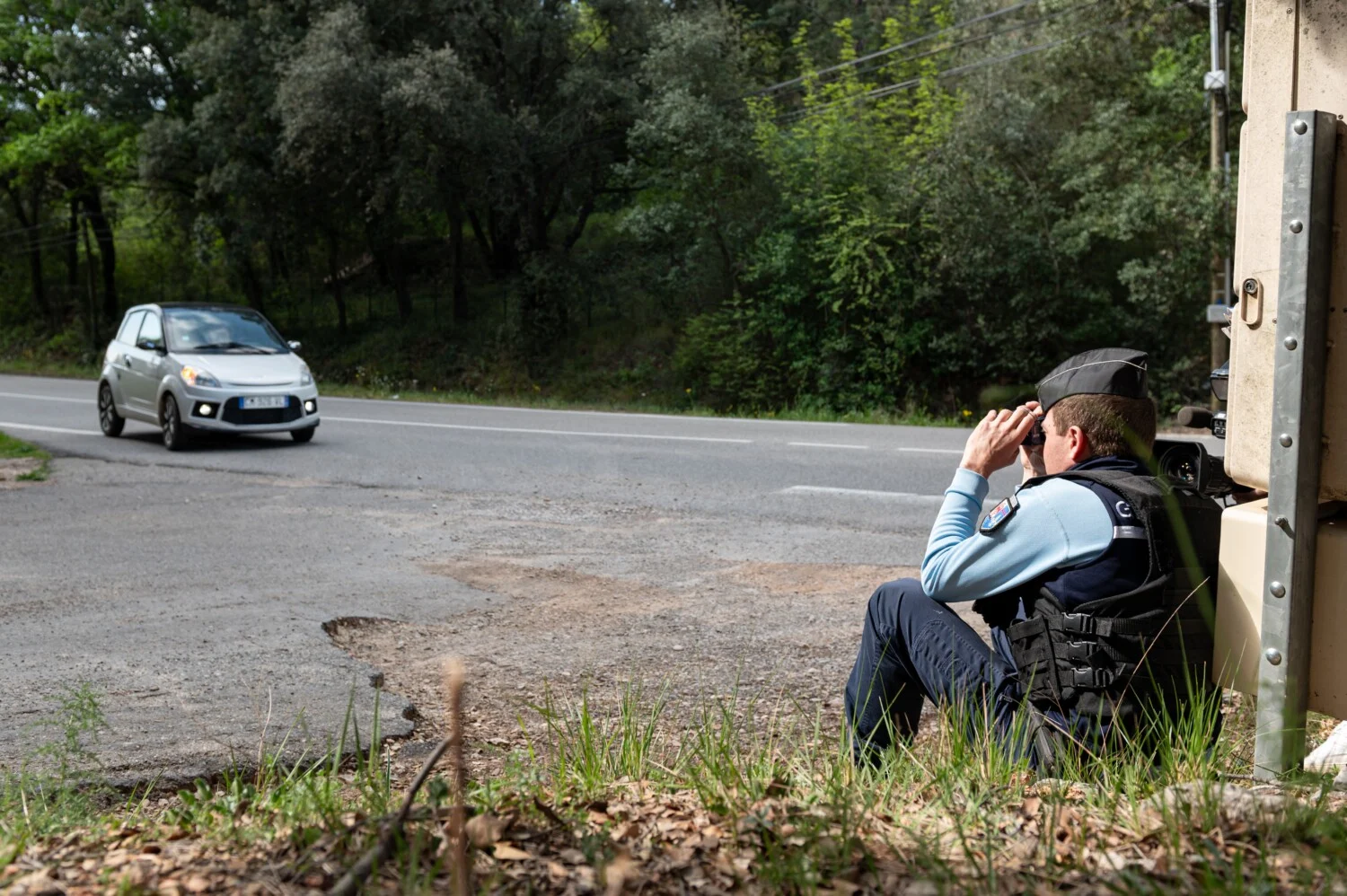
Reporting the police’s presence with high beams is no longer considered a criminal offense, following a 2021 ruling by France’s Court of Cassation, provided this practice does not rely on devices banned by the Highway Code. That said, it can still be punished if performed in an urban area where headlight use is regulated, or if it endangers other road users. The use of electronic means remains strictly prohibited. It is therefore important to distinguish clearly between the different contexts of use to avoid getting a ticket.
Previously, this practice was deemed illegal under Article R413-15 of the Highway Code.
Case law clarifies the situation
This article prohibits the use of any device or apparatus intended to detect or disrupt the tools used to observe and document traffic violations. Those caught in violation faced a €1,500 fine and the loss of six points on their driving license. However, in 2021, the Court of Cassation handed down a landmark decision that reshaped this understanding. In its decision of May 12, 2021, France’s highest court held that alerting other drivers to a police checkpoint with high beams did not constitute a criminal offense. The Court reasoned that this practice fell within the realm of freedom of expression and information.
This ruling rests on the fact that Article R413-15 of the Highway Code specifically concerns devices that detect radar and similar tools, not human behaviors such as flashing headlights. The Court also stressed that the primary aim of police checks is to slow drivers down and persuade them to comply with speed limits, which is also the effect of high-beam signaling.
Beware of possible abuse
Nevertheless, using other methods to indicate the presence of road checks—such as mobile apps or social networks—remains formally prohibited and can lead to a €1,500 fine, or €3,000 if it’s repeated. It’s important to note that this ruling does not render high-beam signaling completely legal and unrestricted. Indeed, under Article R416-12 of the Highway Code, “the use of horn alerts and of high beams is prohibited in urban areas, except in cases of immediate danger.”
Thus, flashing headlights in a city can still be punished, not for signaling a check, but for abuse of high-beam use. Additionally, if a high-beam signaling causes an accident or endangers other drivers, the signaling driver can be charged with endangering the life of others, under Article 223-1 of the Penal Code. This offense can carry up to one year in prison and a fine of €15,000.
Comparative Table
| Offense | Sanction |
|---|---|
| Use of radar-detection devices | €1,500 fine + six points off the license |
| Reporting via apps or social networks | €1,500 fine (€3,000 on repeat offenses) |
| Endangering others by signaling with high beams | Up to 1 year in prison + €15,000 fine |
Key takeaways
- Reporting a police check by flashing high beams is no longer a criminal offense since 2021.
- The use of high beams remains prohibited in urban areas unless there is an immediate danger.
- Devices or electronic means used to signal checks remain strictly forbidden.
- Severe penalties apply if signaling leads to endangering someone’s life.
- Case law clearly distinguishes human behaviors from technical devices.
- Warning about checks can still lead to a ticket depending on the context of use.
FAQ
Is it legal to warn of a police check with high-beam signaling?
Yes. According to the Court of Cassation, this practice is not a criminal offense as long as no prohibited device is used.
Can you be fined in the city for flashing headlights?
Yes. In urban areas, the use of high beams is prohibited except in immediate danger, which can lead to a sanction.
What devices are forbidden for signaling police?
Any device or mobile app used to detect or signal police checks is strictly forbidden.
What penalties apply for endangering others with high-beam signaling?
Up to one year in prison and a €15,000 fine.
Does the Court of Cassation’s decision apply to all drivers?
Yes. It applies to all drivers who warn about a checkpoint solely through high-beam signaling without any electronic device.