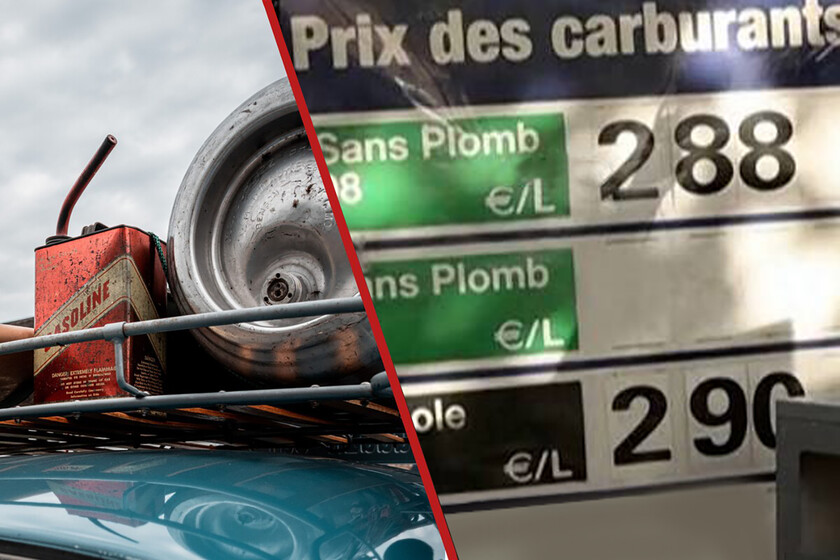
France faces another price crisis at the pump, and the remedy that is starting to echo on political sets again bears a Spanish accent. The former Socialist minister Ségolène Royal, a candidate in the left primaries for the presidential elections, has proposed on BFMTV to lower fuel prices to 1.70 euros per liter by copying the fiscal recipe used by Spain.
This isn’t the first time Paris has looked to Madrid for solutions. And it happened months ago with the electricity bill. The comparison again makes clear that, despite the reputation for spending and protesting a lot, Spain doesn’t do so badly.
Tax Reductions
In August 2022, the French minister Bruno Le Maire pointed to Spain as an example of lack of control, with electricity bills skyrocketing compared to France’s 4%. But the narrative quickly flipped, since then, the Spanish wholesale market has remained almost permanently below the French, costing up to 25% less in 2023-2024, according to AEGE. The “Iberian exception” of the gas cap also lowered the Spanish MWh by around 30% compared with the rest of Europe.
Today, with diesel priced at an average of 2.37 euros in France, the country again looks toward Spain to see how we do it. The proposal by Ségolène Royal aims to cut about 50 euro cents per liter by combining three levers.

The first step would be to eliminate the fixed special tax of 33 eurocents that Brussels imposes on diesel, then lower the VAT and, finally, postpone energy-saving certificates. The problem is that this 33-cent special tax is a European floor, and France cannot go below it without Brussels’ permission… unless it follows the path Spain has already taken.
And indeed Spain formally asked the European Union for authorization to sit below that tax floor. Madrid can temporarily apply a special tax below the minimum required by community law. The result: in September, the diesel special tax stood at 13 eurocents per liter after a cut of 20 cents, a fraction of the 61 eurocents France charges for the same concept.
The difference is noticeable at the pump. This Friday, the liter of diesel A in Spain costs on average 1.94 euros, compared with almost 2.40 euros for diesel in France. The Spanish approach combines two measures taken in the spring, lowering the VAT from 21% to 10% and bringing the special tax down to the European minimum.
In any case, France has ample room to act without seeking Brussels’ permission. Its special taxes (69 eurocents on gasoline, 61 on diesel) far exceed the EU floor, so it could lower them with nothing more than respecting a minimum 15% VAT. But the French government resists, aware that a cut of that scale would open a hole of several billions in the public finances already strained by the deficit. For now, it prefers targeted aid to modest households and struggling sectors, not a broad tax cut.
Spain is not alone in these kinds of moves. Germany also announced in mid-September a relief of about 17 eurocents per liter. But the contrast with France is the one generating the most headlines, because it isn’t the first time this year that the French have looked to their Iberian neighbor to solve a price problem. Between electricity and now fuel, the pattern seems to repeat: they complain, but end up copying Spain’s homework.