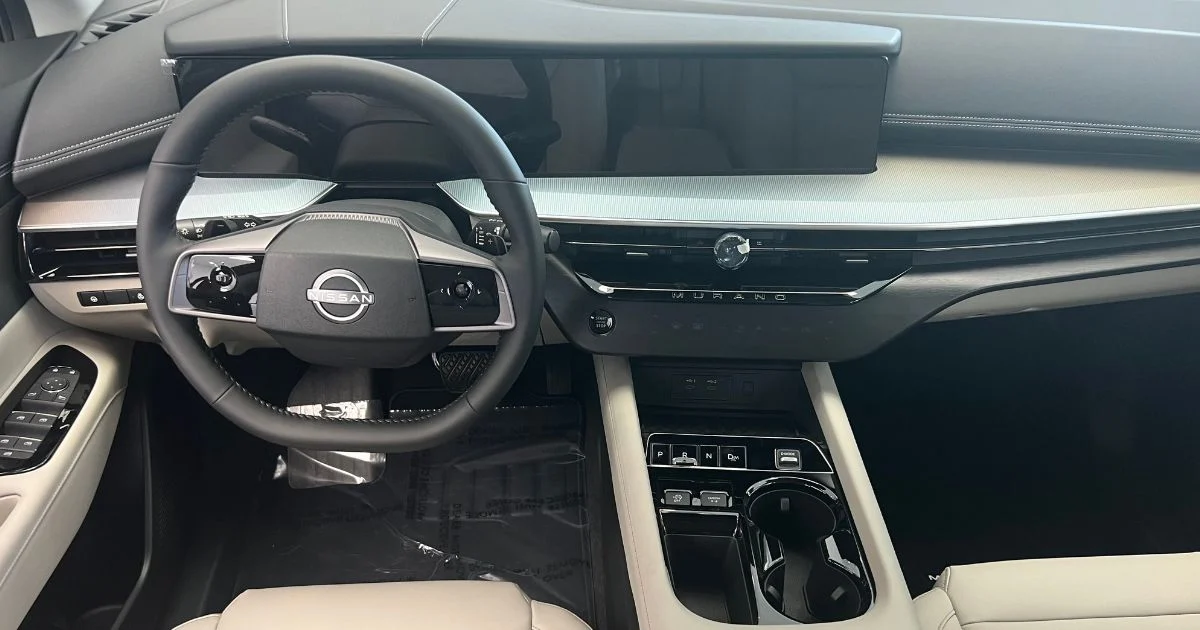
In recent years, dashboards have filled with screens, to the point of nearly erasing almost all buttons. A design-forward choice, but often burdensome in daily life for drivers. Nissan has admitted that it went too far in that direction and wants to revert to something simpler. The automaker announces a real return of physical buttons and a broad crackdown on materials that are impractical to use. Many drivers have already vented while trying to locate a simple temperature adjustment hidden in several submenus.
At the heart of this pivot is Ponz Pandikuthira, Nissan’s product lead for the North American market. In an interview published on September 22, 2026, he explains that wanting to put everything on a screen has its limits. His message is clear: prioritize the onboard experience over a dashboard design styled like a giant smartphone. It remains to be seen how this philosophy will translate into future European Nissan models, where the debate is already heated. Nissan wants a cockpit designed to be used, not a showroom display item meant only for showrooms.
Why Nissan is betting on physical buttons again
For Pandikuthira, as he sums it up, “you can put all the controls in a single screen for a clean design”. But, he warns, “the functionality takes a serious hit”, he told The Drive in an interview. He recalls that drivers are used to certain gestures they perform without even taking their eyes off the road. Trying to digitize everything forces those reflexes to pass through menus, submenus, then tiny icons.
Certaines fonctions ne doivent donc pas quitter la console centrale. Pour le son, Ponz Pandikuthira estime que “le volume et l’interrupteur de la radio doivent être un bouton”. La même logique s’applique à la climatisation, avec des boutons marche / arrêt ou plus / moins faciles à trouver à l’aveugle. Les fonctions plus complexes, avec de nombreux réglages possibles, resteront cantonnées à l’écran, où les menus gardent leur intérêt. Pour lui, un habitacle se juge avant tout sur “l’expérience utilisateur et non l’aspect design”, une nuance lourde de conséquences.
Moins de piano black, plus d’ergonomie pour les Nissan
Ponz Pandikuthira ne s’arrête pas aux boutons : il vise aussi la finition piano black, très présente ces dernières années. Selon lui, “cela a l’air très haut de gamme quand c’est propre et neuf”. Mais “dès que l’on utilise la voiture au quotidien, des traces de doigts apparaissent rapidement. Soit on nettoie les surfaces en permanence, soit on abandonne”, ajoute‑t‑il. “Alors, l’habitacle finit par avoir l’air terrible au bout d’un moment”, poursuit Ponz Pandikuthira.
Cette approche commence à se voir dans la gamme : le Nissan Leaf utilise des matériaux moins sensibles aux salissures. Le tout nouveau Nissan Rogue Hybrid, un SUV pour l’instant réservé à l’Amérique du Nord, illustre encore mieux cette philosophie. Sa planche de bord fait appel à de vrais boutons pour la climatisation, sans plastique laqué ni chrome brillant envahissant. À l’inverse, la citadine Nissan Micra actuelle affiche encore du piano black autour des aérateurs et sur le volant. Un mouvement qui tombe bien : dès Euro NCAP 2026, les voitures avec commandes physiques pour les fonctions seront favorisées.