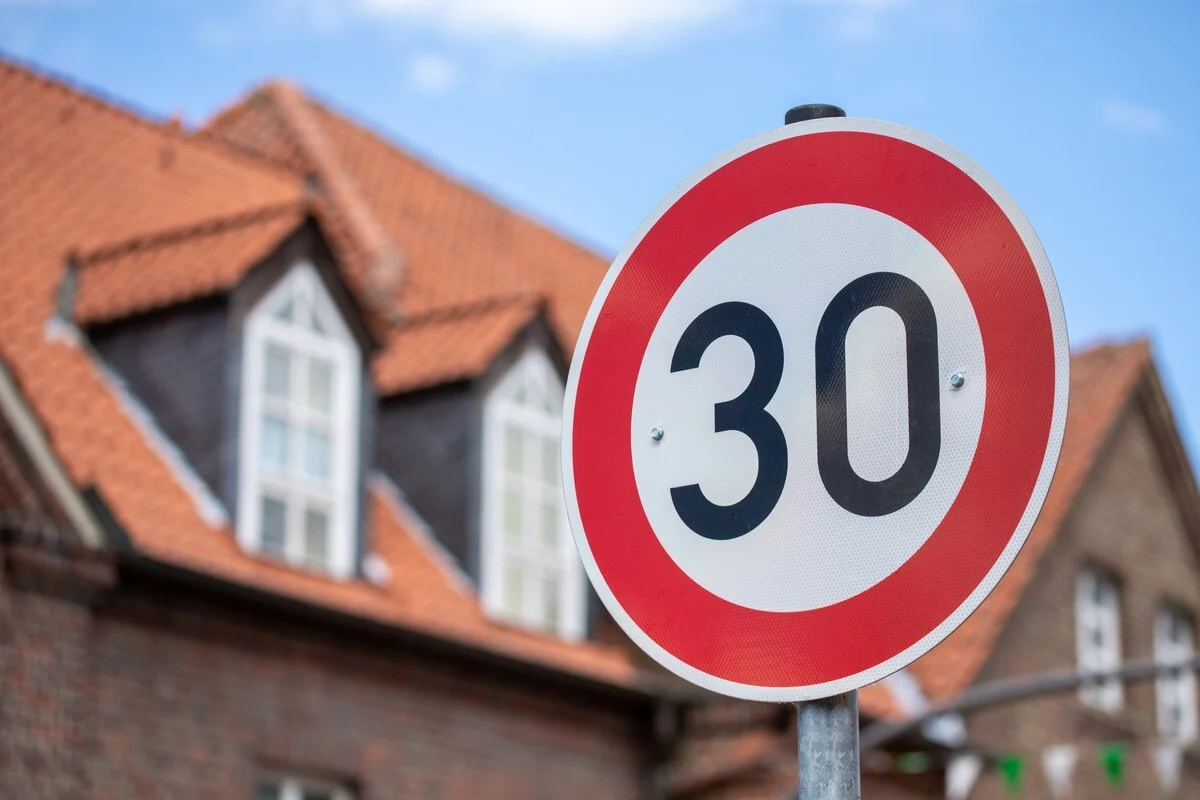
A six-figure bill for just a few kilometers per hour over. The story may sound unreal, yet it sums up how a Nordic country enforces its traffic rules: by scrupulously factoring in the driver’s wallet. When the penalty hits 120,000 euros for a mere speeding violation, it quickly becomes clear that going a bit too fast can be very costly.
Behind this numbers—the kind that makes headlines worldwide—is a Finnish businessman named Anders Wiklöf, nabbed at 59 km/h in a 30 km/h zone in Mariehamn, on the autonomous archipelago of the Åland Islands, Finland. For those 29 km/h over the limit, this multimillionaire was slapped with a colossal fine, calculated under a very particular system: the “day-fine” method. A setup that, when compared to the €135 French penalty for the same offense, completely reframes this minor excess…
In Finland, 59 km/h in a 30 zone can cost 120,000 euros
The facts themselves are fairly routine: an urban area with a 30 km/h limit, a speed check, and a vehicle recorded at 59 km/h. The offense sits in the +20 to +30 km/h range over the limit. What a French motorist would spontaneously call a standard ticket, far from a dramatic crash or a major road crime. And yet the bill sent to Anders Wiklöf indeed reaches 120,000 euros.
The explanation lies in the driver’s profile. Anders Wiklöf is described as a multimillionaire, one of the wealthiest businesspeople in the country. In a system where the amount of the fine is directly tied to living standards, a 29 km/h over the limit doesn’t produce a small symbolic penalty. In the face of this figure, the man stayed noticeably calm. “If I’ve made a mistake, I accept it and there’s nothing more to say,” he told a local media outlet in Swedish. This isn’t his first costly overstep: in thirteen years, he has reportedly paid almost €400,000 in speeding fines, with several already high penalties that show the bill tends to climb for him.
The Finnish day-fine system versus the French €135 fine
If the bill is so steep, it isn’t because Finland punishes speeding more harshly per se, but because it does so in a different way. For significant excesses, the country applies a day-fine system: there is no longer a single amount for everyone; instead, a number of “days” is calculated based on the severity of the offense, and then the value of each day is determined by income. Put simply, the driver’s net monthly income is first reduced by 255 euros, then divided by 30; the resulting figure is the value of one day-fine, which is then halved. The number of day-fines is set by law according to how far over the limit the driver went.
Concretely, the higher the income, the higher the value of a single day-fine, and the larger the final penalty. The idea behind these income-based fines is that the financial pain should be roughly equivalent for everyone, whether it’s a middle-class employee or a multimillionaire. In the case of Anders Wiklöf, this mechanism literally sent the penalty skyward. By contrast, in France, a speeding overage of 20–30 km/h above the limit remains a flat ticket: a €135 fine, plus two points off the driver’s license, regardless of income. For the same 29 km/h overage, a French driver would pay roughly 900 times less than this Finnish businessman, a gap that underscores the stark difference between the two systems and inevitably invites questions from motorists on both sides of Europe.