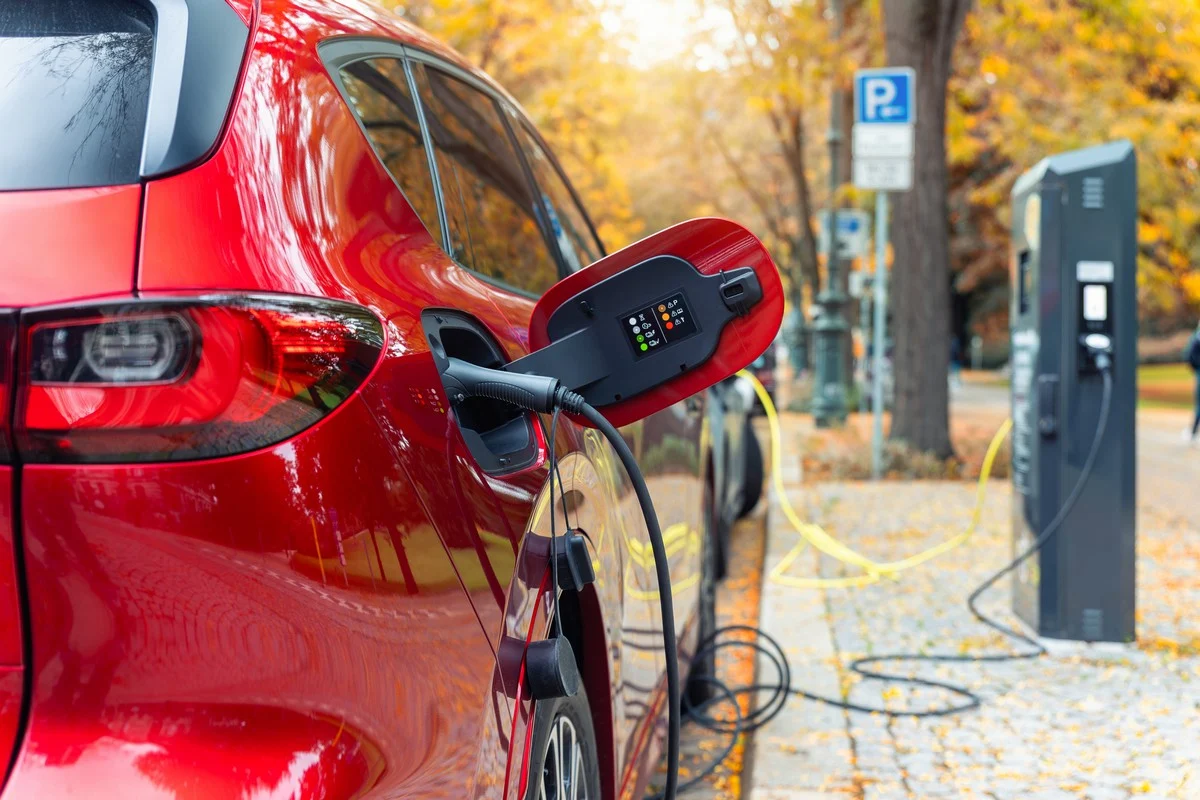
Facing the surge in fuel prices, the option of electric vehicles is favored by many drivers. A small price war has begun between two retailers—Lidl and Leclerc—creating charging rates that are truly attractive.
Which charging stations are affected by the price drop?
The automotive news revolves mainly around fuel prices, rightly so. It now costs more than €2.40 per liter for diesel on average in France. At the same time, electric car owners enjoy much cheaper tariffs. For, as we write, no tax like in the United Kingdom hits EV owners’ wallets. By way of reminder, to compensate the tax loss from reduced fuel consumption, the UK has implemented a per-mile tax on electric vehicles.
In France, two retailers are staging a small price war at the charging stations. It is Leclerc and Lidl. The latter decided, on September 18, to drastically lower recharge prices across its network. But beware, not all chargers are affected. Indeed, it concerns mainly alternating current chargers capable of delivering up to 22 kW of power.
A mandatory criterion to qualify for this discount
From now on, you will have to pay €0.18 per kWh (18 euro cents). Lidl thus answers Leclerc’s move and even outdoes its competitor. By comparison, Leclerc charges €0.19 per kWh. The final bill is far lower than what you’d pay to fill up a tank of gasoline.
As for DC fast chargers, tariffs remain higher. You’ll pay €0.29 per kWh at Lidl versus €0.35 per kWh at Leclerc. In other stores, the rate tends to hover around €0.50 per kWh.
To benefit from this exceptional discount, a key criterion must be met. Indeed, the installation of the free Lidl Plus app is mandatory. Otherwise, you’ll pay €0.29 per kWh, the same tariff as a DC charger. Another important prerequisite: have time on your hands. A charger delivering 22 kW will take considerably longer to recharge your vehicle than a 150 kW charger. Expect a few hours before the battery is full—ideal for running a few errands while you wait.
Faced with soaring fuel prices, the electric car is establishing itself as a credible option for urban mobility.