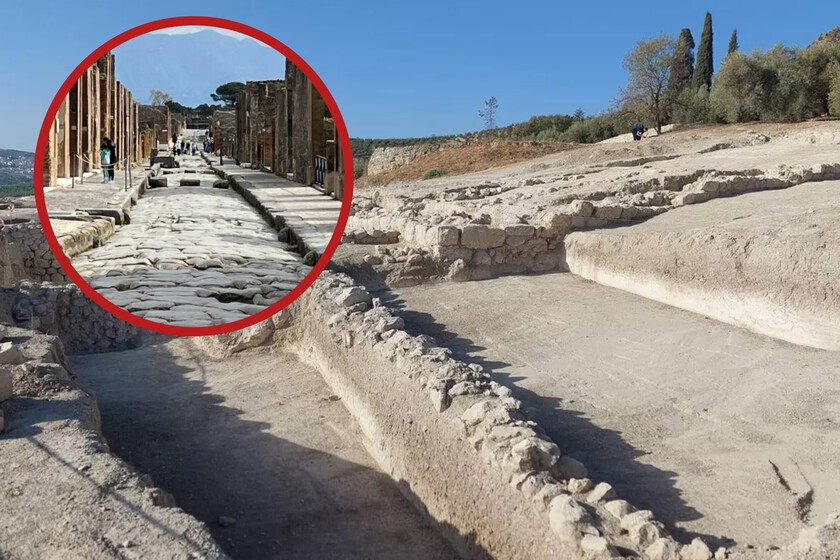
In a land with a rich history like Spain, it is common for genuine milestones of the past to come to light in the middle of construction work. This is what happened during the works on the Las Angosturas bypass in Priego de Córdoba, which were hiding far more beneath the surface than a mere archaeological site.
What began as a preventive intervention to start a new road has ended up revealing a genuine Roman complex for olive oil production whose significance has prompted a redesign of the planned route of the infrastructure, according to Cordópolis. They have even found a Roman road.
The discovery that changed the route of a road
And the archaeological work underway in the surroundings of the Cortijo de los Cipreses has allowed documenting a large Roman-era olive mill alongside other structures linked to a sizable settlement.
So significant is the matter that the Junta de Andalucía has opted to redesign part of the bypass to avoid any impact on the remains. And no, this is not something common, because it had been many years since an archaeological discovery of this magnitude compelled a rethinking of a road infrastructure in the province of Córdoba.
The “exceptional patrimonial value,” according to the experts themselves, has uncovered an olive-oil production complex. Indeed, it is not by chance. Today the Priego de Córdoba region stands as one of the world’s major references in the production of extra virgin olive oil. This is not a recent development, far from it; the link between Priego and olive groves goes back to times… Roman, literally.
And as evidence, the excavations, which have identified a Roman olive-mill built between the 1st and 2nd centuries CE that formed part of a much broader productive complex; a complex with several buildings connected to the processing and storage of olives.
Among them, the usual zones of an olive-oil production complex: milling areas, pressing areas, canalization systems for gathering the oil and dependencies linked to the operation of the whole complex… including hydraulic infrastructures and a wide transport route that traversed the site.
Despite everything, the experts highlight the “size and state of preservation” of the place, to the point that some walls still reach more than two meters in height, something quite uncommon for a site dating back to the Roman era. They believe this complex was strategic within the olive-oil production network of the ancient Baetica Province, one of the empire’s main oil-exporting regions.

Beyond the discovery of the olive mill, a Roman road more than six meters in width has also come to light and could be connected to one of the great historic routes that linked the interior of Andalusia during Antiquity, according to Cordópolis.
In the beginning they thought it was not something very large, but as the archaeological work progressed they realized the site was much grander than initially expected, to the point that parts of the structures extend beyond the excavated area, suggesting the complex could stretch beneath lands that have not yet been explored and that would take years to uncover.
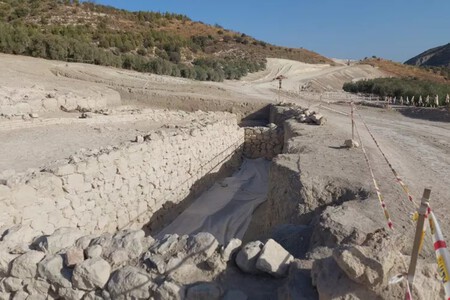
Thus they have had to study alternatives to preserve the heritage while also carrying out the planned bypass. Among the options analyzed were covering the remains, elevating the road, or constructing a structure that would allow the enclave to be saved.
The chosen alternative has been to modify the planned route of the infrastructure to avoid any direct impact on the site and to enable future archaeological investigations.
Because beyond a diverted road, the true value of the discovery may lie in everything that remains to be learned beneath the soil of a region that has lived off olive oil for more than two thousand years.