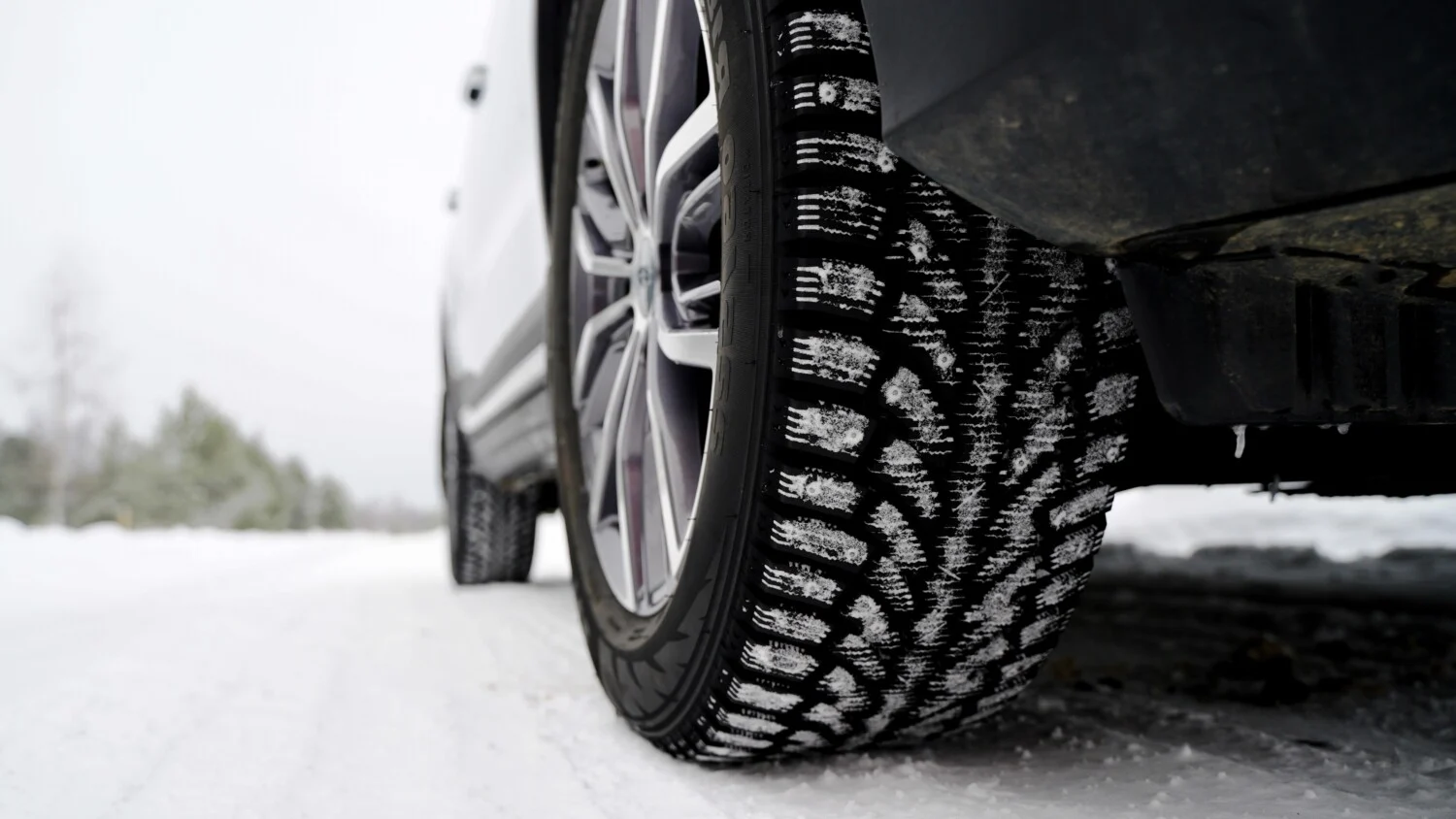
Even though mechanics and tire shops like to echo the slogan “from October to Easter,” putting on winter tires isn’t simply a matter of the calendar!
Winter Tires: The Temperature Shift You Need to Know
In reality, the true trigger is the temperature, not the date. The rule that tire specialists commonly rely on rests on a temperature threshold: as soon as the mercury dips below 7°C, it’s time to consider removing your summer tires and switching to winter rubber. Why seven degrees? The answer lies in rubber chemistry. A summer tire is formulated with a compound that hardens progressively as the temperature falls. Below 7°C, this rubber loses its suppleness, grip drops even on dry pavement, and stopping distances lengthen quite noticeably. Conversely, a winter tire uses a silica-rich compound that stays pliable in the cold, with more sipes that bite into the road. In other words, the performance gap isn’t limited to snowy conditions; it already shows up on a cool, rainy autumn morning. That means it’s wiser to anticipate the switch by mid-October than to wait for the first snowfall, which often arrives too late to act calmly.
Watch out for bottlenecks at tire specialists
You also need to consider geography and elevation. A city dweller in the Paris area won’t follow the same schedule as someone living in the Alps or the Massif Central, where negative temperatures and snow can arrive as early as late September at higher altitudes. Since the Mountain Law II, some mountainous zones actually require winter equipment or the use of chains between November 1 and March 31. Once the season ends, the removal of tires follows the same inverted logic: you switch back to summer tires once temperatures reliably rise above 7°C, generally around Easter, because running summer speeds with winter tires wears the rubber faster and can worsen handling on warm pavement. In practice, the simplest approach is to monitor the forecast for about ten days ahead. If nights turn chilly and daytime temperatures stay below that 7°C threshold, that’s your signal! Following it will spare you from rushing to the shop as everyone else does, with appointment delays that spike and, at times, shortages of certain tire models. Better to head off problems than to chase them.