China and the United States have not hesitated to dive into the development of the autonomous car. Europe, for its part, remains rather cautious on regulation. This could widen a gap that may prove difficult to close.
Driver-Assist Systems on the Rise
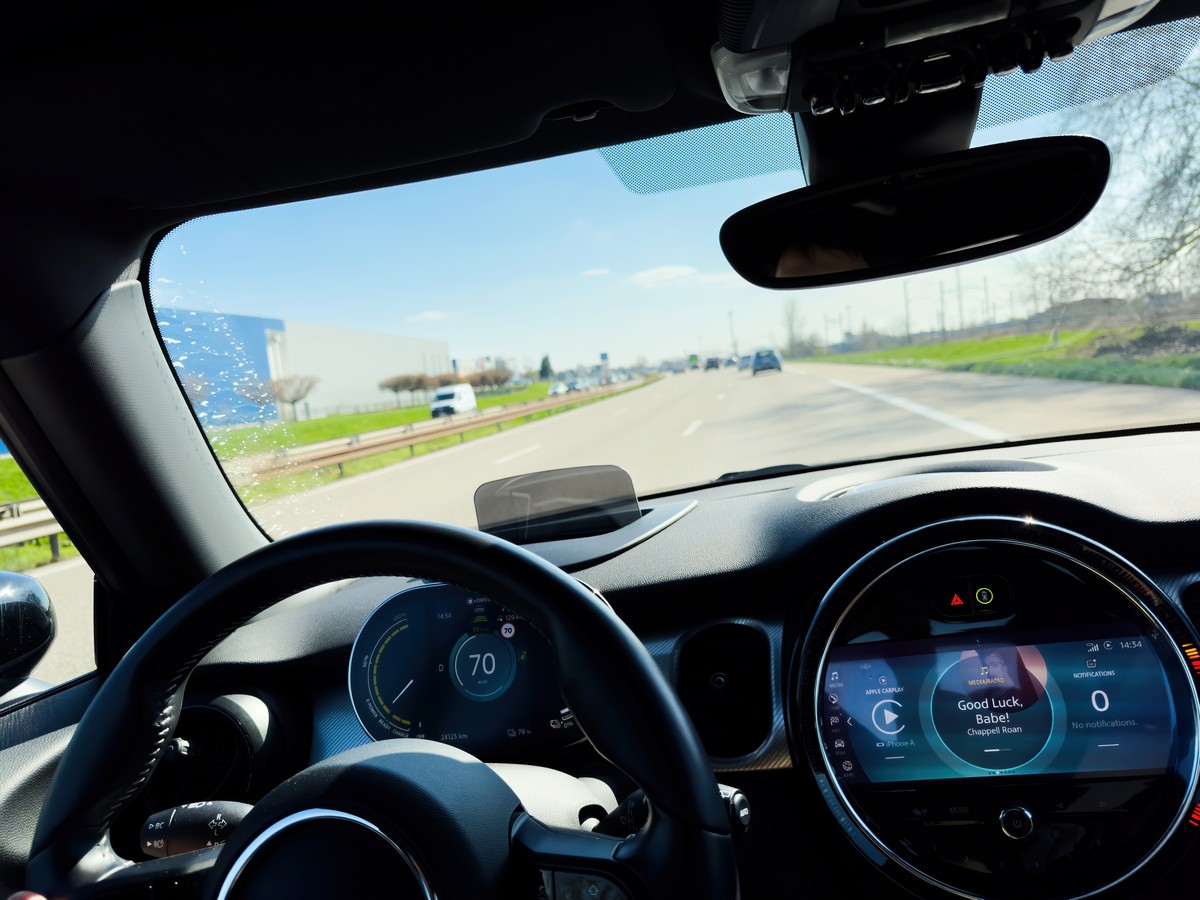
The automotive industry is constantly evolving. New technologies are integrated into our vehicles and help drivers travel more safely and comfortably. A trend that is evident in the global market for driving-assistance systems, which has basically doubled to reach 120 billion euros. Today, in new models, driver-assistance features can provide an alert in case of lane departure or, in some cases, offer lane-keeping. But the ultimate goal for automakers is to achieve the autonomous car.
For reference, this refers to a vehicle capable of moving from point A to point B without driver intervention. China and the United States have heavily developed this technology and now hold a real edge over Europe. On the Old Continent, manufacturers must comply with regulations and not exceed Level 2.
By way of comparison, according to Valeo, in the United States, 500,000 paid rides per week are carried out by an autonomous taxi. In Europe, this figure is almost zero.
A Gap Narrowed, But Not Until 2035
Against this backdrop, Valeo has decided to publish its official figures and estimates. The firm also believes that Europe could catch up with the United States in terms of autonomous driving around 2035. This projection covers Level 3 autonomy as well as Levels 2+, and 2++.
When it comes to Level 4 autonomy, i.e., a journey where the vehicle no longer requires the driver’s action, Europe would still be significantly behind China. Valeo notes that in the Chinese market, a LiDAR has become as mandatory as having a safety feature in the equipment used to promote the vehicles. According to Valeo, to succeed in developing the Level 4 autonomous car, you would absolutely need three LiDARs, eleven cameras, eight radars, and twelve ultrasonic sensors. Without this, safe operation, especially for avoiding obstacles, will be difficult. All told, Europe’s industry is well behind at this level.
Valeo does, however, have a project: a fully autonomous Level 4 parking system in the United States, aboard a BMW. Once that project proves successful, the company plans to roll it out in Europe.