Urban redevelopment works around the Plaza de San Miguel and the Coso, in the very heart of Zaragoza, have recently brought to light a Roman structure that had been hidden beneath the city for centuries. We are talking about a portion of an arcade located roughly four meters below ground and built with opus caementicium, the characteristic concrete of Roman engineering.
Specifically, archaeologists from the City Council of Zaragoza believe it could be part of the remains of a bridge erected during the early decades of Caesar Augusta’s existence. In fact, they think the structure would have served to bridge a ravine that followed the route of today’s Coso during Roman times.
Additionally, there is another possibility that makes the discovery even more intriguing: that it might have served a water-related function as well (something along the lines of a bridge-aqueduct) transferring water from the Huerva River into the interior of the city. According to José Juan Domingo, head of the Municipal Archaeology Service, this remains a hypothesis that still needs further study.
A Roman structure that could reshape Zaragoza’s map
This significant find appeared last March in the trenches opened at the corner of the Coso and Espartero Street, and it is especially important because it is the first such structure documented to date in Zaragoza.
Its location also offers a crucial clue about how the ancient Roman colony was organized, for archaeologists say the remains found in these excavations confirm that Caesaraugusta extended to the Huerva River from its earliest days. In this way, the area between the Coso and the river would not have been a peripheral neighborhood or vicus, as had been suggested until now, but part of the city that had been consolidated from the early years of the colony.

The structure could also help illuminate the primitive wall of opus caementicium (the course of which between the Coso and Calle Asalto has not yet been precisely determined) and, in turn, to better understand how water was supplied and distributed in Roman Zaragoza. For decades archaeologists have been weighing various hypotheses about this system, and the new discovery allows them to revisit them.
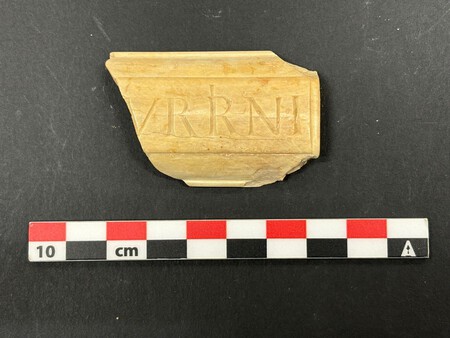
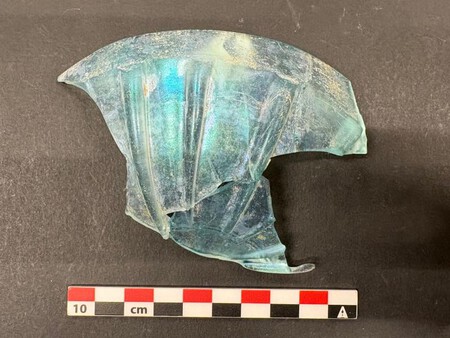
Excavations have also brought to light other traces from different eras, such as Roman pavements, remains of the medieval wall, the Duke of Victoria Gate, an eleventh-century Andalusian courtyard, and part of the old sewer system. In addition, numerous archaeological objects have been recovered, some notable for their artistic quality or their good state of preservation, which are now being cleaned, studied, and catalogued by the municipal services.
Four meters beneath the asphalt, with more history to uncover
Following the discovery, technicians documented the structure through archaeological drawing, photography, and 3D scanning to record its condition, features, and location. Once this portion of the construction was studied, it was protected and left in situ beneath the street pavement. This is a common approach in this kind of intervention: the remains are kept buried after documentation while urban renewal works continue.
However, covering the structure does not mean the research is finished: archaeologists still need to determine whether the rest of the arcade extends underground and, above all, how far it reaches to better establish its function. For this reason, the City Council plans to carry out a new archaeological trench in the area.
These works will be carried out in coordination with the connections for the underground pipes between the square and the Coso, so that both interventions can progress simultaneously. It should be noted that Zaragoza’s subsoil presents an additional challenge.
Many urban interventions conducted in the past altered the buried remains, and, according to José Juan Domingo, head of the Municipal Archaeology Service, “until the 1980s there was no systematic patrimonial control over the city’s constructions.” Therefore, every structure that can still be studied provides especially valuable information for rebuilding how Zaragoza evolved over the centuries.
Images | Zaragoza City Council