At a Glance
Range Rover says it plans to step away from the giant-screen trend in its upcoming vehicles, while declining a full comeback of physical buttons. This new philosophy will debut on the Range Rover GT, scheduled for 2027, to cultivate a calmer cabin atmosphere. Controls will largely rely on a discreet central display and voice commands, preserving connectivity without visual overload. This shift aligns with the brand’s aim to redefine luxury and will be gradually rolled out across the lineup.
In recent years, interiors of premium cars have looked like true walls of imagery, with oversized panels covering the dashboard. Many drivers have spoken of digital fatigue, and some even clamored for the return of good old buttons. And now Range Rover is changing course… but in its own way.
The British automaker is signaling a new cabin philosophy: less digital surface area, giant screens that fade away gradually, but without bringing back a brigade of physical keys. This approach will begin with the upcoming Range Rover GT, an electric model announced for 2027, before being rolled out across the rest of the range. A promise of a calmer interior atmosphere, which raises a fundamental question: how do you operate all functions without multiplying either screens or buttons?
Fewer Giant Screens, More Discretion in the Range Rover GT
For its future models, the brand is clearly aiming to end the screen overkill. Range Rover even uses the term “visual and acoustic noise” to describe the flood of displays in modern interiors, a choice of words that signals how worn out many drivers feel in daily use. Martin Limpert, the brand’s global chief executive, sums up this intent with a straightforward line: “We liberate our cabin from all of that. That’s what makes us unique… we will continue to evolve.” The idea is simple: in a luxury model, the star should be the car itself, not the screens.
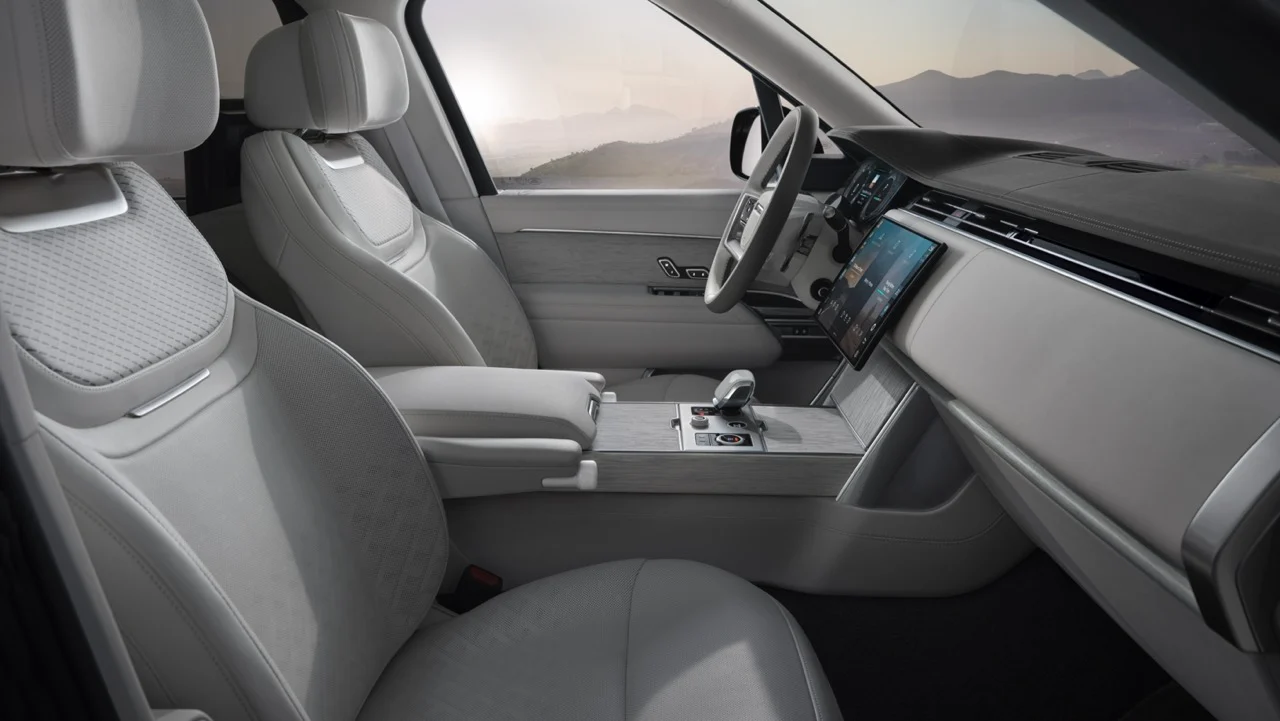
Specifically, the Range Rover GT uses a very slim digital instrument cluster behind the wheel, paired with a large central display that sits lower in the console to avoid that wall-mounted screen feel. This screen handles most of the infotainment, while the driver maintains a dedicated display for driving information. The cabin remains connected and tech-forward, but the visible screen footprint is reduced, and the interfaces no longer aim to be the centerpiece of the design. A deliberate pivot, especially as many rivals still lean on full-width panels spanning from pillar to pillar.
No Return of Physical Buttons, Tech Takes the Lead
Those hoping that trimming the screen count would be accompanied by a broad resurgence of physical buttons will be disappointed. Range Rover makes it clear that dashboards covered with switches of every kind will not come back. The brand intends to use technology more selectively, embedding controls within the interior architecture without letting them dominate. On the GT, most functions go through the central screen, complemented by a handful of essential controls kept in hard form—things like window switches or certain safety functions. And for everything else, the brand bets on voice control, promising a conversational approach to adjusting vehicle settings.
Another strong signal: Range Rover isn’t entering the passenger-screen race. Internal data suggests those co-pilot displays are too rarely used to justify the space they occupy. The philosophy stays consistent across the lineup: the Range Rover GT introduces a leaner cockpit where screens exist but are less intrusive, buttons are sparse, and the voice is poised to play a central role. Range Rover says this approach will gradually extend to all models, even as Euro NCAP 2026 standards push for better ratings for cars that retain some visible physical controls. It’s an intriguing contrast that will make future Range Rover interiors a case study in real-world driving as much as on paper specs.
Key Takeaways
- Range Rover aims to reduce the prominence of giant screens in its future interiors.
- The brand does not plan to reintroduce physical buttons en masse.
- Controls will be primarily handled by a discreet central screen and voice commands.
- This shift begins with the Range Rover GT, an electric model expected in 2027.
- The philosophy targets a calmer interior atmosphere, less dominated by digital tech.
- This approach will later be extended across the entire Range Rover lineup.
- The brand also rejects the idea of passenger-facing screens in its vehicles.
FAQ
Why is Range Rover dropping giant screens?
The brand points to digital fatigue and the “visual and acoustic noise” created by too many screens, aiming to craft a calmer cabin environment.
Will physical buttons come back in Range Rovers?
No, the brand indicates it does not intend to massively reintroduce physical buttons, preferring integrated interfaces and voice control.
How will the main functions be controlled?
The core functions will be managed by the central screen, supplemented by a few essential physical controls and an advanced voice control system.
When will this new philosophy be applied?
It will begin with the Range Rover GT, the electric model due in 2027, before being gradually rolled out across the lineup.
Will passengers get a dedicated screen?
No, Range Rover believes passenger screens are underused and has no plans to include them in its future models.