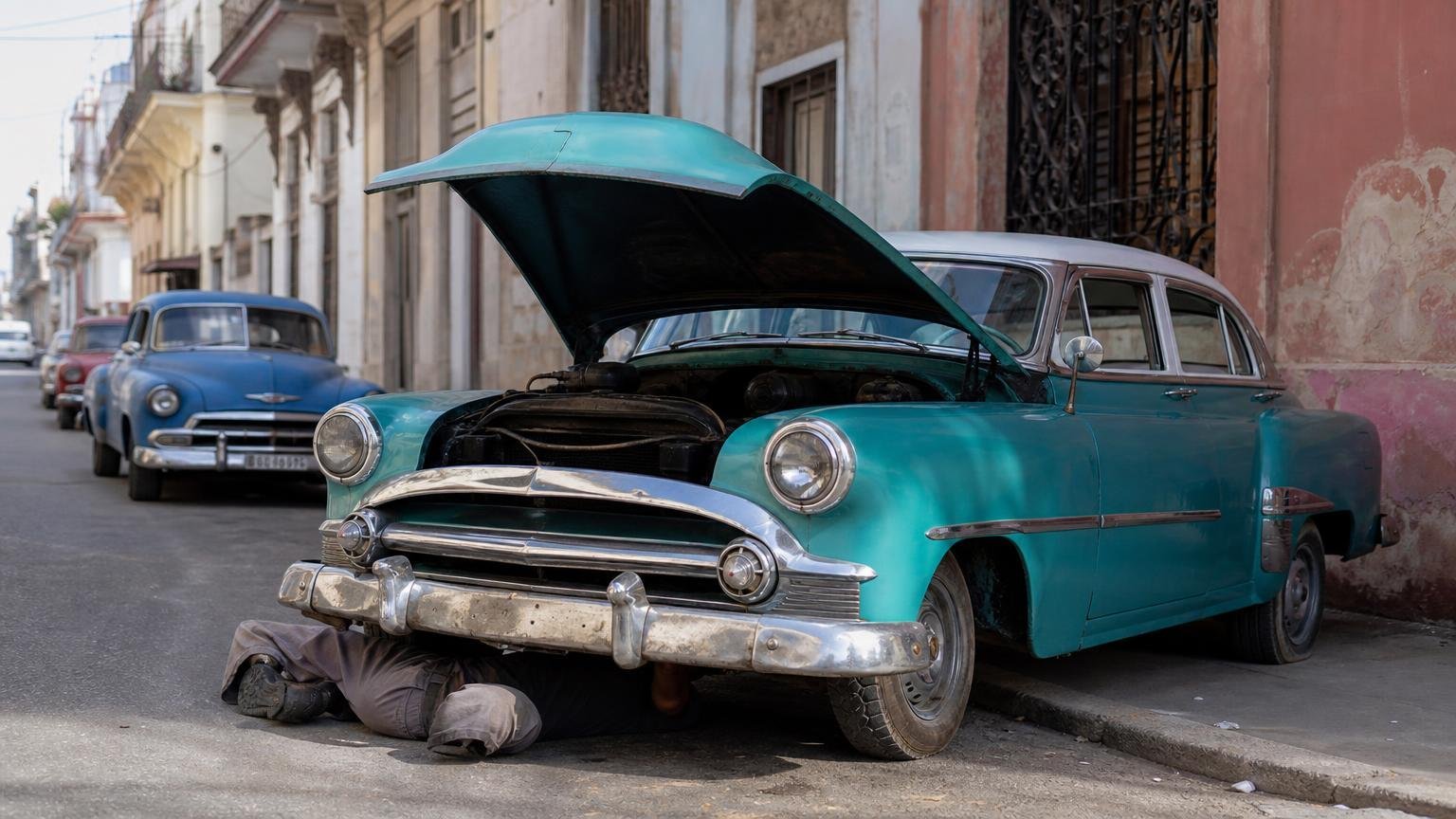
In Havana’s humid light, chrome still catches the eye like a signal from another era, and V8 burbles carry the heartbeat of the city. These cars are not museum pieces; they are workhorses stitched together with ingenuity, patience, and unflinching will. Every dawn, drivers coax another day from machines born when fins were fashion and gas was cheap. The story is less about nostalgia than about survival, less postcard romance and more problem‑solving.
Roadworthy relics
On the Malecón, you’ll see tailfins slicing sea spray, grilles like chrome grins, and dashboards glowing with old-school gauges. The bodies stay faithful to the ’50s, but the souls inside are remarkably modernized. “If it moves, we make it live,” a driver says with a shrug, resting a hand on a two-tone door that’s worn smooth by years of work. The badge might read Chevrolet, but under the paint lies a collage of eras, countries, and solutions.
Ingenuity under the hood
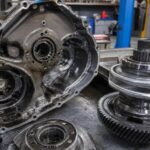
Open one of these hoods and it’s a living archive, a syllabus of Cuban mechanics. Carburetors get rebuilt with handmade gaskets, brake cylinders honed on backyard lathes, and wiring looms reimagined with careful logic. Diesel swaps from buses, trucks, and Soviet-era sedans are common, chosen for torque and thrift. What can’t be found is fabricated; what can’t be fabricated is improvised.
Parts arrive by circuitous routes, but most are conjured from local talent:
- Salvaged assemblies from retired fleets, stripped with care and cataloged with memory
- Home-turned bushings, sleeves, and spacers to calm ancient rattles
- Universal pumps, filters, and hoses adapted with brackets and bravado
- Rewound starters and alternators, rebuilt for charge and crank
“Nothing fits, and then suddenly everything fits,” a young mechanic laughs, wiping grease from his knuckles. He points at a radiator fan bracket, cut from scrap and painted a cheerful blue. “You don’t buy answers here—you build them.”
Economics of endurance
New cars exist, but prices soar beyond reach, and spare parts multiply the math. Old Chevrolets became family enterprises, mobile assets that can feed a household. As colectivos—shared taxis—they run prescribed routes, shuttling workers, students, and stories. Fuel is rationed by availability and rumor; maintenance is planned around scarcity, not convenience or calendar.
A driver explains the calculus with calm precision: “I spend to save, and I save to roll.” A carefully tuned diesel sips less fuel; a hand-turned bushing postpones an import. Sunk costs dissolve into moving targets, amortized by trips that keep the city circulating.
Culture and identity
Beyond balance sheets, these cars carry memory. They feature in wedding photos, quinceañeras, and tourist daydreams, but also in ordinary errands and late-night rides. The paint jobs—pastel, candy, or dignified primer—speak of pride sustained by grit. Inside, cracked steering wheels shine where countless palms have held on through storms, breakdowns, and fixes.
They are not just vehicles, they are neighbors. “My grandfather bought this car when Havana had more theaters than taxis,” a man recalls, patting the hood like a family dog. “I keep it going so we remember who we were, and who we still are.”
Fumes, fixes, and the future
There’s a price for longevity: exhaust that bites the throat, engines tuned by ear, and compromises baked into every improvised repair. Some owners fit electronic ignitions, better seals, and improved cooling to reduce waste and extend life. A handful experiment with electric conversions, scavenging motors and controllers from wherever they can be found. Progress comes not in leaps but in increments, the city learning to breathe a little easier.
Still, the pavement teaches patience and craft. Each detour becomes a lesson, each fix a transferable skill that outlasts the parts themselves. The cars serve as rolling classrooms, where apprentices learn torque by feel and metallurgy by necessity. When an engine should have died, it is coaxed to idle, and when it should have stalled, it lurches forward—a testament to hands that refuse to let motion end.
Why they endure
They endure because ownership is history, because scarcity hardens resolve, and because movement is a form of freedom. They endure because a city is more than its buildings; it is the rhythm of people going from home to work, from market to malecón, from breakdown to rebirth. Each passing Chevy is a small defiance, a bright streak of stubborn hope wrapped in steel and graceful lines.
Watch one glide past, paint glowing in late sun, and you see more than metal and grease. You see a compact treaty between past and present, signed daily by drivers who choose to continue. Against long odds and longer nights, the wheels keep turning. And the city, in turn, keeps its promise to move.