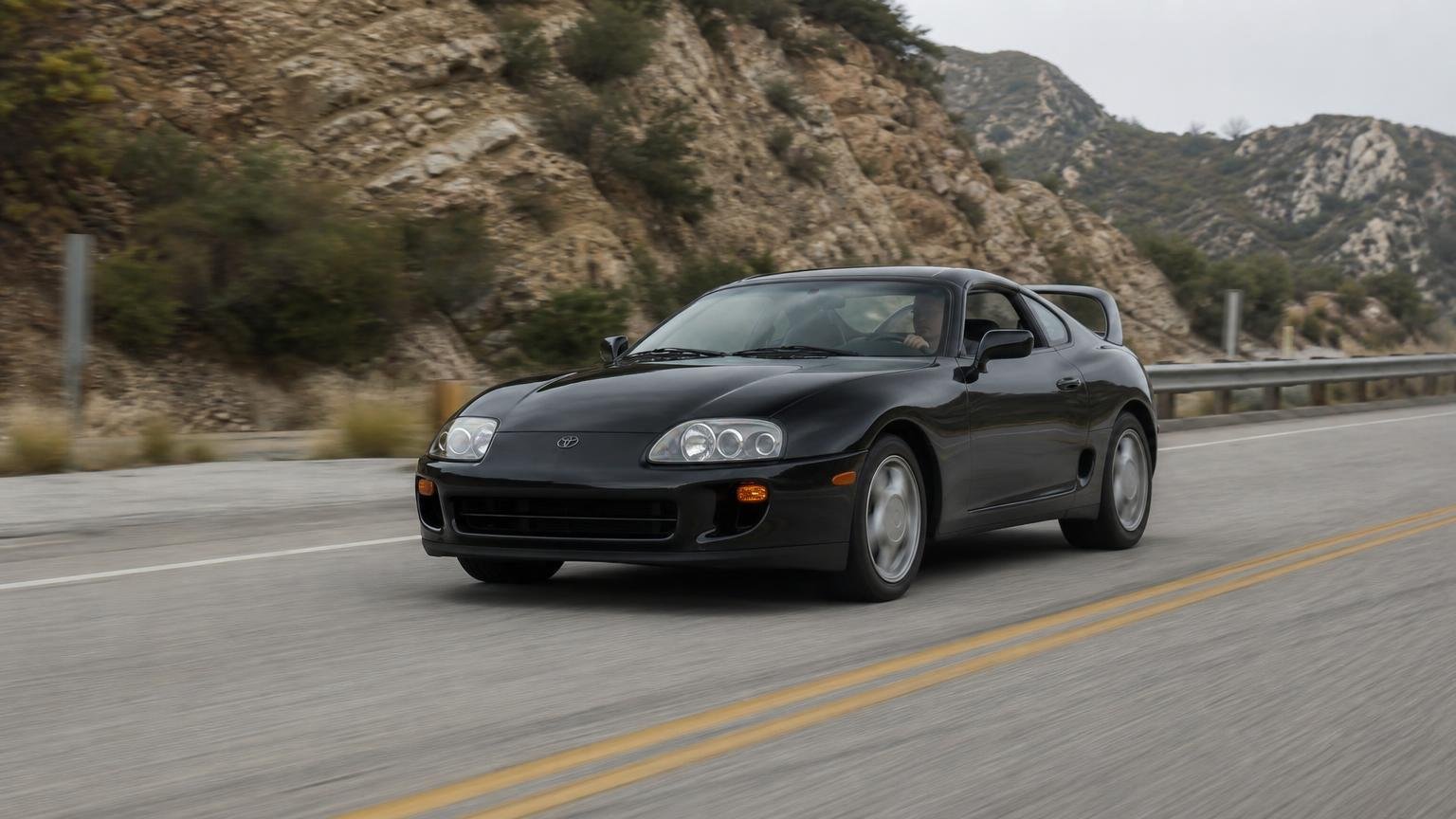
The key turned, the straight-six caught, and the cabin filled with a faint, mechanical hum that felt instantly, unmistakably authentic. In an era of drive modes and sound synthesizers, this old Toyota slid into gear with a soft, clean click and an almost giddy sense of purpose. Ten minutes in, we were already muttering, “This is how it’s supposed to feel,” and wondering why so many modern sports cars feel so busy.
First contact
You sit low, framed by thin pillars and a broad, unfussy dash punctuated by honest, legible gauges. The steering wheel is slim, its rim modest, the rim’s texture grainy, the spokes refreshingly plain. Nothing here tries to impress you; it just wants to work, and it whispers that you should drive.
Power that breathes
The 3.0‑liter 2JZ‑GTE wakes with a dry, confident snarl, then builds boost in a way that feels human. The sequential twins trade off like practiced musicians, swelling torque with a silky inevitability that modern torque tables often smother. At 3,500 rpm it’s awake, by 5,000 it’s urgent, and all the while the note stays clean and metallic, not a curated playlist pumped through the speakers. “It shouldn’t feel this good,” someone said in the passenger seat, “but it feels exactly right.”
Control surfaces, not filters
The six‑speed Getrag clicks with firm, buttery resistance and a short, certain throw. The clutch is meaty but friendly, finding the bite with a predictable arc and zero artificial assist. Steering effort rises naturally with load, the hydraulic rack sending a fine drizzle of road texture through your palms. You don’t pick a mode; you pick a line, and the car answers with clear, unfussy language.
Numbers that still matter
By paper, it’s “only” around 320 hp and roughly 3,400 lb, a spec sheet many 2026 hot hatches casually dwarf. But the gearing is right, the response is clean, and the traction is resolutely mechanical. It’ll hustle to highway speeds with ease, pull hard past prudence, and breathe in long, elegant strides that make modern thrust feel strangely staccato. What the numbers miss is the way the car encourages commitment, then pays you back in rhythmic, repeatable confidence.
Chassis that talks back
On a favorite two‑lane, the body breathes over ripples with a supple, analog honesty, never crashing, never floating. Mid‑corner bumps tickle the wheel, the seat, your spine—information, not alarm. Lean is present, but it’s the kind of lean that communicates grip, slipping gently into a neutral, poised attitude. Compared to so many modern setups that chase lap times with brittle resolve, this old Toyota prioritizes trust and timing.
Design that earns the stare
From the outside, it’s pure long‑hood, cab‑back, targa‑optional drama, but with lines that stay shy of cartoonish theatrics. The proportions are classic, the surfacing clean, the stance purposeful without aftermarket posturing. Park it next to a new super‑coupe and it doesn’t look slow; it looks focused, like a runner in flats among hikers in carbon boots.
What modern cars could relearn
New sports cars are dazzling—massive grip, active aero, wild computational bandwidth—but many feel like you’re emailing the road rather than writing it by hand. This car hands you a pen, slides over the paper, and says, “Your turn.” A few minutes in, you stop thinking about features and start thinking about flow. The sensations stack: clutch, gear, weight, boost, and suddenly you’re synced to a living, predictable clock.
- Buy‑in is emotional before it’s numerical: steering that’s alive, a powerband that breathes, and controls that respond with texture instead of menus and modes.
The sound of sincerity
“There’s no fake bass, no digital throat,” our photographer laughed, window cracked, mic down. Turbo hiss edges into a light chirp, the wastegate whispers, and the exhaust draws a fine silver line behind the car. None of it is loud by modern standards, but every note has meaning. You’re hearing combustion, gear mesh, and airflow, not an engineer’s playlist.
Living with it, not just lusting for it
Ergonomics are sensible, sightlines are real, and the cabin feels compact but not cramped. Switchgear moves with a determined, plasticky charm that still functions like it was built to last. The ride is compliant enough to daily, poised enough to play, and it asks for attention without demanding your sanity.
Why it lands so hard in 2026
Because so many fast things today are also busy, defensive, and preoccupied with proof. This one doesn’t try to prove; it just is. The power is enough, the weight is honest, the feedback is rich, and the experience is stitched together by your hands. Drive it, and you’ll wonder why we let convenience and capability crowd out character. Step out, and you may realize the most modern feeling on the road can still come from something resolutely, beautifully old.