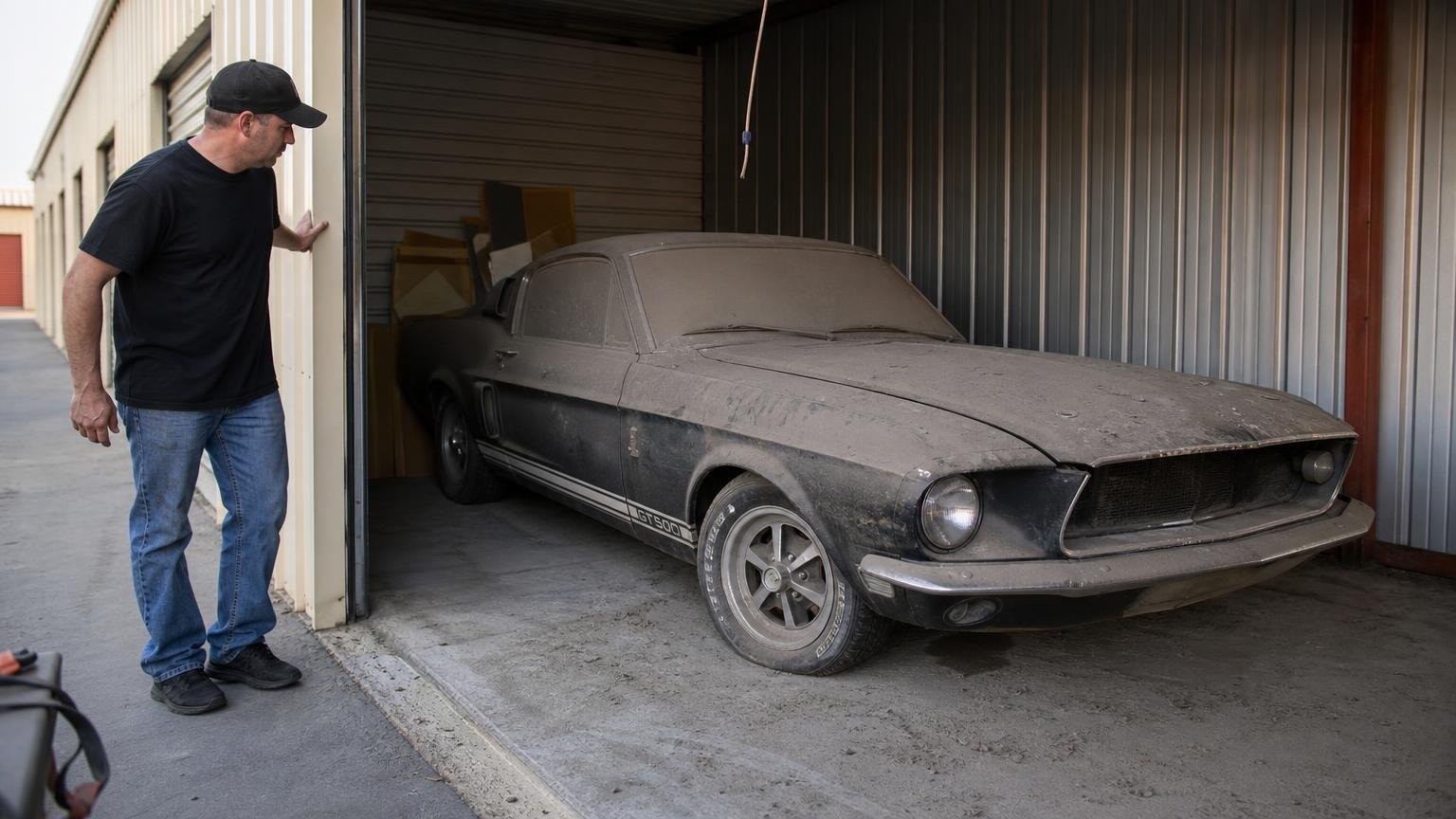
He stood at the roll-up door with a winning ticket and a nervous laugh, the kind of half-smile people wear when chance meets intuition. The unit smelled like concrete and old cardboard, a muted perfume of forgotten plans. Dust hung in the beam of a flashlight, and somewhere inside came the soft scuff of his boots on grit. “If I find just one good thing,” he whispered, “this will feel worthwhile.”
A gamble at the edge of town
The auction had been all shrugs and shrill bids, the regulars tossing numbers like coins into a fountain of habit. He kept quiet, playing the long game, watching who twitched at which lot and who stared too long at the taped-up corners. The unit was poorly labeled, light on promises, and perfectly priced for a reckless yes.
Breaking the lock
The padlock popped with a report, and the door rose with a groan that raked the room like a bow across a dusty cello. Boxes tilted in odd stacks, a moth-bitten tarp drooping like a tired curtain. He tugged the fabric and saw a nose, then a grille, and finally a stripe beneath the powder of long seasons. “No way,” he said, voice going thin and bright, “that’s a Shelby.”
Under the dust, a legend
Parked like a secret, the 1967 Shelby GT500 wore dust with dignity, each speck a badge of survival. The Le Mans stripes peeked through, as if the car were breathing after a deep sleep. He traced the fender with a trembling finger, and the metal felt both cold and strangely alive.
Chasing the truth
Anyone can stencil a snake on a hood; proving a real GT500 takes paper and numbers that match. He found a brittle envelope in the glove box, service slips and a hand-signed receipt from a small-town dealer in 1968. The VIN stamped on the apron synced with Shelby records, and the data plate told the same story.
What time did to it
Time had combed through the interior, cracking the dash and blanching the seats to a kind of noble ash. The tires were square, the fluids feral, and the belts had the texture of old bread. Still, the panels were stunningly straight, the gaps even, and the frame outrageously solid for something that had slept this long.
The heart beneath the hood
He lifted the hood with reverent care, revealing the 428-cubic-inch V8, a cathedral of cast iron and stubborn will. Hoses slumped like vines, clamps blushed with rust, but the original air cleaner wore its sticker like a crest. “It smells like old victories,” he said, “and a little like mice.”
Calling in a second pair of eyes
A local mechanic, equal parts poet and pragmatist, came with a magnet and a mood. “You can fake paint, but you can’t fake history,” she said, tapping the quarters and nodding at the unmolested spot welds and factory seams. Her verdict was patient and plain: “This is the real thing.”
First steps toward revival
He promised himself no reckless starts, no key-in-and-hope moments, only careful stages that respect old bones.
- Drain every old fluid, inspect for glittering grit, and log what the engine is trying to say.
- Replace perishables—hoses, belts, filters, and soft lines—with quality, period-appropriate pieces.
- Scope the cylinders, test compression, and oil the rings for a gentle turn by hand.
- Wake the ignition with fresh contacts, correct dwell, and a measured spark.
- Bleed the brakes to clean amber, confirm flex lines aren’t ballooning, and verify master cylinder health.
- Document every step, preserve patina where it tells honest time, and resist needless shiny fixes.
Why the car matters
The 1967 Shelby GT500 is a threshold, a car that turned brute strength into directed purpose. It carries the aura of circuits and long American roads, of weekend warriors and midnight tunes at half-lit garages. In a world of disposable updates, it remains a durable idea made of steel and sound.
Money, meaning, and the middle place
Value talk arrived fast, gleaming like a lure and humming like a bee. Restored examples command figures that reset bank accounts, while survivor-grade cars write their own premiums in the margins of auctions. “I didn’t buy a jackpot,” he said, “I bought a responsibility.”
The life after the lock
He swept the floor, labeled each bolt, and let the car teach its pace. Neighbors began to drift by, drawn by the soft alchemy of chrome and story. In the hush between wrenches, he could hear the old engine clear its throat, asking only for patience and a fair chance.
The unit is empty now, except for a workbench and a slow-beating hope, the kind that comes from doing things right rather than fast. Under a cleaner tarp, the Shelby waits, a fast future idling in the quiet present. “Some finds make you richer,” he said, “but this one makes me more careful.”