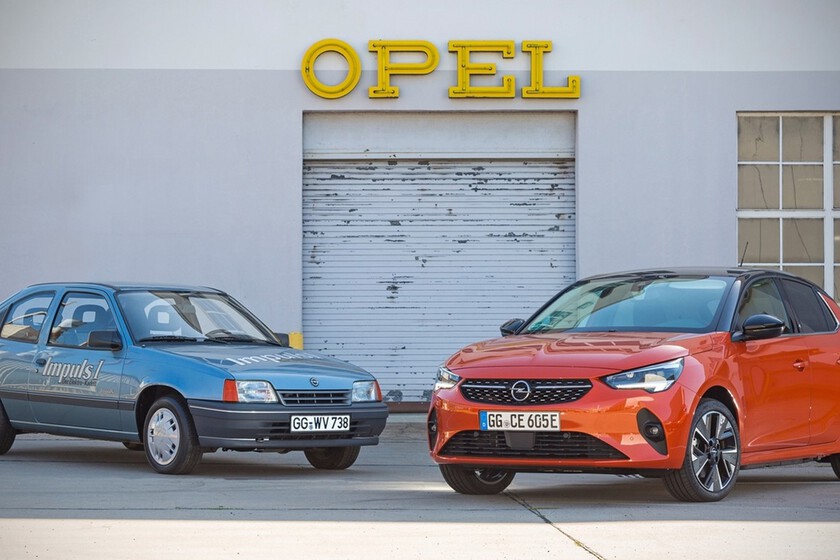
The 2020 Opel Corsa-e marked Opel’s first electric car in its modern era. The sixth-generation Opel Corsa and its electric variant share, with the Peugeot e-208, the e-CMP modular platform; yet long before these synergies existed, Opel had already fielded zero-emission cars in its ranks.
The very first, and what we can now call the ancestor of the Opel Corsa-E, is the Opel Kadett Impuls I, an electric car born at the end of the 20th century as an experimental vehicle and laboratory for electrification technologies.
Opel Kadett Impuls I: the precursor of the Opel Corsa-e

More than three decades ago we could hardly imagine how much the world of mobility would change. In just a few years we have gone from not worrying at all about pollutant emissions to a car universe that orbits around the imperative to decarbonize manufacturers’ catalogs.
The expansion of electrified, hybrid, and fully electric vehicles is already unstoppable, but a few years ago there were manufacturers eager to experiment with electric propulsion. Some time ago we discussed the Mercedes-Benz 190 E Elektro, a 100% electric German compatriot with the same objective as the Opel Kadett Impuls I: experimentation.
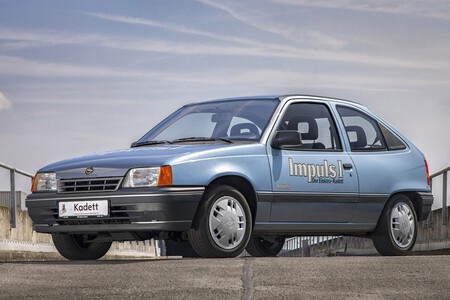
Based on exactly the same platform as the combustion Kadett (and its production version), the Opel Kadett Impuls I was conceived years ago with the goal of creating a city car that produced no emissions while being manufacturable with the technology available at the time.
With virtually no one worrying about how to create cheap electric cars at that moment, Opel decided that the best way to introduce electric mobility was to use materials, techniques, and solutions already known. Another part of the challenge the brand set was to ensure interior space and cargo capacity were not compromised by the transformation.
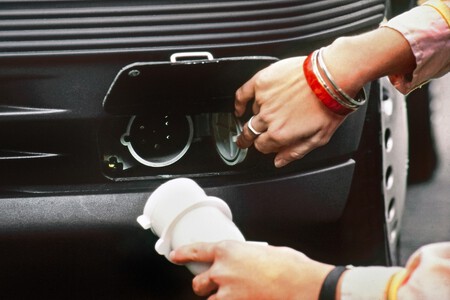
Thus the Kadett Impuls I emerged from the collaboration between Opel, the energy company RWE, and battery makers SAFT. The vehicle was powered by a 100 V DC electric motor driving the front wheels with a modest 16 kW (22 hp). Performance was likewise restrained, achieving 0-50 km/h in about 10 seconds and a top speed of 100 km/h.
This was achieved thanks to a nickel-cadmium battery pack located under the engine bay, with the charging system placed beneath the trunk floor. The battery pack alone weighed about 310 kg and could store 14.3 kWh of energy, occupying 170 liters of space.
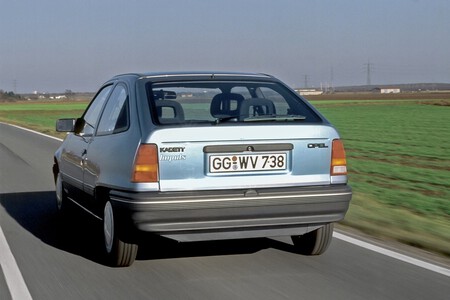
In total, the Opel Kadett Impuls I could cover up to 80 km per full charge, theoretically enough for daily urban trips for its era. The estimated recharge time was about 5 hours.
The weight of the vehicle in running order was about 1,000 kg, quite high for the era, especially considering that the gasoline Kadett E it was based on weighed 840 kg. In the end some interior space was sacrificed, reducing the trunk volume by 60 liters (to 330 liters) and payload capacity by 140 kg (to 350 kg).
According to the manufacturer, the Kadett Impuls I featured partial regenerative braking to recover kinetic energy during decelerations. They also note that it could handle slopes of up to 25%, albeit likely at very limited speeds.
The Opel electric lineage
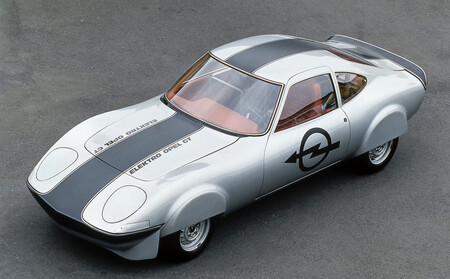
Opel Elektro GT of 1971
While the Kadett Impuls I was the precursor to the current Opel Corsa-e, it was not Opel’s first foray into experimental electric cars.
Before the Impuls I also saw other vehicles such as the Opel Kadett B Stir-Lec I from 1968, equipped with lead-acid batteries that were recharged by power produced by a Stirling engine located at the rear. Yes, in this case the Kadett B Stir-Lec I was a range-extended electric car and can be considered the forerunner to the Opel Ampera.
But it did not come alone, as Opel was quite active in electrification in the second half of the 20th century. Three years later, in 1971, the Opel Elektro GT appeared. This was a pure electric car built for competition.
The Elektro GT driven by Georg von Opel (grandson of the founder) managed to set up to six world records, reaching a top speed of up to 188 km/h. To achieve this, the mechanism relied on two series electric motors with a combined output of 88 kW (120 hp) and a nickel-cadmium battery pack. Its total electric range was 44 km at a constant 100 km/h.
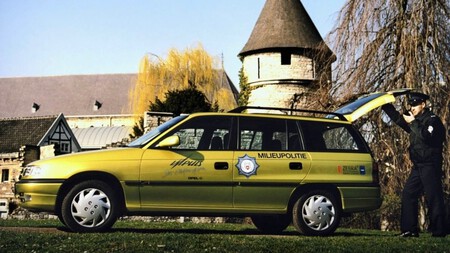
Opel Impuls III on the island of Rügen
Apart from these, there were also other more ambitious initiatives. After the Kadett Impuls I came the Opel Impuls II, based on the Opel Astra F with a station wagon body and a maximum power of 115 HP and 128 Nm of torque.
Later appeared the Opel Impuls III, creating 10 units on the Opel Astra Wagon platform for experimentation on the German island of Rügen, a site where the Mercedes-Benz 190 E Elektro was also tested.
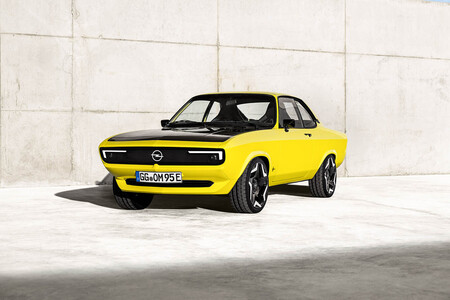
After those came in 1992 the Opel Twin in prototype form and the Opel Combo Plus in 1995. A lineage of Opel electric vehicles that culminated in 2021 with the Opel Manta GSe ElektroMOD, which we eagerly await a production variant for because it looks incredibly cool.

Looking for your next electric car and overwhelmed by so many options? That’s normal.
More than 45,000 readers have already tried it. And you?
Advice offered by the brand