At the end of 2025, the CEO of Volkswagen, Oliver Blume conducted an unusual internal survey. As part of anonymous audits, the eight members of the Group’s Executive Board, the designated CEO of Porsche, Michael Leiters, and the members of the Supervisory Board were asked to honestly assess the state of the industrial group. The results are eloquent, to say the least alarming: six of the nine members of its board of directors believe that the company is facing an existential danger.
According to Manager Magazin, which gained access to the results of a survey presented to the supervisory board in April, another three described the situation as “tense.”
Volkswagen, a group of directors even more pessimistic
Six of the nine members of Volkswagen’s board agree that the very existence of the Volkswagen Group is at risk. The other three label the situation as “tense.” This is how pessimistic the executives of the world’s second-largest manufacturer appear.
The diagnosis is unanimous on one point: the business model needs a profound redefining. But that is where the consensus ends. According to ‘Elektroauto-News’, four board members think management acts in a cohesive manner; the other four disagree. Among the fourteen members of the Supervisory Board, eleven share the same lack of faith in internal unity.

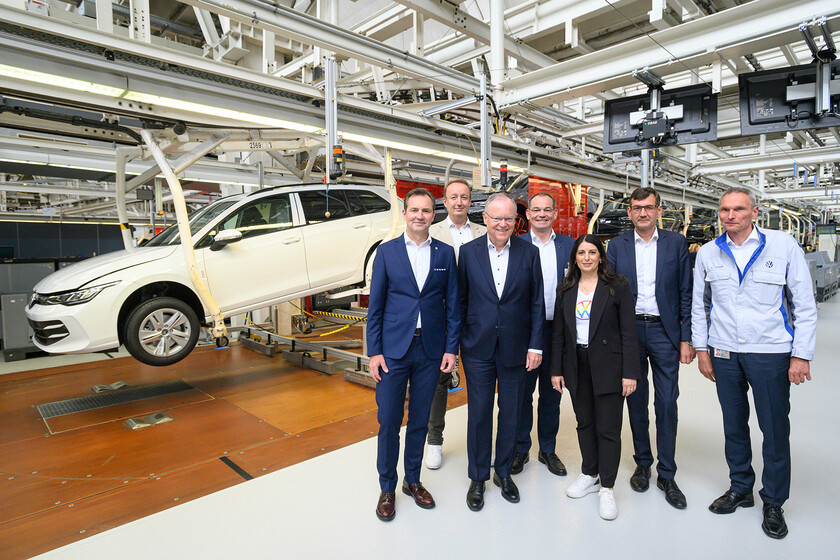
Dr. Michael Leiters, CEO of Porsche, and Dr. Jochen Breckner, a member of Porsche’s Finance and IT Executive Board.
The underlying problems are known. China has ceased to be the market that sustained the group. Local manufacturers offer more attractive products at prices Volkswagen cannot match, and the pride of owning domestic brands has taken hold among Chinese consumers. In 2025, the Volkswagen Group delivered 2.69 million vehicles in China, an 8% drop from the previous year.
In the United States, the 25% tariffs hit both the group’s Mexican plants (the Audi Q5, the brand’s best-selling model in the USA, is built in Mexico) and the cars assembled on American soil with imported parts.
Porsche, which relies heavily on the American and Chinese markets, is one of the brands facing the most difficulties. In 2025, Porsche posted revenue of €36.27 billion (a 9.5% drop) and an operating profit of €413 million, representing a collapse of 92.7%. Its sales in China, its first market, are plunging, and the shift to electric propulsion is advancing with difficulties.
On top of that, the Cariad software subsidiary failed, delaying key Audi and Porsche models, and the electric gamble has yet to catch the anticipated pace of adoption. Bentley incurs losses, and Audi is mired in a lull it is trying to overcome with new model ranges.
The German group posted results for 2025 that are the worst since 2016, the year after Dieselgate. And in the first quarter of 2026, things did not improve. The group’s net profit fell by 28.4% year on year, from €2.186 billion to €1.564 billion.
Part of the leadership also believes that the cost-cutting targets set by CEO Oliver Blume are untenable without scrapping the development of new platforms for future vehicles, which would call into question the group’s mid-term roadmap.
Images | Volkswagen, Porsche