
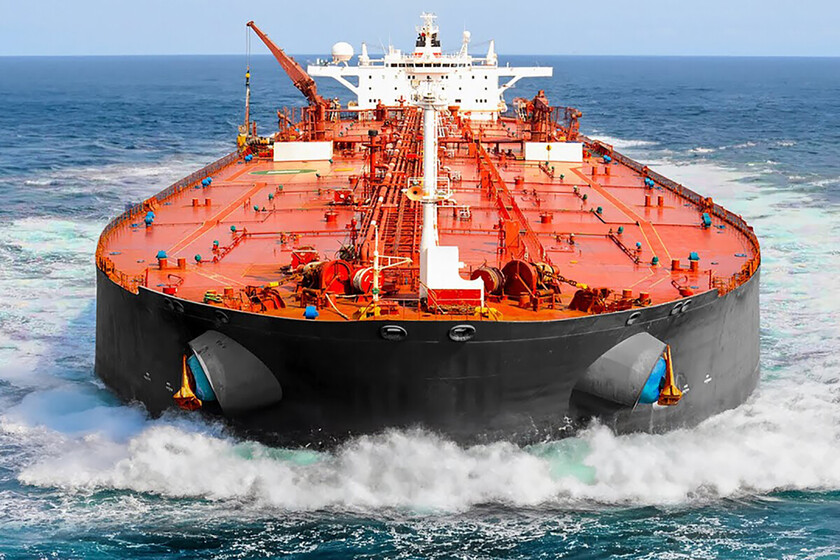
This Sunday, Donald Trump announced on Truth Social that an agreement had been reached with Iran and that he had immediately authorized the reopening of the Strait of Hormuz. The formal signing of the memorandum of understanding is slated for Friday, June 19 in Switzerland, with Pakistan acting as mediator. More than a hundred days after the conflict began, the planet’s most strategic maritime passage is once again open to shipping.
For consumers, it means cheaper gasoline and diesel, though we’ll see it play out over weeks due to the rocket-and-feather effect. For oil companies, however, it’s a major headache.
The Oil Rollercoaster
The news of a signing between the United States and Iran, announced Sunday night, sent crude prices in Europe down by about 4.5%. A barrel was trading at around $83 this morning, compared with about $97 at the start of August. In the United States, the decline was even sharper: the WTI crude barrel fell by more than 5% overnight, to around $80.
Before the US and Israel launched their military offensive against Iran, Brent traded near $72 a barrel. From that point, the market embarked on an unprecedented surge in recent times. The closure of Hormuz abruptly erased roughly 20% of the oil traded globally.

The Brent price briefly topped $126 in Asian markets—the highest since 2022, when talks collapsed and the United States threatened the possibility of a prolonged blockade. Now, with the reopening agreed, the barrel slides back toward $83: a drop of more than $40 in just a few weeks.
| Period | Brent Price (per barrel) | Context |
|---|---|---|
| January–February 2026 | ~$70–72 | Latent tension. Hormuz open, market nervous but stable. |
| Feb 28–March 2026 | $78–103 | Conflict begins. US and Israel attack Iran. Hormuz closes. Brent exceeds $100 for the first time since 2022. |
| April–May 2026 | $90–126 | Crisis peak. Prolonged blockade, broken negotiations. Peak of $126 on April 30—the highest in four years. |
| June 2026 (today) | ~$83 and falling | US–Iran agreement. Hormuz reopening. A 4% drop in a single session. |
Why this is bad news for the oil majors. The logic seems counterintuitive: more oil flowing should be good for the sector. It does not work that way when the price of crude largely hinges on fear. During the blockade, the market priced in a hefty risk premium per barrel. It wasn’t the actual cost of extracting or transporting the oil: it was the price of panic, of uncertainty about whether supply would hold tomorrow.
Analysts like Stephen Innes, of SPI Asset Management, warned that the risk wasn’t just a temporary disruption but a durable drop in production. That narrative held prices up. As it fades, the speculative bubble could deflate with little warning. Or almost none.
Even if the United States and Iran manage to clear the Strait quickly, it will take time for the tankers now in the Persian Gulf to reach their final destinations. Oil majors may also hesitate to deploy new vessels into the gulf, fearing that hostilities could resume and ships could end up trapped again.
Moreover, global oil reserves have fallen sharply since the war began. In May, they stood at 7.9 billion barrels, down from 8.2 billion before the conflict, according to the IEA. This figure, to be updated this week, is likely lower than last month. With the reopening, countries worldwide will seek to rebuild their stocks, which should keep prices elevated.
Still, Hormuz resuming to canalize crude from Saudi Arabia, the United Arab Emirates, Iraq and Kuwait means the market will receive volumes that were not anticipated. OPEC had already trimmed its production to 18.8 million barrels per day in May, about 34% below February levels.
When those flows normalize, supply could clearly outpace demand, especially if the economic slowdown sparked by months of high-energy prices has cooled consumption. The result is a brutal squeeze on margins. The oil majors sold into scarcity during the blockade. Now they will have to compete to move a production that is returning to abundance.
When will it show up at the pump? The mechanism is already familiar: pump prices rise quickly when crude soars, and they fall only gradually when it drops—the rocket-and-feather effect. The decline will come, but with weeks of delay compared to wholesale market movements.
The deeper takeaway is harsher than the barrel’s own plunge: the energy market does not fear resource scarcity. What frightens it, and what wipes out margins, is stability itself.


Looking for your next electric car and feeling overwhelmed by so many options? That’s completely normal.
More than 45,000 readers have already tried it. What about you?
Advice offered by the brand