
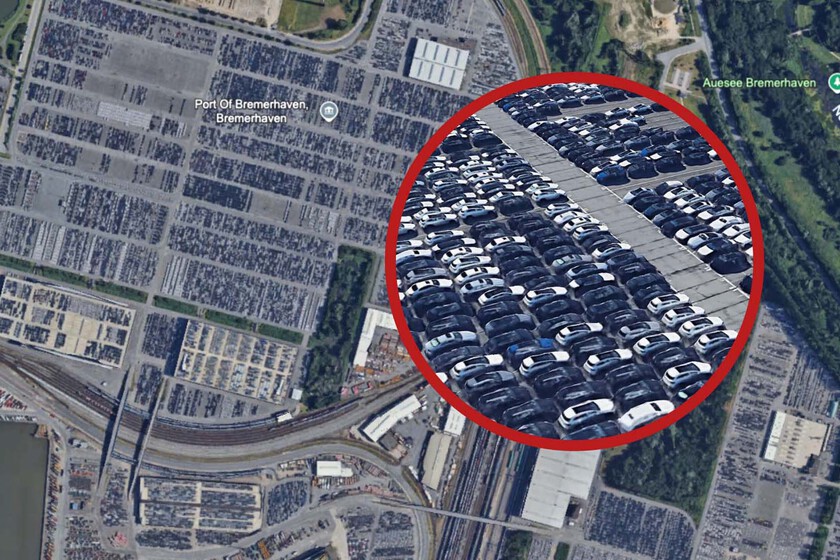
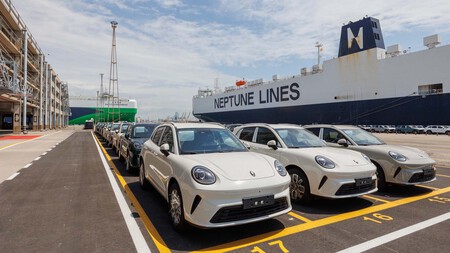
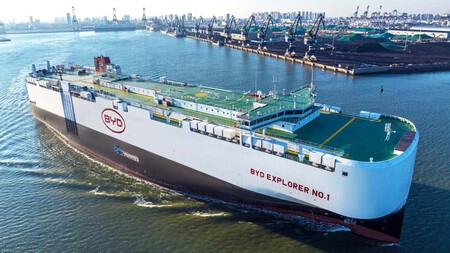
As Chinese manufacturers continue to contemplate the idea of setting up factories in Europe to produce here the cars they sell in our market, or striking deals with local producers to manufacture some Chinese models in their plants, the main way of bringing Chinese cars to Europe remains Ro-Ro ships.
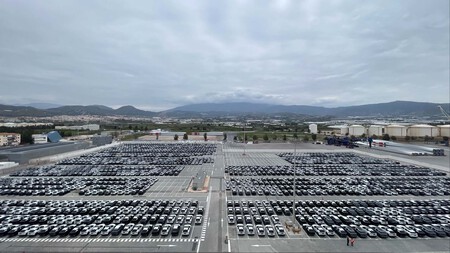
These massive vessels discharge thousands of cars at the major European ports. In theory, they should spend only a short time in the port yards, but they are parking there for months, as satellite images of port terminals such as Antwerp-Zeebrugge in Belgium, Bremerhaven in Germany, or Barcelona in Spain show.
Transit areas turned into long‑term parking lots
The large European ports where vehicles are discharged have enormous yards to park these vehicles once they leave the ship. In theory, these areas are meant for quick transit: the cars discharged from the ships should stay there only long enough to be loaded onto trains or trucks and distributed to European dealers or to other large yards that are part of the local transport network used by manufacturers and distributors.
However, that is not what is happening. Cars arriving in Europe from China on Ro-Ro ships are piling up in the yards of the major ports.

Satellite images of the yards at the Antwerp-Zeebrugge port complex in Belgium
How do we know this? Quite simply, because the satellite images of some of the ports where these Chinese cars arrive show thousands of tiny colored dots in the yards that do not move for months. They are not shipping containers, but cars.
Why so many cars parked for so long in these port yards? The Chinese brands have adopted an aggressive export strategy and have been sending ships full of cars to Europe for months without a sufficiently broad dealer network or a well-developed local transport network. While they are shaping that network of dealers and transport, they are using those yards as giant temporary storage lots.
Savage export before the cars have owners
What traditional brands have done for decades is maintain a strong dealer network through which vehicles are allocated. When there is an order, that car gets made. China has not done it that way: leveraging its enormous production capacity, it has manufactured the cars, exported them, and stored them in these yards waiting to be sold.
To put it into perspective, in the first quarter of 2026, China exported 2.2 million vehicles worldwide, up 57% from the same period last year, reaching historical peaks of nearly 900,000 cars exported per month. Europe is the primary destination for these exports.
Nor does Europe help with a shortage of carriers right now. There is a logistics collapse on the continent because car-carrying trucks and drivers are in short supply. With no one to move vehicles from the terminal to the interior, the cars end up parked in these yards.
On the other hand, the new Chinese brands do not have consolidated logistics agreements with large carriers, as traditional brands do. No matter how fast the cars arrive by sea, they hit a wall when they touch the dock.
Moreover,
Many of those unsold cars end up in Europe, as if our market were an outlet where the units unsold in their local market are dumped. Stopping production would be easier than sending us all those unsold cars, but Chinese factories cannot afford to stop the machines.
The problem intensified during 2024 and early 2025 because electric vehicle sales in Europe declined at that time. Since many of the cars the Chinese brands were bringing were electric, they sat for months on those yards.
At the same time, the tariff war prompted China to send more cars to Europe for fear of the European Union tariffs on electric vehicles manufactured in China.
Now more electric cars are sold in Europe, but the slowdown in sales of this type of model is occurring in China as well, so stock continues to accumulate in our yards as a lot of stock is brought to our market.
Lack of dealers and of a transport network
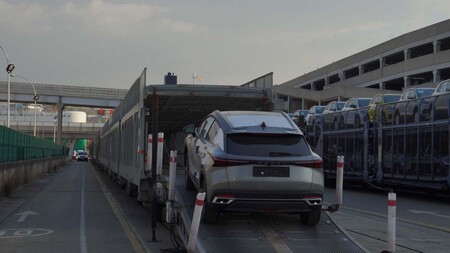
Some Chinese brands already have a fairly solid dealer network, such as BYD, Omoda, and Jaecoo, but others still have not had time to resolve this issue; in fact, many companies have just entered our market and barely have any sales points.
The major seaports are growing tired of this problem and are asking manufacturers to prove they have contracted transport for the cars they will unload before they offload them from the ship.
It is one of the ways to prevent terminal congestion because some Chinese cars stay in those yards for 12 to 18 months waiting to be sold or transported.
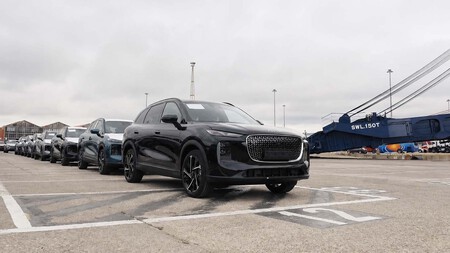
Beyond the congestion caused by so many cars parked in the same place for so long, when it is not a parking area intended to be a warehouse, but a transit zone, the majority of the vehicles left there are electrified. If a fire occurs, having so many electric cars parked together is not ideal.
Furthermore, salt spray and corrosion can be fatal for these models if they remain parked for so many months in these yards. And it should be noted that they receive no maintenance, much less periodic charging, so their batteries can deteriorate from disuse.
Images | GWM, Google Earth, BYD, Omoda, Lepas