There are many traditional manufacturers who have run smack into reality: they cannot compete with China. And this isn’t even one of the countries where building cars is cheapest due to labor conditions, yet it is the market that is swallowing the rest.
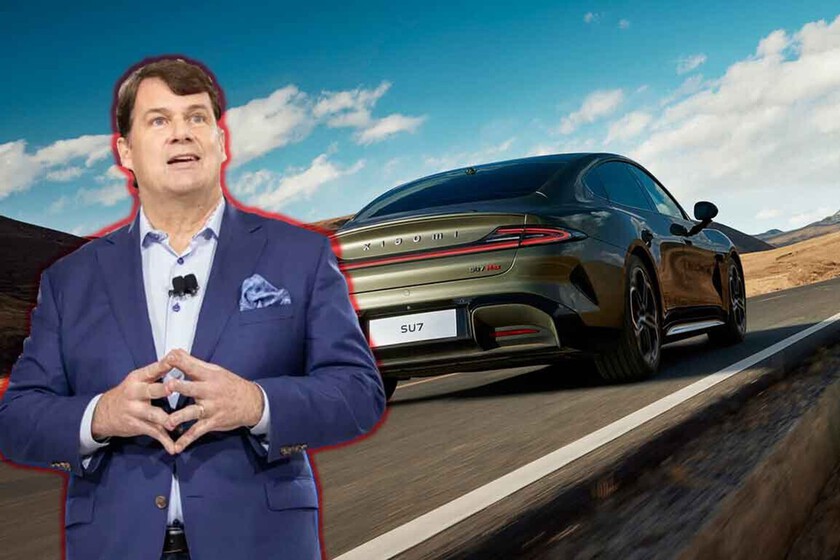
Jim Farley, Ford’s CEO, has long known that surviving will require following in the footsteps of the Chinese giants: Tesla is no longer the benchmark. And although there are lobby groups claiming that Europe is close to catching up with China, other data say otherwise.
If Ford’s boss is driving a Chinese electric car, there must be a reason
Farley, explained recently on the Rapid Response podcast that Tesla has ceased to be the reference, and that China is now the leader. The CEO has been driving a Xiaomi SU7 (an zero-emission SUV that racked up 90,000 reservations in the first 24 hours after its launch) to understand the key to the company’s success:
“If you’re American and you want us to beat the Chinese in the car business, you’re going to want to pay attention, not necessarily to Tesla. Nothing against Tesla, they’re doing well, but they really don’t have a current vehicle,” he explained.
For Farley the benchmark now is BYD, not Tesla, because Tesla has a very limited portfolio and no novelties for years: “The best in the business for us in terms of cost, supply chain, manufacturing experience and innovation is BYD,” he acknowledged. Ford’s roadmap includes launching a $30,000 electric pickup by 2027.
Environmental lobby groups have a very positive view… but is it realistic?
A recent study by Transport & Environment argues that thanks to more ambitious targets for 2025, the EU stands only three years behind China when it comes to electric car sales. And this is despite the fact that Chinese companies manufacture 60% of the electric cars sold worldwide, while their battery production is 20 times larger than Europe’s.

In just over seven months, Xiaomi produced 100,000 units of the SU7, from a single factory and with a single shift.
But the reality is that Europe cannot yet compete with the Chinese supply chain, their pace of production, and especially the labor costs. Some data point to manufacturing a car in China costing €10,000 less than in Europe due to taxes, wage costs, and the associated bureaucracy.
And the same goes for batteries: they are much cheaper since China holds the raw materials and the capacity to source and process them.
Find your ideal electric car
If you have considered buying an electric car, this will interest you. We have created the Personalized Electric Car Recommender, where in addition to seeing models that fit your needs you will also find answers to the questions you’re most likely to have about price, range, or nearby charging points.

Looking for your next electric car and feeling overwhelmed by so many options? It’s normal.
More than 45,000 readers have already tried it. What about you?
Advice offered by the brand