
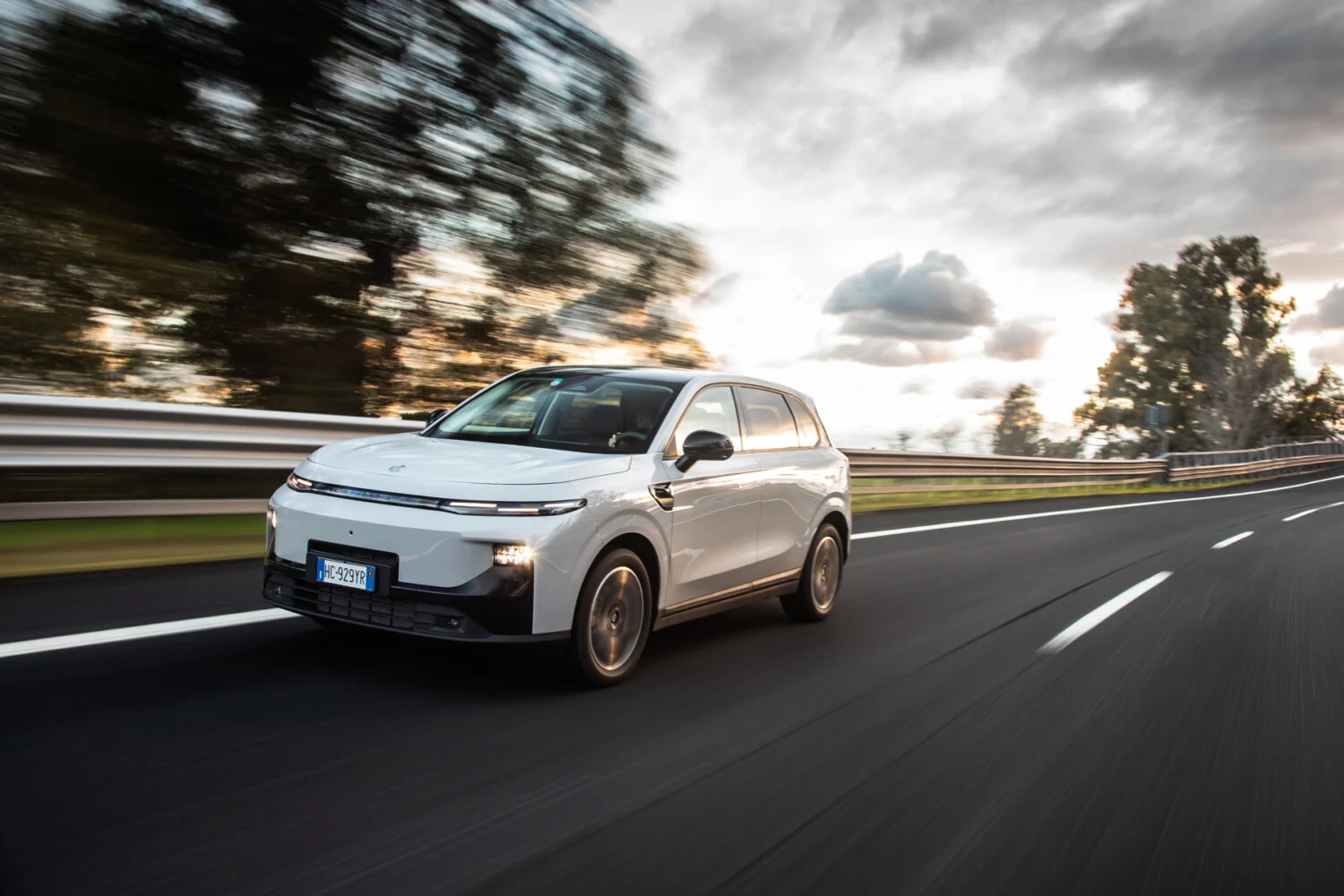
In a Nutshell
The Leapmotor B10 1.5 e-Hybrid blends the benefits of electric propulsion and a hybrid with a range extender, delivering smooth, quiet long-range driving. It stands out with an electric range of 86 km WLTP and a fuel consumption figure of 6.7 L/100 km thanks to its 68 hp gasoline engine used solely as a generator. Priced at €32,900, it positions itself as a competitive option among rivals in the segment and comes with a generously equipped standard package. Its comfort, interior space, and driving enjoyment are appreciated, though critiques focus on the ergonomics of the controls and drive-assist systems that can feel overly intrusive.
Although steadily improving, range, charging times that are still too long, and high prices remain the main barriers to buying a 100% electric vehicle. For this cautious, even reluctant, segment when it comes to switching to a “battery-powered” car, some manufacturers offer an alternative. This is the case with Leapmotor and its newest B10 e-Hybrid. The Chinese-brand’s compact SUV, a partner of Stellantis, already exists in fully electric form with two battery options: 56.2 kWh or 67.1 kWh. The maker adds a third version, still electric, but with a “range extender” to gain miles. In this extended configuration, the B10 e-Hybrid is marketed by its designers as more efficient than traditional plug-in hybrids. Here, the gasoline engine, a 68 hp four-cylinder, is not connected to the wheels. It serves solely to power the 18.8 kWh net-capacity battery. In practice, that battery provides 86 km of range on WLTP, according to the manufacturer. Once it’s depleted, on a long highway trip for example, there’s no need to stop to recharge. The four-cylinder engine takes over, acting as a generator and promising to feed the battery and thus the electric motor for up to 900 km — more than twice the range of the B10 electric ProMax with a 67.1 kWh pack, which would have to stop at a charger after 430 km.
Leapmotor B10 1.5 e-Hybrid 218 hp Design: A Pleasure to Drive
Behind the wheel, the driver enjoys the perks of a 100% electric-driving experience — smoothness, responsiveness, and near-silence — without the nuisance of constant recharging on the road. This idea isn’t entirely new. Before Leapmotor, BMW applied it to the i3, and today Nissan’s Qashqai and X-Trail e‑Power or Mazda’s MX‑30 offer similar tech. Quiet and composed, the B10 moves along in almost complete silence, with only wind noise becoming noticeable beyond around 110 km/h (about 68 mph). The cabin is so well insulated that the generator’s noise is more audible outside the car when stationary than inside while driving. The suspension strikes a balance between firmness and suppleness, keeping the car steady in bends while prioritizing comfort and smoothing out road irregularities. The driver even finds themselves pushing the pace, as the chassis feels lively and the rear-wheel-drive transmission delivers engaging sensations. It’s unfortunate that the steering doesn’t provide a stronger sense of road feel. It’s pleasant for maneuvering, but not as convincing at higher speeds. Another drawback: the power, though more than adequate at 218 hp, lacks consistency depending on the battery’s level. To optimize performance and fuel economy, you need to work with the four available modes: EV prioritizes electric driving. The four-cylinder engine recharges the battery only when it drops below 25%. In EV+, the generator starts even later, when the battery dips under 15%. This mode is intended for finishing a trip in full electricity to avoid burning any gasoline. In Fuel, the 1.5-liter engine runs intermittently to maintain the battery’s charge on long trips. Finally, in Power+, the gasoline engine runs continuously to guarantee high performance when the road gets tough (for example, in mountains) and the battery is low.
Leapmotor B10 1.5 e-Hybrid 218 hp Design: 6.7 L/100 km Consumption
Under these conditions, we recorded an average fuel consumption of 6.7 L/100 km. That’s a reasonable appetite for a 218 hp SUV weighing more than 3,800 pounds (about 1,700 kg). It’s worth noting that the B10 e-Hybrid can recharge from DC fast-charging up to 46 kW, letting you skip the generator for short trips and save on running costs. Ergonomically, the car isn’t as flawless. Like Tesla, the big central screen consolidates most of the controls, including mirror adjustment, which is annoying and tedious as you dive into the many menus and submenus. On top of that, the driver-assistance features feel overly intrusive in their intervention. In particular, the active lane-keeping assist lacks a smooth, progressive touch. Financially, the B10 e-Hybrid is competitively priced compared to its rivals. At €32,900, this premium version competes with a Nissan Qashqai e-Power Tekna+ at €42,700 or an MG EHS PHEV Luxury at €35,990. For that competitive price, it also comes with a very rich standard equipment list from the base Life trim and a generous package on the top-spec Design trim used in this test, which adds the power tailgate, Eco leather upholstery, heated and ventilated front seats with electric adjustments, and a heated steering wheel… An equipment level on par with European plug-in hybrids in that price range, perhaps less opulent than a Leapmotor itself, though the brand still has work to do building its image with the general public.
Leapmotor B10 1.5 e-Hybrid 218 hp Design: The Pros
- Price/equipment
- Handling
- Interior space
Leapmotor B10 1.5 e-Hybrid 218 hp Design: The Cons
- Intrusive driver-assist features
- User interface not intuitive
- Brand image
Auto-Journal Verdict: 3/5
Competitive at purchase and very well equipped, the B10 e-Hybrid is also notable for its cabin space. Well damped and quiet, it prioritizes comfort and offers all the advantages of a 100% electric vehicle without the range anxiety. But its onboard technology needs improvement.
Leapmotor B10 1.5 e-Hybrid 218 hp Design: In Numbers
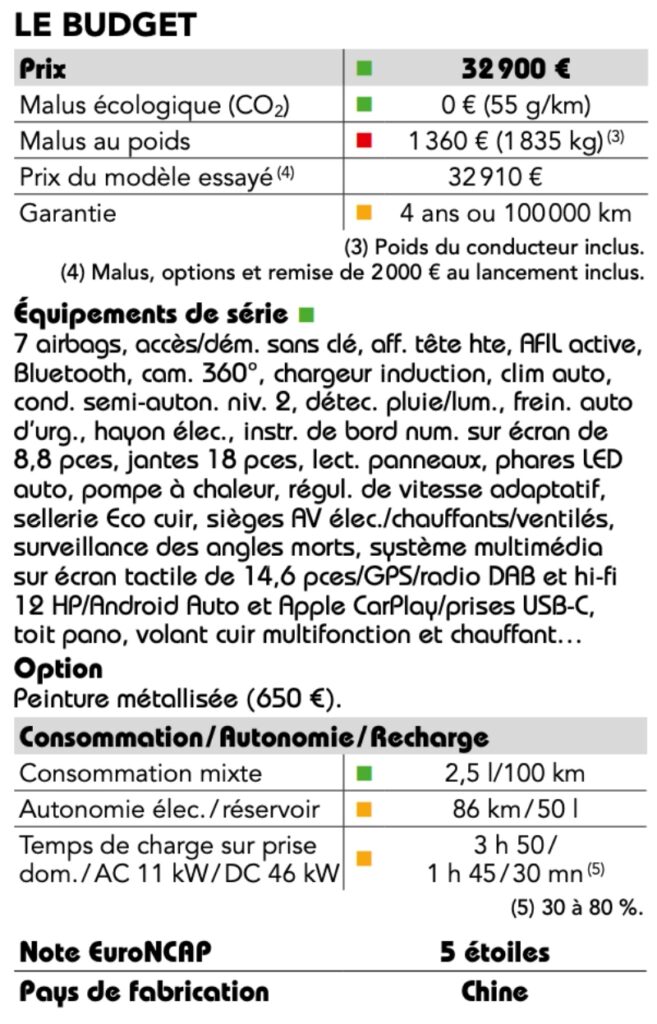
Find our first test of the Leapmotor B10 1.5 e-Hybrid 218 hp Design in Auto-Journal issue 1207, dated 16/04/2026.
Comparative Table
| Model | Power (hp) | Battery (kWh) | Electric Range (km WLTP) | Average Consumption (L/100 km) | Price (€) |
|---|---|---|---|---|---|
| Leapmotor B10 e-Hybrid | 218 | 18.8 | 86 | 6.7 | 32 900 |
| Leapmotor B10 electric ProMax | – | 67.1 | 430 | – | – |
| Nissan Qashqai e-Power Tekna+ | – | – | – | – | 42 700 |
| MG EHS PHEV Luxury | – | – | – | – | 35 990 |
Key Takeaways
- The Leapmotor B10 1.5 e-Hybrid offers an innovative hybrid tech with a range extender.
- Announced electric range is 86 km (WLTP), extended to 900 km with the gasoline generator.
- Combined power reaches 218 hp, with an 18.8 kWh battery and measured consumption of 6.7 L/100 km.
- Comfort, silence, and equipment are major strengths for this compact SUV.
- Some ergonomic aspects and the intrusiveness of driver aids are areas for improvement.
- Priced at €32,900, it offers a highly competitive value-for-equipment ratio in the market.
FAQ
What is the Leapmotor B10 1.5 e-Hybrid’s electric range?
The Leapmotor B10 1.5 e-Hybrid delivers 86 kilometers of electric range according to the WLTP cycle.
How does the range extender work?
The 68 hp gasoline engine is not connected to the wheels; it serves solely as a generator to recharge the battery when it is depleted.
What is the price of the Leapmotor B10 e-Hybrid?
The Leapmotor B10 e-Hybrid starts at €32,900, a price that compares favorably with its rivals.
What are the main criticisms levelled at the B10 e-Hybrid?
Ergonomics of the central display, overly intrusive driver-assist features, and a brand image that needs further development are the main criticisms.
What was the measured fuel consumption for this model?
The average consumption measured during the test was 6.7 L/100 km.