
Plug-in hybrids (PHEV) were marketed as a greener stepping-stone between internal-combustion vehicles and pure electric cars, yet not as clean as full electrics. Brands assumed buyers would be drawn by their on-paper ultralow fuel consumption, but they faced two hurdles: high prices and a reluctance to recharge them.
Nicolas Peter has been with BMW since 1991 and is currently the marque’s chief financial officer. In a recent interview with the German outlet Die Zeit, he tackled this issue head-on and proposed a remedy: penalize users who don’t recharge their PHEVs.
A Behavior Problem That Undermines the Technology
Until now, plug-in hybrids have rightly been deemed an ecological farce: many drivers gladly accept subsidies, but then hardly venture into electric mode because they don’t recharge the battery.
“It’s a behavior problem that undermines a technology that’s environmentally friendly and could be a good way to introduce people to electric mobility, especially where infrastructure remains scarce,” Peter explains.
One possible measure, the BMW executive details, would be for automakers to document and even penalize driving patterns. “If a driver never charges their battery, the power output of the engine could be reduced; technically, this is feasible,” he asserts.

In fact, brands like Toyota are developing their own ways to encourage drivers to plug in, and in Germany the same line as Peter is being pursued: the VDA (the main German automotive industry association) proposes to punish rebellious drivers with a power restriction and with mandatory recharging.
Something that remains speculative for now, especially after Brussels relaxed the EU’s emission limits starting in 2035.
When Official Fuel Economy and Real-World Consumption Are Light‑Years Apart
Recently, new studies by Ariadne Projekt and the European Commission, conducted between late 2025 and early 2026 and analyzing more than a million cars, revealed a staggering gap: the real-world average CO2 emissions of PHEVs sit around 138 g CO₂/km, compared to 46 g CO₂/km in homologations. About 300% higher.
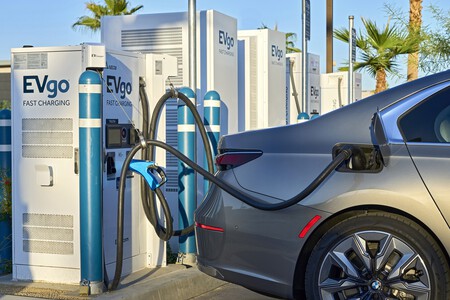
But beyond Toyota, Brussels has also sought to curb this issue. The European Commission’s first study on real-world CO₂ emissions of cars and vans highlighted the emissions and actual use of this technology, beyond lab tests: “These vehicles are not currently reaching their potential, largely because they are not being charged and driven in fully electric mode as often as assumed.”
Thus, the near-zero consumption claims for PHEVs have gradually disappeared from official figures.
Find Your Ideal Electric Car
If you’ve been considering buying an electric car, this will interest you. We’ve created the Personal Electric Car Recommender, where beyond viewing models that match your needs you’ll also get answers to questions that might worry you most, such as price, range, and nearby charging points.
Images | Pexels, Peugeot