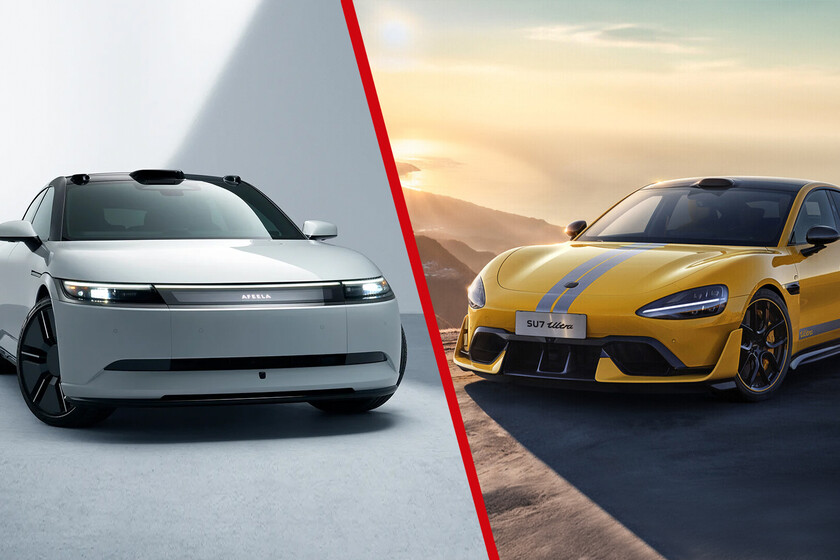
Honda and Xiaomi published their results almost simultaneously in May. The contrast they generated was immediate. While the Japanese company posted losses for the first time in its history, the Chinese brand’s sales continued to grow, even though it loses money on every car it sells. Thus, reading that contrast as a story in which traditional brands will disappear and Chinese brands will dominate is painting a picture with a broad brush. Nuances are missing.
Both brands are losing money, but not for the same reasons and with very different consequences.
Pérdidas por error estratégico vs pérdidas como estrategia
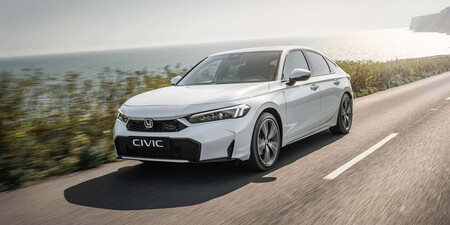
Honda has lost money (€14 billion) for the first time in its history because it bet wrongly. Its exclusive platform for electric vehicles, developed to compete against Tesla and Chinese manufacturers, never found the scale economics to justify it. Demand did not grow at the pace expected in the United States (end of federal incentives) and Europe (still hesitant market), while foreign brands, heavily dependent on the Chinese market, keep losing ground in China.
In the end, the investment was buried in a dead-end architecture, while other brands bet on multi-energy platforms, such as BMW, to achieve those scale economies. The result was about €13.8 billion in losses and a return to square one. Now the plan is to develop flexible platforms that work for both hybrids and electric vehicles. It’s a survival plan.

Xiaomi, for its part, also loses money, but not for the same reasons. In the first quarter of 2026, the automotive division posted an operating loss of about $400 million with 80,856 units delivered of its two only models, the YU7 and SU7, which amounts to roughly $5,000 loss per car sold, compared with $900 in the same period last year.
Those are bad numbers, but they are the numbers of someone deliberately buying market share, with a corporate balance sheet to support them. The structural difference is this: Honda loses due to a strategic error and now must tighten its belt to try to bounce back. Xiaomi, on the other hand, loses knowing exactly why.
The problem is that Honda is not an isolated case. Volkswagen agreed at the end of 2024 to cut 35,000 jobs, relocate production outside Germany, and close factories in Germany for the first time in its history to save more than $15 billion annually after its electric bet also failed to generate the necessary volume.
To this must be added the drop in sales of their brands in their first market, China. Volkswagen fell 8.4% in 2025, Audi down 5% —but it sells 38% of its production in China and Porsche 26% after four consecutive years of decline.
Stellantis, for their part, closed 2025 with net losses of more than €22 billion. The pattern repeats: dedicated platforms, massive investments, insufficient demand, withdrawal.
The question these cases raise is not whether traditional manufacturers arrived late to electric vehicles, but whether they arrived badly. Arriving late implies the problem is a timing issue. Arriving badly implies the problem is structural: organizations designed for seven-year product cycles competing against companies that update software every few weeks and are willing to subsidize losses for years to win the market.
Xiaomi still does not sell outside China. Its development center in Munich, opened in 2025 with hires from BMW and Tesla, targets a strong entry into Europe, confirmed for 2027.
If by then it has absorbed its scale costs and stabilized margins, it will arrive with prices that European manufacturers will not be able to match without eroding their own profits. Honda’s problem today could be the problem of others in three years. The difference is that Honda already knows it.
Find your ideal electric car
If you have considered buying an electric car, this will interest you. We have created the Personal Electric Car Recommender where, in addition to viewing models that fit your needs, you’ll also get answers to the questions that worry you most, such as price, range, or nearby charging points.

Are you looking for your next electric car and feeling overwhelmed by so many options? It’s normal.
More than 45,000 readers have already tried it. What about you?
Advice offered by the brand