
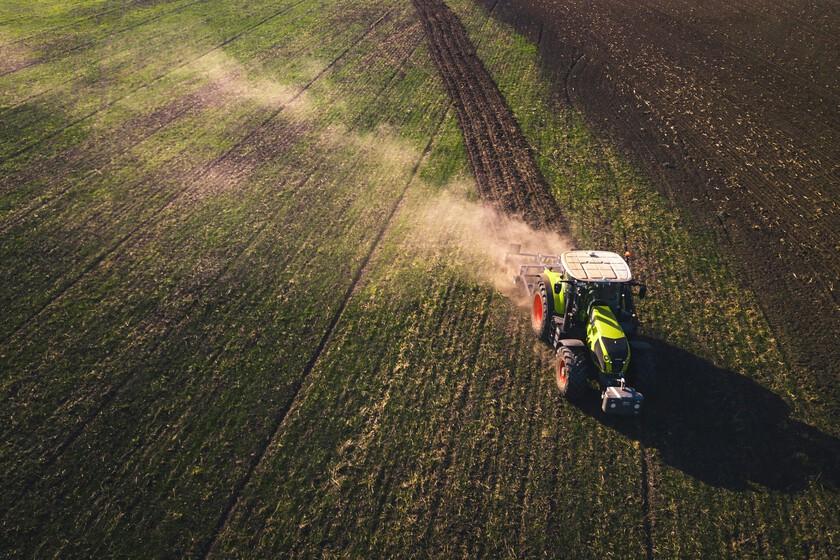
The Oímbra fire, which in August 2025 ravaged more than 23,700 hectares and became the second-largest on record in Galicia’s history, is once again making headlines. At the time, the investigation initially pointed to some clearing work carried out with a tractor on a day marked by extreme fire risk and high temperatures, and a resident of A Gudiña was arrested.
They charged him as the presumed author of a crime of arson by gross negligence and he ended up in provisional detention. However, now the defense has requested the dismissal of the case, arguing that another municipal tractor was also working in the area that day. According to Eduardo Villar, the lawyer representing Europe Press, “it is not established” that his client was the author of the fire, nor is it proven at what time the municipal machinery remained in operation.
How a tractor can trigger a forest fire
Beyond the legal battle, the case has reopened a recurring debate that surfaces whenever temperatures rise: the role of tractors and agricultural machinery in forest fires. These machines are essential tools to keep the countryside clean and to create firebreaks, but they can also become the unintended source of a fire when high temperatures, dry vegetation, and certain mechanical conditions coincide.

The explanation often lies in something as small as a spark: when a brush cutter or a shredder attached to the tractor strikes a rock or a hidden metal piece among the vegetation, it can project incandescent particles. And if the ground is very dry, that can be enough to start a fire.
To this can be added other mechanical factors, since exhaust systems reach very high temperatures during intensive work, while parts such as bearings, discs, or components subjected to friction can generate hot spots. That’s why regional authorities limit certain agricultural tasks on days of extreme risk and require additional preventive measures.
From suspects to indispensable allies against the flames
But the paradox is that the very tractors that can trigger a fire are also among the most effective tools for stopping it: during major forest emergencies it is common to see agricultural machinery opening emergency firebreaks, turning soil to remove vegetal fuel, or creating protective strips around homes and livestock operations.
That happened precisely during the Monterrei valley fire in Ourense. As the flames advanced across several municipalities and forced evacuations, many neighbors used their own tractors to try to protect villages and properties in the face of the magnitude of the fire front.
Restrictions on working with tractors are becoming stricter
After several summers marked by fires of great intensity, prevention campaigns have tightened across much of Spain, and the protocols emphasize avoiding work with machinery during the hottest hours, ensuring immediate extinguishing resources are available, and stepping up the maintenance of equipment.
Public agencies and agricultural associations remind every year that a poorly maintained tractor can become as significant a risk factor as human negligence… and precisely that is what the Oímbra investigation will have to determine: whether the fire was the result of negligence linked to a specific machine or whether there are still key elements to clarify. Because in summer, a tractor can be one of the best defenses against fire, but it can also be a valuable tool to avert a catastrophe.
Images | El Tiempo, unsplash