
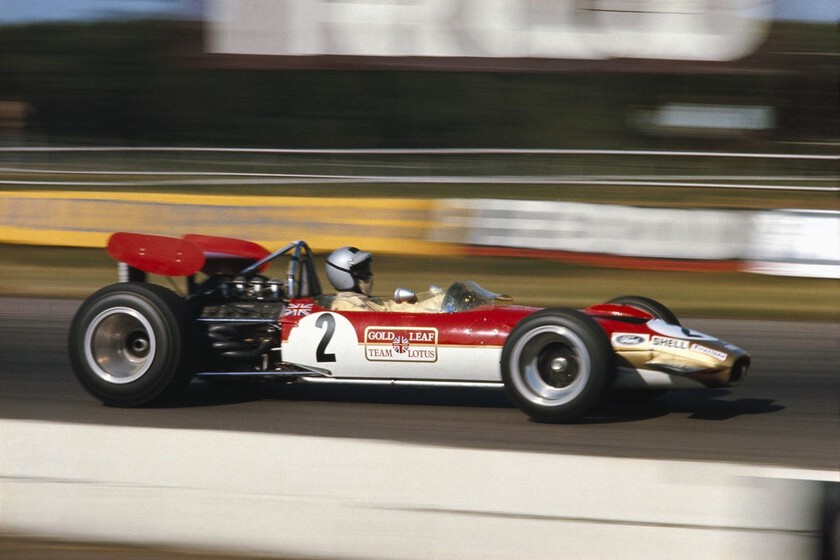
In the entire history of Formula 1, 33 drivers have claimed world championships, although only 32 were aware of their achievement. The sole exception occurred with the champion of the 1970 season, one of the most tragic and transformative chapters in the saga of the sport’s premier category.
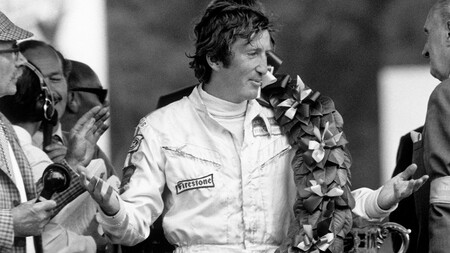
An Austrian driver born in Germany, Jochen Rindt was on the cusp of becoming the world champion. He had won every race he had managed to finish. The world championship seemed destined for him, but his fate changed on a fatal day at Monza. This is the bittersweet story of Jochen Rindt, the only posthumous Formula 1 champion.
Rindt won the Formula 1 world championship one month after dying at Monza

Jochen was born in Mainz, Germany, in 1942, as World War II raged across Europe. Precisely during an Allied air raid, his parents died, forcing Rindt to move to Graz, Austria, where he grew up with his grandparents and discovered his passion for racing.
Precisely this circumstance makes Rindt remembered as the first Austrian champion since, although he never held that nationality, he raced under an Austrian license. The question of the first German champion remained open for a few years until a certain Michael Schumacher came along to break all the records.
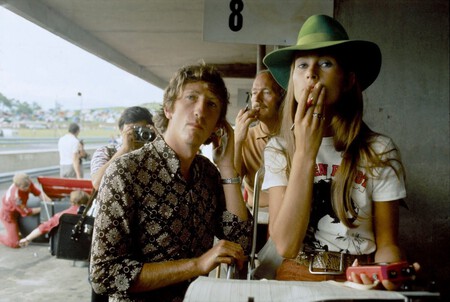
The journey of Jochen Rindt in Formula 1 began in 1964, when the Brabham team, owned by three-time champion Jack Brabham, hired him for a single event, the Austrian Grand Prix. Rindt secured a solid qualifying, placing thirteenth, but had to retire from the race near the end due to stability problems.
Nevertheless, the Austrian had already carved out a niche in Formula 1, so Cooper decided to hire him for the following season. In the British outfit he stayed for three years, recording three podiums and a handful of strong results that convinced him to return to Brabham, which in those years had evolved enough to win the two previous world championships under the leadership of a man named Bernie Ecclestone.
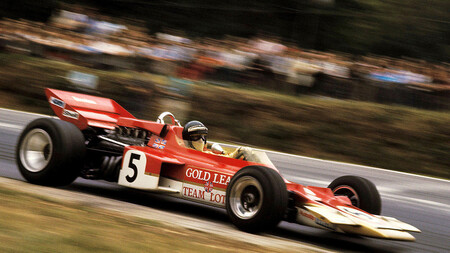
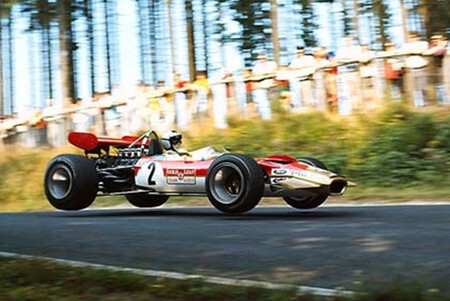
However, things did not go too well: Rindt finished only two races, both on the podium, throughout that season. Even so, the signs of talent from the Austrian were enough for Colin Chapman, head of Team Lotus, one of the sport’s most illustrious outfits, to notice him for the challenging task of replacing Jim Clark, the two-time world champion who had died months earlier in an accident.
Rindt accepted gladly, ignoring this prophetic remark from his then-boss, Bernie Ecclestone: “If you want to win titles, join Lotus, but if you want to stay alive, stay at Brabham.” With Lotus, after a hesitant start, the latter half of the year saw Rindt’s breakout, with a series of podium finishes and his first victory, at the 1969 United States Grand Prix, beating the second by 47 seconds and the third by two laps.
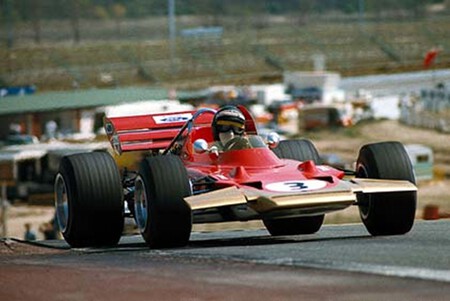
Jochen had wrapped up his first year with Lotus in fourth place in the standings, with one victory and four podiums—a not bad ledger to begin the real push for the world title in 1970. And indeed, that year Rindt delivered. A start with two retirements gave way to five nearly consecutive victories that left the world title practically within reach.
There was a lot that would have to go wrong for Jochen not to see his grand dream fulfilled, becoming the Formula 1 world champion. Yet everything would dramatically change during free practice for the Italian Grand Prix at Monza. After a small countersteer, the rear wheels locked to the left at the entry to “La Parabolica,” a right-hander that precedes the main straight of the Italian circuit.
The Lotus of Rindt crashed into the wall, breaking his legs and embedding some of the car’s parts in the driver’s chest and abdomen. An hour later, the sport’s leader at the time, Jochen Rindt, died on the way to the hospital. He became the second world championship leader Lotus had lost in two years.
The outcome of the Italian Grand Prix opened the door to as many as six drivers being able to crown themselves champions, but after the next race in Canada, only Belgian Jackie Ickx (Ferrari) could still be champion, and he would have to win the remaining two races. He did win in Mexico, but in the United States, where a year earlier Jochen Rindt had won his first Grand Prix, he could only finish fourth.
The victory that day went to Emerson Fittipaldi, precisely the young Brazilian driver Lotus had just hired to replace Rindt. It was Fittipaldi’s first win, the first stone in a project that would, a couple of years later, crown him the youngest world champion in history. But at that moment it signified only one thing: delivering the title that his late teammate so deserved.
Thus Rindt became not only the first Austrian (or German) champion in history, but, unknowingly, he became a sports legend. He became the first—and we hope the only—posthumous world champion in Formula 1 history. The legend of the driver who never knew he had entered Olympus.
Today, and after 2025 marked the 75th anniversary of F1, Rindt remains the only posthumous world champion, and we hope it stays a record that no one else will break.
The accident of Rindt had fatal consequences partly because his body was not properly secured by the harness, which sparked a push for safety in the single-seaters.
Fortunately, safety has dramatically improved in Formula 1, and many horrific accidents today end with minimal consequences thanks to the halo, survival cells, or carbon-fiber monocoque chassis.