
Every April 1st has its automotive jokes, but in 2026 the players in electromobility clearly took the lead. From a dating app that only triggers at the charging station to a diesel-scent for electric utility vehicles, the industry pushed the clichés that still cling to electric cars and their users.
In Brief
In 2026, April 1 was marked by a series of particularly creative April Fools’ pranks in the world of electromobility, deftly playing with the stereotypes surrounding electric vehicles. Between a dating app at the charger, a diesel smell for electric vans, or a car-moving robot, these jokes highlighted current concerns: range, charging time, nostalgia for the combustion engine, or new uses at charging stations. Behind the humor, these initiatives reveal reflections on the evolutions expected in the world of electric cars and how users adapt to these changes.
Range, behaviors at charging stations, diesel nostalgia, and time to kill during charging: behind these jokes lie the real questions of the moment. And sometimes, reading those April 1 announcements, you almost wonder which of them could someday leave the realm of jokes.
When EV April Fools’ Jokes Play with Range and Charging Stations
At StadtBus Dormagen, they chose to tackle head-on the old fantasy of an endurance extender. The public transport company unveiled, for April 1, 2026, mysterious “Passenger Energy Interfaces” (PEI). The idea displayed: install these interfaces in five new electric buses to turn them into range extenders… powered by passengers’ smartphones. According to the highlighted calculations, five travelers would provide up to eleven kilometers of extra range for the bus, each giving up only 8 to 10% of their battery capacity. The transfer was supposed to occur automatically and wirelessly during the trip, with the phones acting as human power banks. In a second post, StadtBus Dormagen thanked humorously all those who had pondered the concept, smiled… or offered their “battery tribute.”
On the charging pads, the target was different: drivers who leave their car plugged in after charging completes. Ionity rolled out its autonomous QBOT robot, billed as a technology to smooth traffic at its high-power charging stations. The scenario was highly detailed: if a spot remains occupied by a vehicle that is no longer charging for more than three minutes, the system alerts QBOT, which springs into action. With a 360° LiDAR, twelve cameras, and high-resolution ultrasonic sensors, the robot is supposed to thread its way with centimeter precision up to the vehicle, lift it gently, and move it to another designated space at 5 km/h. QBOT can even unplug the HPC cable after the session ends, just to avoid hindering those who follow. And to drive the April 1 joke home, the company added: “If you don’t encounter a QBOT at an Ionity site today, it’s not a system error. It’s simply due to the date. Have a very happy April Fools’ Day.” In a separate thread, fleet consultant Marc-Oliver Prinzing (Carmacon) posted on LinkedIn a faux emergency regulation from the German Federal Ministry of Transport: every electric-vehicle driver would be required to carry a 5-liter gasoline jerry can to assist combustion engines stranded on the road, under penalties for companies. The post even purported to offer an official justification: the rising number of breakdowns caused by gasoline or diesel drivers running nearly empty to save fuel. “Observers described it as a deep intervention in the existing mobility logistics and as a new role for electromobility, the guardian of the remaining thermal-vehicle fleet,” noted Prinzing before inviting readers to a free expert workshop on April 1.
From Diesel Scent to On-site Dating Apps: When Electric Plays with Emotions
On the utility side, Farizon rode another emotional string: nostalgia for the traditional diesel. The maker announced on April 1 a cabin fragrance specially developed, “Eau de Diesel,” meant to instantly transport drivers of its electric vans back to the era of diesel-fueled vans and their pronounced odors. For those who want more than a fragrance, Farizon says it has designed an onboard “Nostalgia Mode.” Once activated, this mode continuously drifts a diesel engine roar through the cockpit speakers, the sound rising with accelerations, while integrated seat vibrators reproduce the vibrations “that used to shake bones” of the old utilitarian trucks. A nod to a trend seen elsewhere: Ford had offered a fuel-scent fragrance at the launch of the Mustang Mach-E GT, and in 2024 the Kia Finland importer offered an essence-scent air freshener for customers who had switched to electric.
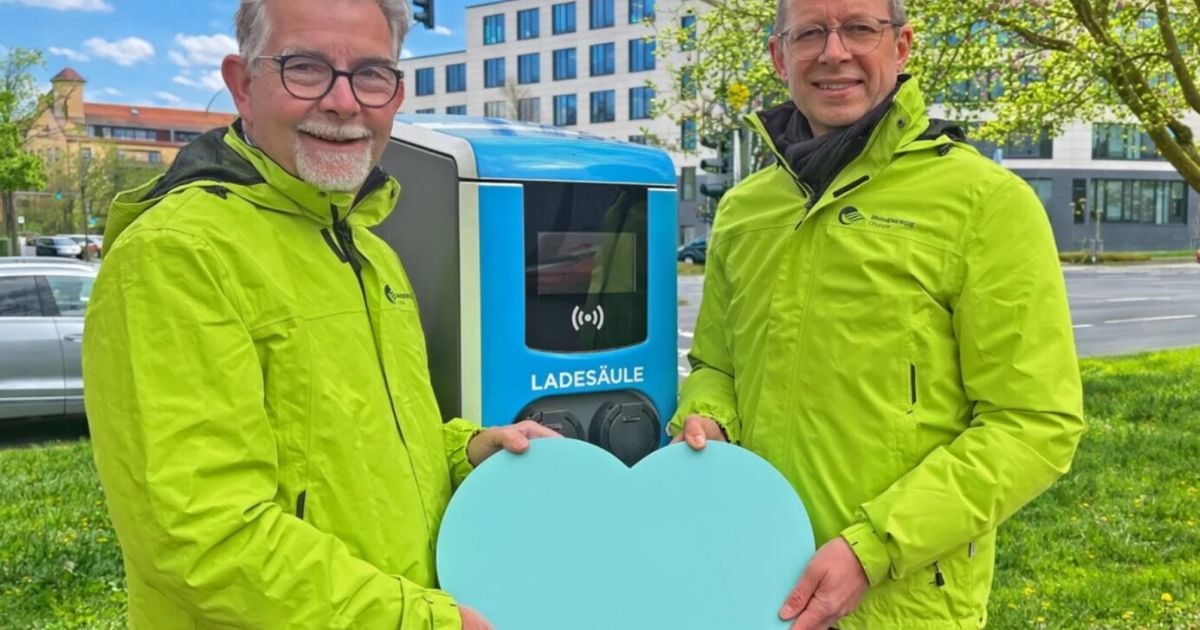
RhönEnergie, meanwhile, chose a much more romantic angle with its app “Herzschlag” (heartbeat). The idea: turn every charging point into a dating zone, and why not a place for a spark to fly. As soon as a vehicle is plugged in, “the adventure” is supposed to begin. Sensors, AI mood analysis, and an optional “flirt factor” identify compatible profiles, then the charging station suggests an icebreaker such as: “You’re charging at 11 kW? Me too… Coincidence?” To justify the concept, Martin Heun, spokesman for the group’s executive board, explained: “We asked ourselves: if energy already flows, why wouldn’t it also flow between people? The answer is our new Herzschlag app. Our charging stations now measure not only electricity but also chemistry.”, cited by Electrive. He said the charging stations are even the most romantic meeting places since the invention of the office coffee machine. Some “experience stations” were planned to push the decor further, with ambient lighting, soft music, and themes ranging from “After-Work Chill” to “Romantic Under Current.” Internal tests reportedly enabled numerous dates in a pilot group, including a couple that left with a shared wall-mounted charging unit. To cap this tour with a tasty note, charger-maker Technagon introduced the TE SNACK 8, a solution that combines a charging point for electric vehicles with a snack dispenser for occupants, summed up by the slogan: “The first charging solution that powers energy for both people and vehicles.” A nod to a real trend: at more and more charging hubs, the plug-in break turns into a true life pause.
Comparison Table
| April Fool | Numerical data | Description |
|---|---|---|
| Passenger Energy Interfaces (PEI) – StadtBus Dormagen | 5 travelers, 8 to 10% of battery each, 11 km of additional range | Wireless transfer of energy from passengers’ smartphones to extend the electric bus’s range. |
| Robot QBOT – Ionity | Moving cars at 5 km/h, intervention after 3 minutes of inactivity | Autonomous robot that moves cars finishing their charging to free up spots quickly. |
| Mandatory 5-liter jerrycan | 5 liters | April Fool about requiring electric vehicles to carry 5 liters of gasoline to assist thermal vehicles in breakdowns. |
Key Takeaways
- April 1, 2026 turned electromobility into the primary source of automotive pranks.
- Topics center on range, nostalgia for internal combustion engines, and behavior at charging stations.
- Some April Fools used numerical data to bolster plausibility (PEI, QBOT, emergency jerrycan).
- Whimsical innovations like a diesel fragrance or a dating app at the charger address new uses tied to electric mobility.
- The humor in these efforts hides real questions about how electric mobility will evolve and its social impacts.
FAQ
What were the standout EV April Fools’ pranks in 2026?
Several notable pranks included a diesel-scent fragrance for electric utility vehicles, a station-side dating app, and a car-moving robot at Ionity stations.
What was the Passenger Energy Interface (PEI) presented by StadtBus Dormagen?
It was a fake system where passengers’ smartphones could transfer energy to extend the electric bus’s range by up to 11 km.
How did the QBOT robot work according to Ionity’s prank?
QBOT would detect a vehicle idle after three minutes, then move it automatically at 5 km/h using precision sensors and cameras.
What did Farizon propose for diesel nostalgics?
Farizon announced an interior fragrance “Eau de Diesel” and a “Nostalgia” mode that mimics the sounds, vibrations, and smells of a diesel-powered utility vehicle for its electric models.
What was the Herzschlag concept from RhönEnergie?
Herzschlag was meant to turn the charging station into a dating venue, with sensors, AI mood analysis, and romance-themed features to connect users.