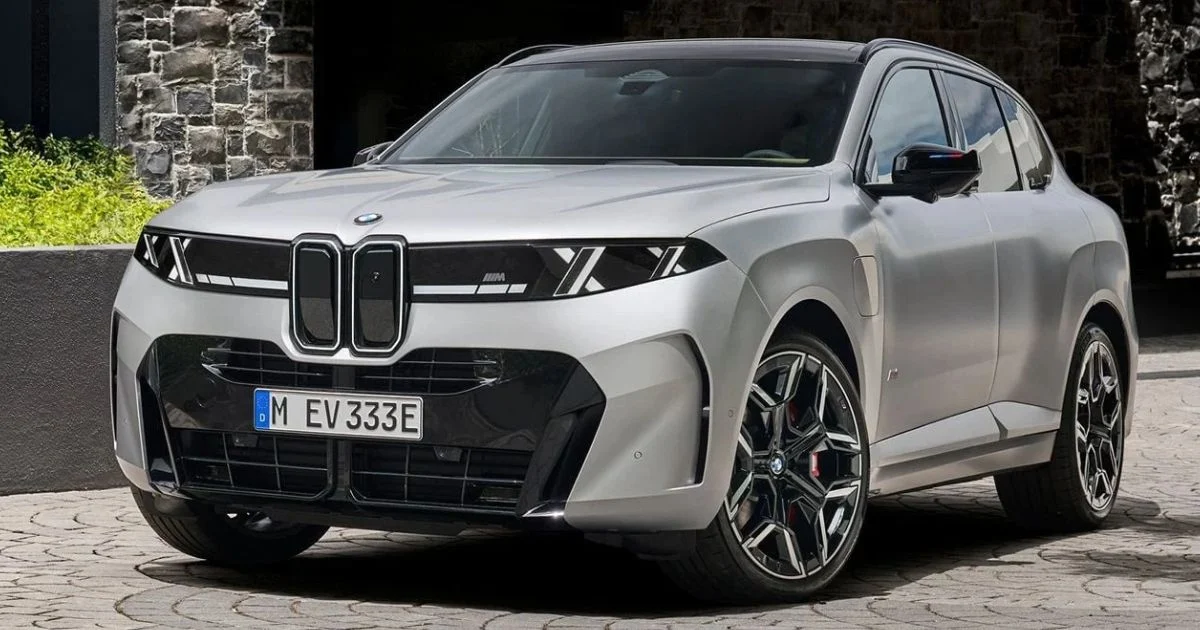
Crossing the €100,000 mark for a plug‑in hybrid SUV isn’t as surprising as it once was. But when the new BMW X5 does it, the message shifts. It signals more than 600 horsepower and up to about 66 miles of electric driving. The big Bavarian SUV is lifting its game, climbing in both technology and pricing.
Launched a few months ago, the fifth generation of the X5 2027 adopts the Neue Klasse styling and a multi‑energy strategy. Alongside the combustion engines and the fully electric iX5, the lineup expands with two plug‑in hybrids. They are the BMW X5 xDrive50e and the BMW X5 M60e xDrive. These two variants push up to 612 hp and promise up to 106 km of zero‑emission range. Those numbers look impressive on paper. But it’s really the pricing of this BMW X5 plug‑in that signals the move upmarket.
A 2027 BMW X5 plug‑in hybrid that’s more muscular than ever
Technically, the two BMW X5 plug‑ins share the same fundamental layout. You’ll find a 3.0‑liter inline‑six gasoline engine with TwinPower Turbo technology paired to an electric motor. All‑wheel drive xDrive and an eight‑speed automatic transmission come as standard. The battery is a 29.5 kWh NMC pack, enabling an electric range of 99 to 106 km depending on the WLTP cycle.
In this shared architecture, the X5 xDrive50e already sits at the top of the range. It combines the inline‑six petrol engine with the electric motor to deliver 489 hp and 700 Nm of torque. The sprint from 0 to 60 mph is listed at 4.8 seconds, with up to 106 km of electric range. At the top of the lineup, the X5 M60e xDrive uses the same technical base. The sheet climbs to 612 hp and 800 Nm. The 0–60 mph time is quoted at 4.2 seconds, with 99 km of electric range. The figures edge toward what you’d expect from an M‑badged model while preserving the zero‑emissions badge that accompanies it.
Prices and equipment: the X5 plug‑in shifts upmarket
The pricing published in October 2026 confirms this leap in positioning. The X5 xDrive50e starts at €106,150. The X5 M60e xDrive asks for €121,650, in list price before any discounts. First deliveries are slated for early 2027. By comparison, the base diesel X5 40d xDrive sits around €96,500, and the 40i gasoline variant is roughly €101,300. The fully electric iX5 60 xDrive sits near €105,000. The plug‑in hybrid thus prices itself above the gasoline and diesel versions and sits on par with the all‑electric model. It also remains well below a typical six‑figure mark that would feel out of reach for many buyers.
To justify such lofty pricing, BMW equips the X5 plug‑in with a generous level of standard equipment, even in the Base trim. 21‑inch alloy wheels come as standard, as do LED headlights and taillights, plus a panoramic sunroof. Inside, there are heated, power‑adjustable sport seats with memory and a heated steering wheel. On the safety and driver‑assistance front, the X5 includes adaptive cruise control and lane‑keeping assist. The Parking Assistant Plus adds a rear‑view camera and rear cross‑traffic alert. The cockpit centers around a digital cluster paired with a large 14.9‑inch touchscreen. A BMW 3D Head‑Up Display completes the driving experience, while the Panoramic Vision system enhances visibility. Android Auto and Apple CarPlay are built in, and there’s wireless smartphone charging along with a Professional DSP hi‑fi system. The lineup can be further boosted with M Sport, M Sport Pro, and BMW M trims, which tilt the car toward a more aggressive stance and ambience. In France, the iX5 60 xDrive and the X5 50e M Sport are both listed at €105,950. The X5 M60e, meanwhile, is priced at €128,500. Once again, this reinforces a six‑figure positioning for BMW’s flagship plug‑in SUV.