Suzuki has just unveiled its roadmap for the next decade, laying out its strategies for its key markets, its new technology choices, and a peek at what’s coming in future models…
The Suzuki 10-Year Roadmap
The first workstream, and perhaps the most tangible, centers on research and development time. By 2030, Suzuki promises to halve the time it takes to develop a new vehicle. It also aims for 30% greater efficiency on development and 50% on manufacturing. To achieve this, the plan rests on two ideas: bringing the teams that design the cars closer to those that build them, and sharing more components across different models. A strategy Renault has already pursued with the new Twingo, designed in China in under two years to better compete with the standards of Chinese automakers. One unknown remains for Suzuki: no timetable has been given, and nothing guarantees that these time savings will translate into lower dealership prices, which was Renault’s rationale for a ‘Made in China’ development of the Twingo to price it under $20,000. We’ll have to wait and see. On powertrains, Suzuki refuses to bow to the all-electric dogma, at least for now the brand prefers to proceed with caution initially.
Electrification, Weight Reduction, and Affordable Small Cars
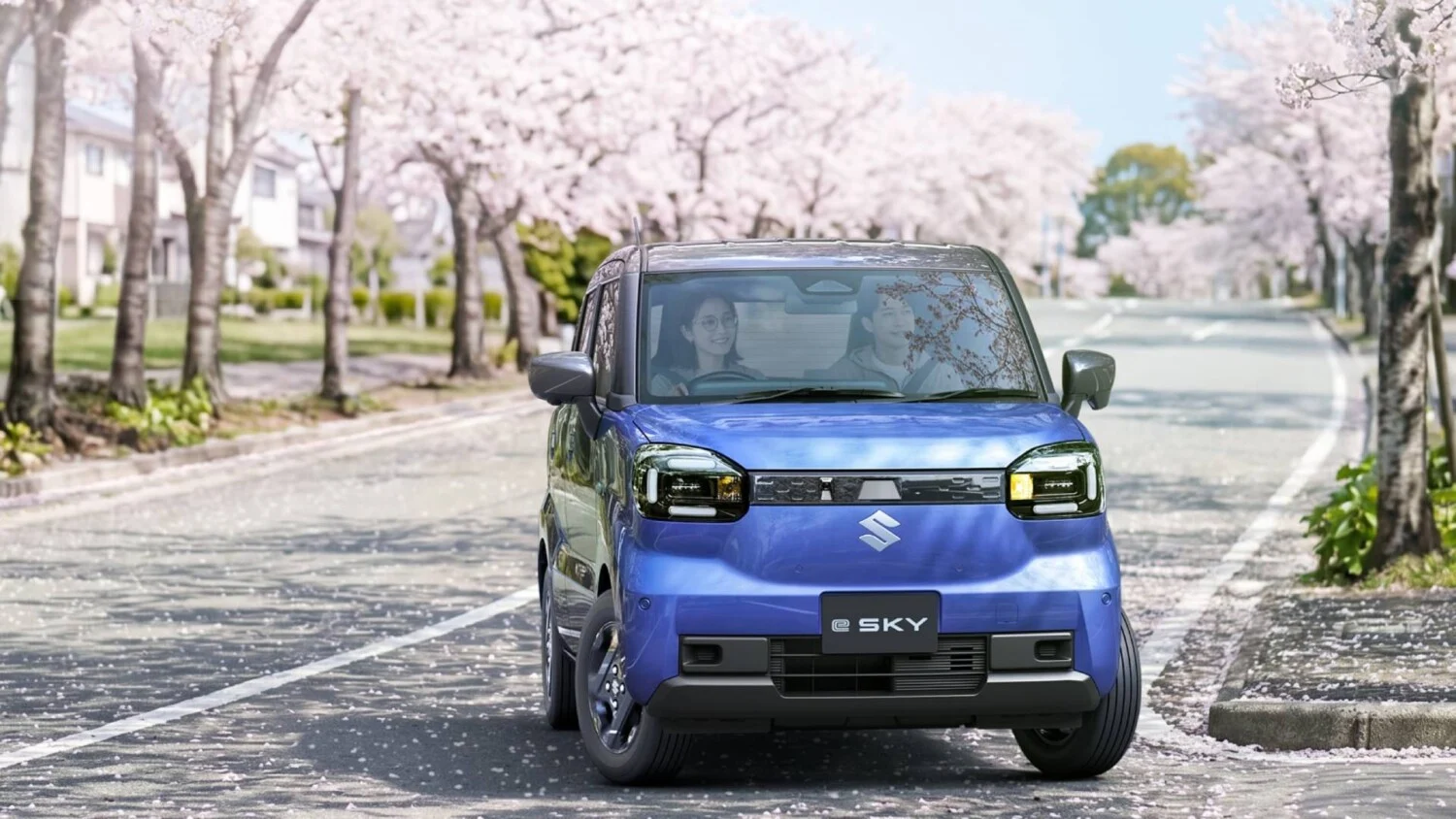
Indeed, electrification is on the agenda for its future releases, but alongside simple hybrids, a new full-hybrid system called “Super Ene Charge” and turbocharged gasoline engines that aren’t hybrids. The company is also betting on weight reduction, with the creed: a lighter car consumes less, regardless of what’s under the hood. A modular, “on-demand” approach that rests on a simple fact: every country has its own infrastructure, its own habits, and its own purchasing power, and imposing the same technology everywhere doesn’t make a lot of sense. For us in North America, the most enticing prospect is called e SKY. This is a small electric city car, a Kei-class vehicle originally designed for Japan, slated to land on our shores by 2027. It will challenge the electric Twingo’s territory, as well as its derivatives from Nissan and Dacia, in a segment where there’s long been a demand for affordable small EVs. Suzuki presents this model as a demonstration of its know-how in range, a sensitive point for compact vehicles. A flurry of announcements, in the end, that we’re now waiting to see materialize.