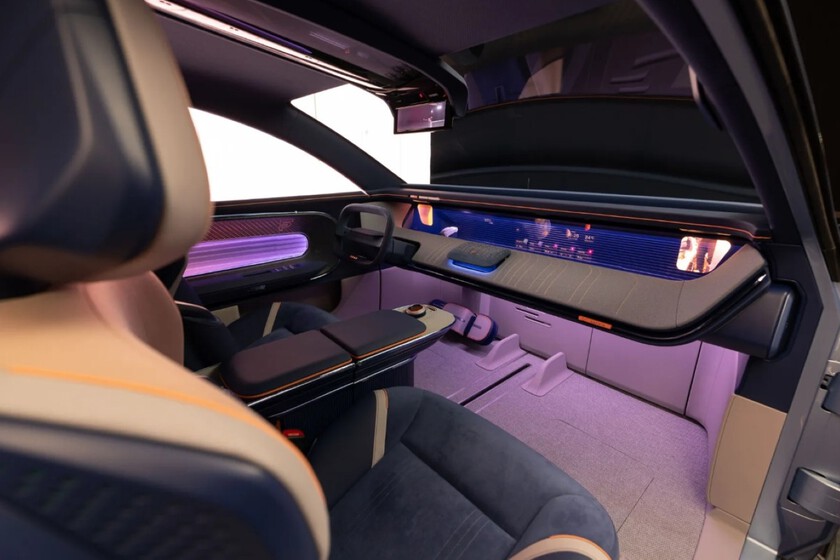
Forvia is one of the world’s major suppliers of automotive components and is accustomed to manufacturing at a scale few defense companies can rival. Now it aims to leverage precisely that industrial capacity to enter a completely different market: the realm of military drones.
The French company announced at the end of July an agreement with a European defense Aerospace and AI-based drone interdiction systems specialist. Production will begin at around 500 interceptor drones per month, though the short-term target is 1,000 units.
The Automotive Industry Begins Manufacturing Drones
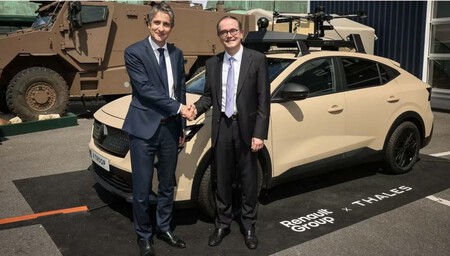
The operation of Forvia forms part of a broader movement in France. Carmakers such as Renault are already working with Turgis & Gaillard on the Chorus project and with Thales on the Toutatis attack drone, while Valeo has been chosen by Harmattan AI to develop and manufacture in France electric motors for drones.
The reason for turning to automakers is quite straightforward: they know how to produce large quantities of components quickly, in an automated way, and at controlled costs. And that is exactly what the military industry is beginning to need after witnessing in Ukraine the role drones can play when used in large numbers.
Forvia already had a foothold in this sector through Hella, its German division, which supplies lighting and electronic systems for military and security applications. The new agreement represents a further step by directly using the company’s industrial capacity to assemble drones.

The Drone Business Is Changing the Rules
The interest lies not only in creating a new product, but there is also an economic motive in a context marked by the fact that the European market is not at its best. Suppliers face cost pressures, weaker demand, and growing competition from Chinese manufacturers.
Forvia closed 2025 with €26.2 billion in sales and an operating margin of 5.6%, although it also posted net losses of €2.1 billion after applying extraordinary adjustments related to portfolio transformation. The company also maintains a program to reduce costs and debt.
This new defense-focused business offers an additional diversification opportunity. As Forvia’s own CEO, Martin Fischer, admitted, the company believes it “can contribute to strengthening European sovereignty and resilience.” In Valeo’s case, the logic is even clearer: the company is repurposing automotive technologies to manufacture electric motors for drones without heavy rare earths.
France Aims to Manufacture Drones as If They Were Cars
The move also has an industrial and strategic dimension: France seeks to rapidly boost its ability to manufacture drones and is turning to the experience of its automotive industry to do so.
The key is to transfer automotive-sector methods to the defense sector. Military drones have traditionally been built in small series, while the new model aims for simpler designs, fewer components and automated processes that enable large-scale production at lower cost.
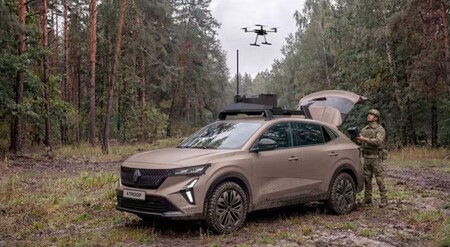
Renault and Thales, for example, intend to reach a production of 1,000 Toutatis drones per month from 2027. To that end, the brand is redesigning the Toutatis to reduce parts and replace 3D-printed components with those made by injection molding. Meanwhile, Delair and the German supplier Schaeffler are preparing another line with capacity to manufacture around 100 drones daily. If all announced projects meet their objectives, France could approach a production capacity of 60,000 drones per year.
Forvia Also Signs Up for the Change
Forvia’s agreement fits precisely into this strategy, as the company plans to begin assembling around 500 interceptor drones per month and raise production to 1,000 units from early 2027, with the capacity to increase the manufacturing pace subsequently.
For automakers, the advantage lies in their own industrial experience: assembly lines, automation, quality control and suppliers able to handle large volumes. For the defense industry, that capacity enables moving from manufacturing drones in small series to producing them at a much larger scale. Thus, car plants are beginning to take on a new role as the sector undergoes a deep transformation and looks for additional business lines.
Images | Forvia, Thales