For nearly twenty years, Sant’Agata Bolognese’s atmospheric V10 stood as the symbol of Lamborghini’s “entry‑level” lineup.
Gallardo, then Huracan, not to mention the Audi R8 sharing the same block. For many enthusiasts, that screaming 5.2-liter engine alone conjured the magic of the car. The day the brand announced its disappearance, in favor of a 4.0-liter twin‑turbo V8 paired with a hybrid electric system, the sacrilege debate began in earnest. Paolo Racchetti, head of the Temerario product line, knew the reception wouldn’t be gentle. “We expected to receive a certain form of critique,” he told CarExpert. It isn’t by accident that Lamborghini today speaks so openly about this choice.
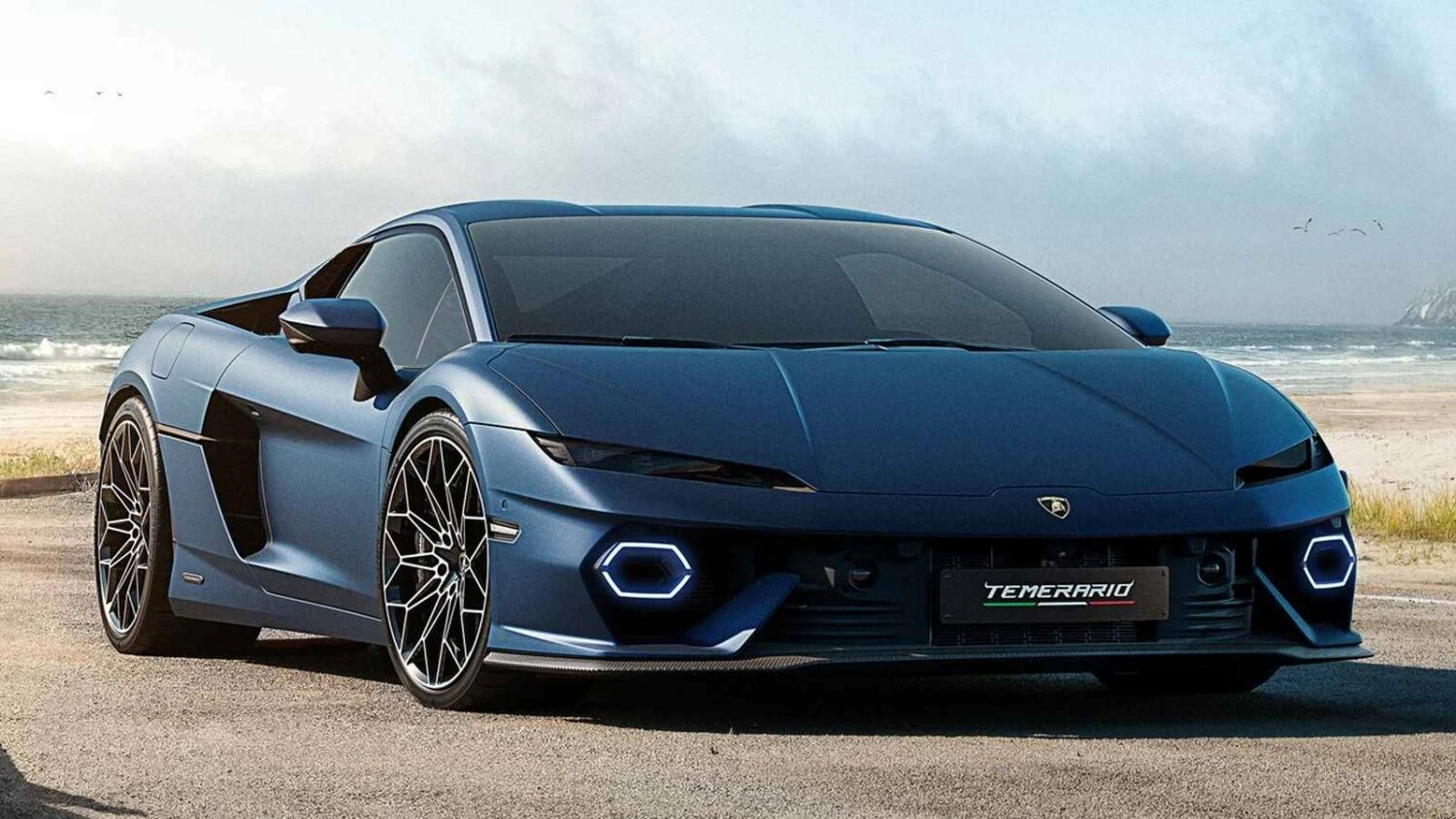
Because behind the end of the V10 lies a very real model. The new Lamborghini Temerario takes up the Huracan’s torch with a completely different heart. A 4.0‑liter twin‑turbo V8, bolstered by three electric motors, delivering a combined output of about 920 hp. Fewer cylinders, more technology, and a plug‑in hybrid supercar status that divides opinion as much as it intrigues. For the bull’s‑head brand, this gamble represents, nonetheless, the best way to marry mechanical emotion with tomorrow’s standards. The question remains how Lamborghini defends this choice, framed as its most delicate turning point in recent years.
A Legendary V10 That Lamborghini Knew Was Doomed
For the engineers at Sant’Agata, the Huracan’s V10 was not just another block among others. Its 5.2‑liter naturally aspirated displacement revved to stratospheric heights without forced induction and offered a sound inseparable from the “baby Lambo.” This engine defined the Huracan’s identity as much as its angular design. Paolo Racchetti doesn’t deny it for a moment. “I mean, it isn’t a criticism. It’s a bit of nostalgic behavior, because we knew we were giving up something truly valuable. We knew the naturally aspirated V10 was an asset for the Huracan. It basically defined the whole car, the sound of the car itself,” he emphasizes.
For Lamborghini, the current controversy is largely about enthusiasts’ nostalgia. The brand acknowledges having turned a major page, that engine that defined the Huracan. It isn’t trying to pretend nothing will change. And yet, the maker stresses one point. If it abandons the atmospheric V10, it does not renounce the internal combustion engine or the character that built its reputation.
How the Lamborghini Temerario and Its Hybrid V8 Aim to Make the V10 Fade from Memory
On paper, the Temerario’s recipe takes a radically different path from the Huracan. Under the hood sits a brand‑new 4.0‑liter V8 biturbo working in concert with three electric motors. The setup adopts an HPEV architecture close to that of the Revuelto. The gasoline block delivers roughly 800 hp, with a combined output pushing toward 920 hp. The redline sits near 10,250 rpm, a figure rarely seen on a road‑going V8 twin‑turbo. Lamborghini doesn’t claim this engine sounds like the old V10. Racchetti even admits the V10 possessed a more melodic signature. The V8, equipped with a flat crank, aims to be more “rock and roll” and comes alive after 7,000 rpm. Below that, Racchetti describes a supercar that behaves with notable civility. The upper end, by contrast, highlights a true racing temperament.
If Lamborghini has given up the V10, it isn’t to provoke its customers. Stricter emissions and noise standards made the survival of a large, 10‑cylinder atmosphere engine difficult, all while keeping performance and homologation worldwide. Hybridization can cut CO2 emissions by about half versus a comparable Huracan. It also delivers superior performance, with a 0–100 km/h time advertised around 2.7 seconds. The trade‑off is a significantly higher curb weight, about 1,690 kg dry. That’s more than 300 kg heavier than a Huracan Tecnica, with increased rigidity and greater aerodynamic downforce. The same powertrain is slated to power the Audi Nuvolari, the future spiritual successor to the R8. Proof that the choice extends beyond Lamborghini alone. Temerario already has roughly a year of orders on the books, indicating the market is following this technical turn. Still, the brand doesn’t see 100% electric as the near‑term path. Internal studies show customer interest “near zero” for a battery‑powered supercar. Stephan Winkelmann even described these models as little more than an expensive hobby at the very top end, as cited by Motor1. Consequently, the forthcoming 2+2 coupe that was initially planned as all‑electric will ultimately receive a combustion engine. And the strategy centers on these hybrid V8s and V12s, with Temerario becoming the symbol of the debate.