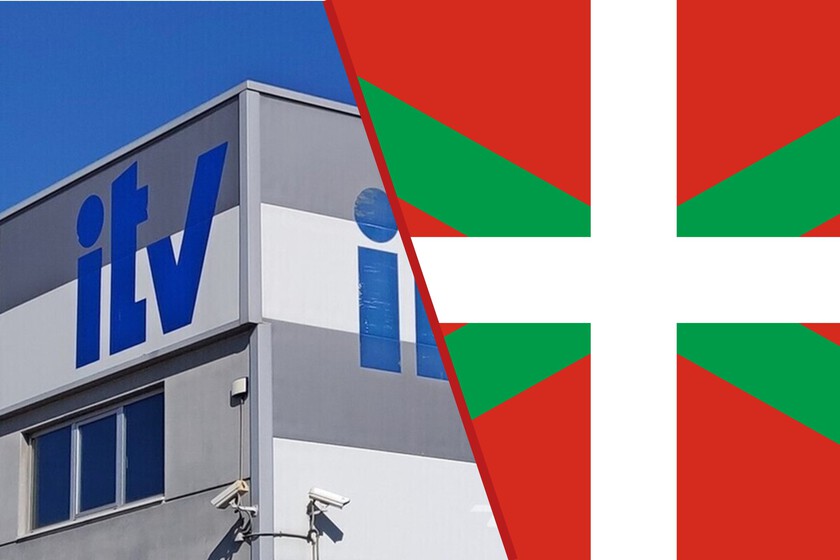
There are few things as routine for any driver (Spanish or European, at least) as the Vehicle Technical Inspection (ITV). It does not matter whether you drive a twenty-year-old compact car, a brand-new SUV, or a motorcycle that you only take out on weekends… you have to pass it.
What you may not know is that passing it does not cost the same across Spain: depending on the autonomous community where you live, it can cost you more than three times as much.
The North Concentrates Spain’s Most Expensive ITVs
This is one of the most striking conclusions of FACUA’s latest comparative study on ITV tariffs for 2026. They say they detected differences of up to 225% for gasoline cars and over 100% for diesels, which represents a gap that, objectively and on paper, is exactly the same procedure throughout Spain.
The most expensive autonomous community when it comes to diesel passenger cars is Cantabria, at 57.80 euros; then Euskadi (57.74 euros; six cents less) and Aragon, which completes the group of the most expensive regions for this type of vehicle.
Then come the gasoline cars, whose leadership shifts slightly (though it stays in the north): Euskadi leads the table with 55.28 euros, while Cantabria is second with 51.07 euros and Castile and León, third with 47 euros.
But what stands out are the opposite end, i.e., the cheapest options: Mallorca again records the lowest rate for gasoline cars, at barely 17.01 euros, while Andalucía and some public stations in Extremadura are also among the most affordable options in the country. The difference is obvious, and so large that a Basque driver can pay more than three times what another driver pays for exactly the same inspection in Mallorca.

And if the differences are noticeable for cars, they magnify for motorcycles because, according to FACUA, the gap between the highest and the lowest rate is 294%. Madrid is the most expensive community, at 40.22 euros. The cheapest is Mallorca, where passing the ITV for a motorcycle costs 10.21 euros; a 294% difference between one and the other, or, in other words, that a Madrid resident pays four times more than a resident in the Balearics for exactly the same obligation.
Why does this happen if the ITV is the same?
The question is normal, and it is the great paradox of the Spanish system, because the technical inspection is regulated by a common national regulation, and the procedures, checks and technical requirements are the same for all vehicles regardless of where they are located. What is not the same, and from there the differences come, is the management of the service.
It is not the same because there are territories where the stations are public, others where private companies operate under administrative concession, and others where prices are completely liberalised. Madrid is probably the most well-known example, since there each operator fixes its own tariffs and uses discounts, promotions or commercial campaigns to attract customers.
On the other side, there are models where the administration maintains tighter control over prices or even operates some facilities directly, which causes a single inspection to have radically different costs depending on the region.
To add to this, another factor is that the price map remains fragmented, since, according to the study, some autonomous communities have frozen tariffs for 2026 while others have applied notable increases.
At the same time, another little-known factor is that not all communities calculate their tariffs in the same way. Some differentiate between petrol and diesel, others take engine displacement into account, and some apply nearly a single rate for all vehicles. There are even differences arising from tax application or from the public or private nature of certain stations.
Images | ITV, Unsplash