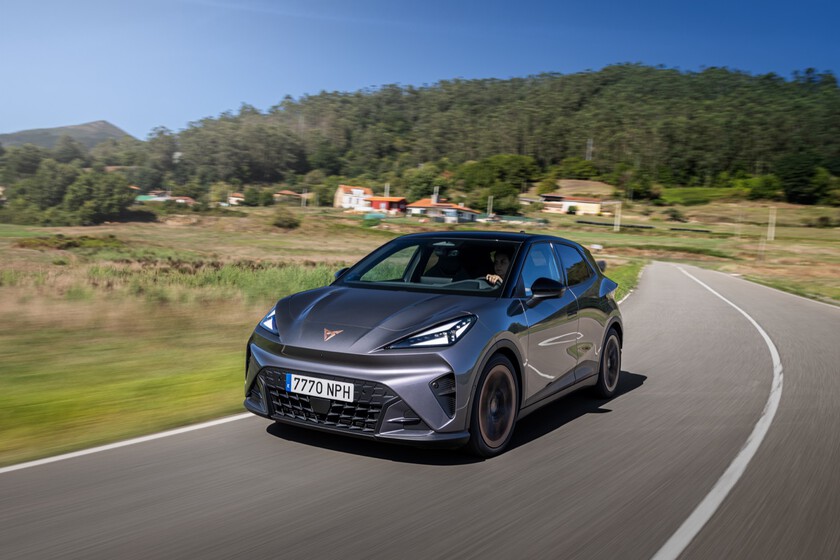
There are cars that surprise you when you read their spec sheet and others that surprise you once you get behind the wheel. The CUPRA Raval Endurance clearly belongs to the second group. Because on paper we’re looking at an urban electric car with 210 hp, about four meters long and a 52 kWh battery, but once you leave the city and start linking corners you discover there’s a lot more beneath that sleek body.
I’ve tested it in Asturias, and also undertook an energy journey—from mining to hydroelectric and wind power—precisely in a scenario that, on paper, was unusual and hardly fitting for a car of this kind.
Narrow mountain roads, curves of every kind, changes in gradient, braking and constant weight transfers composed the menu, and after driving it for several hundred kilometers, one conclusion is fairly clear: the Raval Endurance is probably the most balanced version of the entire range and for a reason it’s going to be the best-seller.

It’s not the most powerful. It’s not the most radical. It’s not the one with the most sophisticated chassis. But it achieves something that, for me, has much more value: to offer practically everything I liked about the Raval VZ when I tested it a few months ago in Barcelona, without needing to push the concept of sportiness to excessive lengths.
That makes this Raval Endurance greatly appealing to me and I forecast a brighter future for it than the model’s own early commercial run, which, as CUPRA told us, is already the brand’s best-selling start in its history.
210 HP, front-wheel drive and a recipe that works
The Raval Endurance uses a front-mounted electric motor of 210 HP and 290 Nm. The battery has a net capacity of 52 kWh and allows WLTP-certified range of up to 446 kilometers. On paper, it accelerates from 0 to 100 km/h in 7.1 seconds and reaches 160 km/h.
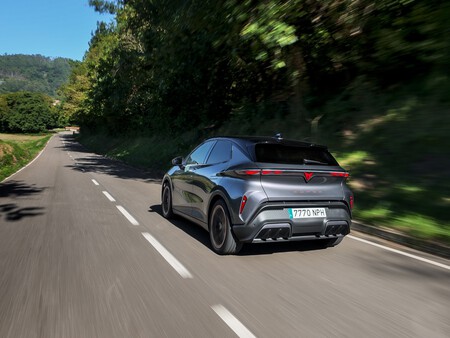
Those figures are sufficiently good for a car that, after all, measures just over four meters. But what’s truly interesting isn’t how quickly it hits 100 km/h. It’s how it delivers that power and, above all, how it manages to use it when the road gets tricky.
Because we’re talking about a front-drive car with 290 Nm of instantaneous torque. A combination that, if poorly resolved, could translate into traction losses, a steering that fights the driver, and a front axle overloaded with work. Just like many Chinese electric cars.
In the Raval it’s exactly the opposite. The car transmits an extraordinary sense of control and the front end plays a huge role in the driving experience.
When you drive it, and you’ve previously piloted one of the now-retired SEAT León or Ibiza CUPRA, or one of the current CUPRA models with a sportier stance, you realize that the front axle is just as good and shares the same setup as those referenced benchmarks in their segments.
The front axle is the best part of the Raval
Let me say it straight away, because it’s one of the things that surprised me most during this test: the CUPRA Raval Endurance has, in my opinion, the best front axle and the best grip I’ve found so far in a car in its segment.
And it’s not just that the steering is quick. It’s the feel. The steering is direct, precise and sufficiently communicative to know at every moment what’s happening under the front wheels.
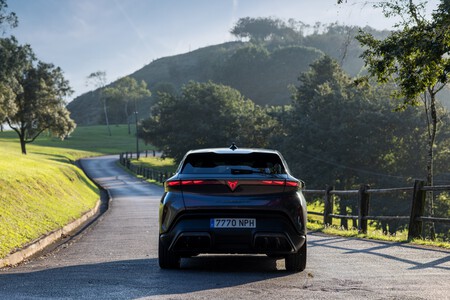
When you start linking curves, the car responds immediately to every steering input and lets you place the nose with extraordinary ease.
On the beautiful mountain roads of Asturias where we’ve driven it this was very noticeable. You enter a bend, lean into it and you feel the front axle is exactly where you want it. There are no parasitic movements, no artificial response and nor that sensation that the car needs a moment to react.
Just point and turn. And the faster you drive, the more sense the Raval’s setup makes.
CUPRA has lowered the body by 15 millimeters compared with other models on the VW Group’s Small BEV platform like the VW ID.Polo, widened the tracks by 10 millimeters, and developed a specific suspension and steering setup. The result is a surprisingly solid grip for a car of this size.
Asturias is the perfect place to discover it: from the mine to the hydroelectric plant
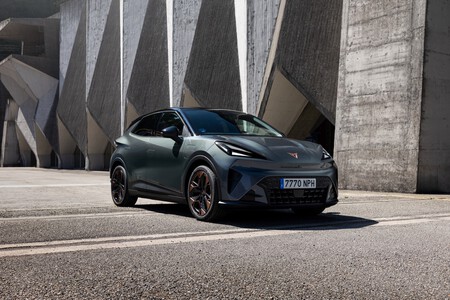
In the city, many drivers will probably never discover all this, which is why I loved that CUPRA took us away from the barely communicative urban environments where we usually test cars like this, so we could try it under proper conditions.
While many manufacturers, especially Asian brands that have recently arrived in our country, limit their car presentations to offering a brief urban drive between traffic lights and jams—perhaps to avoid being compared with these, for example—CUPRA did not hesitate to pit their car against the press in the harshest environment.
In Barcelona we already confirmed that the Raval is small, maneuvers well and its dimensions make it a very suitable car to move through traffic and narrow streets. But when I left the city I found a different story.
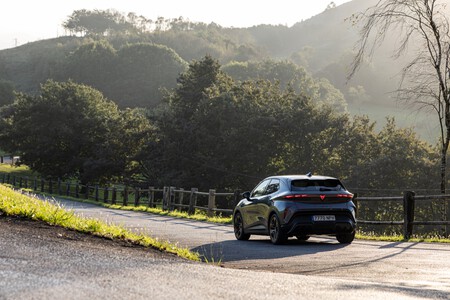
In Asturias, where the roads seem designed to test a chassis, the Raval Endurance is completely in its element.
The slow curves allow checking how the motor’s 290 Nm is delivered. The fast bends show how well the body sits. The changes of support make it clear that the car doesn’t need major movements to change direction and the braking before a curve lets you appreciate the good work done on the whole package.
It isn’t a car that asks you to drive it violently. Quite the opposite. The cleaner you are with the wheel and throttle, the faster you can go and the more you enjoy it. And that, in an electric car, isn’t always easy to achieve.
Curiously, I didn’t notice big differences with the Raval VZ
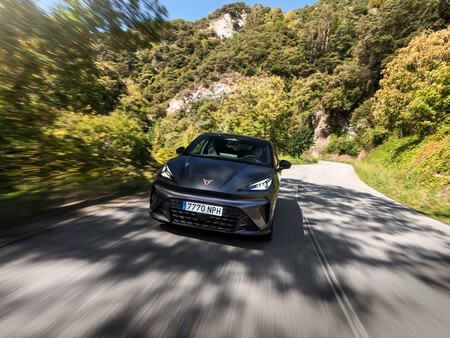
A few months ago I had the opportunity to try the CUPRA Raval VZ in Barcelona. It’s the most powerful and sporty version of the range, with 226 HP, and it also features chassis-specific elements that we don’t find in the Endurance.
The VZ includes adaptive DCC Sport suspension with up to 15 levels of adjustment, an electronic limited-slip differential e-LSD, and high-performance steering ball joints. It also comes with high-performance tires of 235 mm and 19-inch wheels as standard.
That’s why, before driving the Endurance, I expected to find quite significant differences. And I haven’t found them. Or, more precisely, the differences exist but are much smaller than I expected.
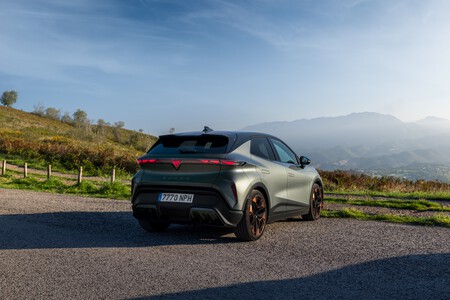
It’s true that the units we tested in Asturias of the Raval Endurance were equipped with optional wide tires and not the narrow wheels of the series for this version, but the truth is that behind the wheel, the grip and stability felt almost identical, and the power difference between the two was nearly imperceptible.
The Raval VZ is more radical, but the Endurance isn’t that far away
It’s true that if you’re chasing the car’s limits, the VZ has arguments the Endurance can’t match. The extra 16 hp are a small part of the equation. Much more important is the work done on the chassis, especially the electronic LSD, which allows better management of torque delivery during acceleration and improves traction exiting corners.
But in fast open-road driving, the difference isn’t nearly as big as the spec might suggest. The Endurance maintains that sense of agility and precision I already liked in the VZ. And here lies the great virtue of this version.
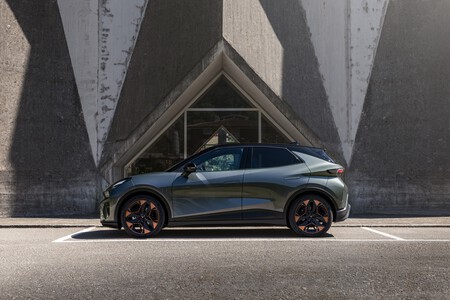
The Endurance already has a well-worked chassis, an excellent steering setup, and a powertrain response that’s more than enough to enjoy a lot on a winding road.
In fact, after driving both, I feel the Endurance achieves something even more difficult: keeping CUPRA’s sporty character without turning into an overly radical car.
The version that makes more sense and offers more range
The Endurance offers up to 446 kilometers of WLTP range, while the VZ reaches 439 kilometers with efficient 19-inch tires and drops to 387 kilometers with its high-performance 235 mm tires.
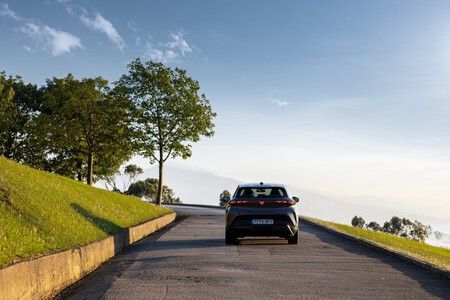
The Endurance comes with 18-inch wheels as standard and, while that might seem like a minor detail, I think it has a lot to do with the sensations it transmits.
There is enough rubber to achieve a good level of grip, but not so much that the car sacrifices part of that agility that makes it so enjoyable to drive.
The car feels light, agile and easy to position. And that is precisely what I expect from a small car that aims to be fun, which I don’t always find nowadays.
Doesn’t feel like an urban electric car
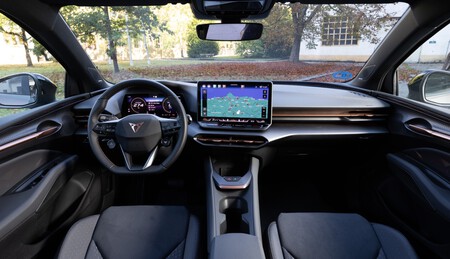
After driving it through Asturias, it’s hard to define the Raval solely as an urban car. Its 4.05 meters in length make it very easy to handle. But underneath there’s a MEB+ platform with the battery laid flat on the floor, a low-slung body, widened tracks and a CUPRA-specific setup.
Additionally, it has 441 liters of boot and rear seats that are surprisingly roomy for its size. So it can work perfectly as a daily car, but also as a weekend getaway vehicle.
And here is, for me, one of the Endurance’s keys. You don’t have to give up anything important to achieve that range. You don’t have to settle for a weak engine. And you don’t have to accept a boring or extremely soft tuning that may mask tuning flaws as some potential rivals do from China.
You have 210 HP, 290 Nm, 446 kilometers of homologated range and a chassis that invites you to seek a winding road. Very CUPRA all around.
Would I pick the Endurance?
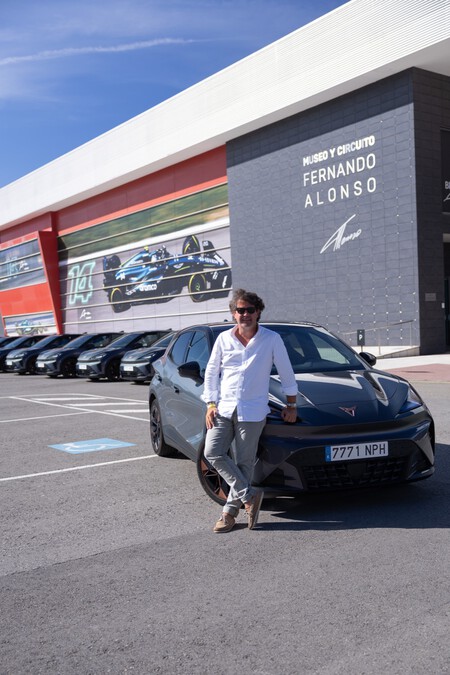
After having driven the Raval VZ and now this Endurance, my answer is fairly simple. The VZ makes sense for those who want to fully exploit the dynamic potential of the Raval. Its locking LSD, its adaptive dampers and its specific chassis components have a clear purpose.
But the Endurance seems to me the most balanced version of the range. It has more than enough power, enough range to use it beyond the city, and a dynamic behavior that is surprisingly close to that of the VZ when it comes to fast highway driving.
And, above all, it preserves that front axle I’ve liked so much. After this test in Asturias, I find it hard to think of another urban electric that convincingly combines steering, precision, grip and ease of enjoying a winding road.
Perhaps that is the greatest virtue of the CUPRA Raval Endurance. It doesn’t need to be the most powerful Raval to be the one that makes you want to keep driving.
The price of the CUPRA Raval Endurance, another point in its favor
Finally, price is another factor working in favor of this Endurance version of the CUPRA Raval. Although the listed price is €35,010, the truth is that with discounts and financing, plus the Auto+ Plan, it can drop to a tasty €25,050, which is a very competitive price.
For all these reasons, I believe the CUPRA Raval Endurance is set to become one of the best-sellers among electric cars of its size, which is excellent news considering it is a car from a Spanish brand, developed and manufactured in Spain.

Looking for your next electric car and feeling overwhelmed by so many options? It’s normal.
More than 45,000 readers have already tested it. And you?
Advice provided by the brand