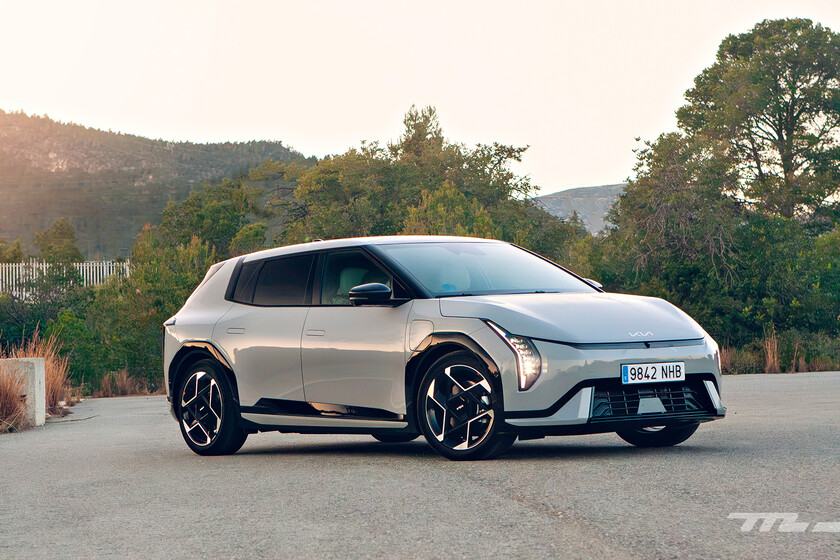
Kia has long shown that it knows how to build electric cars that fit perfectly into everyday life. The EV4 is no exception. In a market dominated by crossovers and SUVs, it’s curious that the brand proposes a classic compact. The old formula established by the Golf—the car that does it all and is for everyone—is here reincarnated in the electric era.
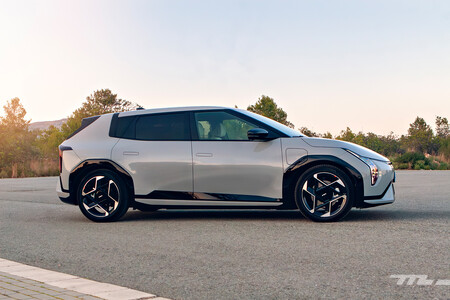
The design language of Kia is already so recognizable that there is no way to confuse the EV4 with any rival. Its silhouette is, let’s say, curious.
The car for everything and everyone, in electric
The Korean model stands out for its geometric shapes and its length of 4.43 m, placing it among the largest in the segment. The Kia EV4 was born electric from the ground up, which allows it to offer a long wheelbase and a cabin generous in space, especially in the rear seats, in addition to the option of a large-capacity battery. Two advantages that internal-combustion cars converted to electric do not have, such as the Peugeot e-308.
The EV4 also offers a second version with a 58.3 kWh battery to reduce its entry price, a version that still delivers a range of 440 km, as well as a fastback variant, even more original.

Manufactured in Europe at Kia’s Slovak factory, where the Ceed was produced until now, the EV4 shares its platform with the EV3 and EV5 and, therefore, reclaims the 400 V electric architecture and LG lithium‑ion batteries. On this occasion, we have an EV4 GT-Line with an 81.4 kWh battery.
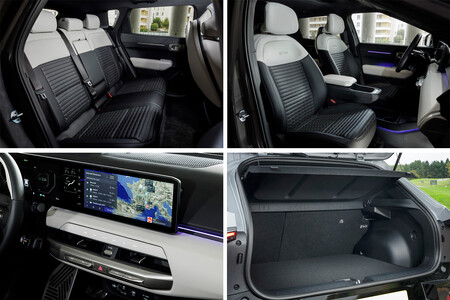
The interior is spacious, both in front and in the rear seats. The sense of quality is real: flat floor, light materials, abundant soft surfaces, and there is a console between the two seats that looks more like furniture than a car component.
Kia’s operating system is one of the most rational in the segment. The displays (12.3 inches for the instrument cluster, 5.2 for the climate control system, and 12.3 for the touchscreen) operate logically, although the menus are somewhat lengthy. It is offset by the presence of a large number of real physical controls.
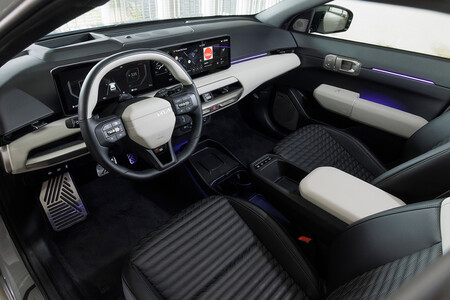
The top-spec version adds a head-up display. Achieving that minimalist, clean look while retaining so many physical buttons is a considerable achievement. The entire automotive industry should take note, including Volvo.
Lots of comfort and little dynamism
Two battery levels, but only a single motor for the EV4: the permanent‑magnet synchronous unit mounted on the front axle. With a power output of 204 HP and a torque of 283 Nm, it delivers reasonable performance, hitting 0-100 km/h in 7.7 s and 80-120 km/h in 6 s. And it has to move almost two tons (1,910 kg in this large-battery GT-Line version).
Smooth in the city and relatively agile on the highway, the EV4 does not have the precision of a Peugeot e-308, with little body roll.
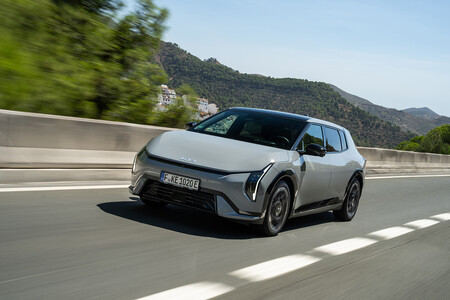
The brake pedal is somewhat light, though the steering is well resolved. Both are progressive and instill confidence. Most of the time the steering filters the road surface information, but in tight corners or roundabouts it shows a bit more feedback and the car can become entertaining… as long as the surface cooperates.
The suspension is very soft. It works wonderfully on highways and in the city. However, on roads with potholes and pronounced undulations the EV4 can become a bit boat-like, with diagonal swaying motions that can disorient you.
The EV4 stands out for its quiet ride (aerodynamic and rolling noises well controlled) and the levels of battery regeneration, which are controlled by paddles located behind the steering wheel (the best system). It’s also worth noting that the One Pedal function (the car stops without touching the brake) is not linked to the chosen recovery level.
Autonomy and efficiency of the Kia EV4
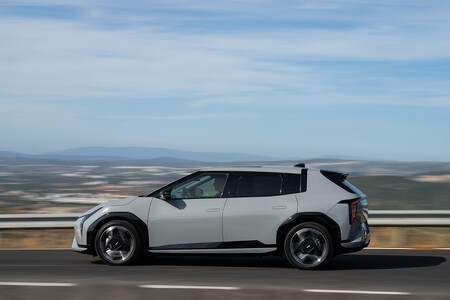
During the 140 km drive on secondary rural roads, the Korean compact recorded an average consumption of 15 kWh/100 km, placing it among the best in the segment. Thanks to this efficiency, its real-world range on secondary roads reaches 542 km, a figure close to the WLTP homologation of this GT-Line version with 19-inch wheels (584 km).
On the highway, the result isn’t as positive, though not bad. At speeds between 120 and 125 km/h, the real consumption was 23.5 kWh/100 km. The EV4 is more efficient than the EV3 SUV, which is less aerodynamic, but I expected a little more from such an aerodynamic compact. Still, total highway range is 347 km.
This figure drops to 243 km between two charging points, where it is common to top up from 10% to 80%, a charge that takes just over 30 minutes. And that’s thanks to its 128 kW DC charging power. This figure is lower than rivals with similarly sized batteries, but Kia’s secret to reducing charging time lies in maintaining charging power between 110 and 128 kW throughout the session, or nearly.
Rivals and price of the Kia EV4
The EV4 offers a reasonable autonomy/ equipment/price balance. It doesn’t reach the MG4’s price level, but it delivers a noticeably higher perceived quality and more kilometers per charge. Compared to the Volkswagen ID.3 Long Range, the Kia is price-competitive and its underlying electric technology is familiar and mature, while the CUPRA Born adds truly dynamic behavior. In any case, both Volkswagen Group models offer greater range on long trips.
The Kia EV4 with an 81 kWh battery starts at €28,350. With the GT Line trim of the test, it currently starts at €35,750 and comes with a very complete standard equipment package, including heat pump air conditioning, blind-spot assist, forward-collision assist at intersections and evasive maneuver assist with pedestrian and cyclist recognition.
The only options available at this trim level are metallic paint and a Luxury Pack (€2,700) that includes the electric sunroof, electrically adjustable front seats (driver and passenger) with memory function (driver), ventilated front seats, Head-up Display and Premium Audio System (Harman/Kardon).
Kia EV 4 GT Line: our assessment
7.7
7.0
8.0
7.0
8.0
8.0
8.0
8.0
7.0
8.0
8.0
Pros
- Original design
- Range
- Practicality/Habitability
- Price and equipment
Cons
- Original design
- Chassis not very dynamic
The Kia EV4 bets on an original style, perhaps too much for the majority of buyers. But more importantly, it precisely fulfills the expectations of someone looking for an electric car (efficiency and good range), while taking on the role of a no-compromise compact (habitability, comfort and equipment). It only lacks a bit of emotion in the chassis to satisfy fans of dynamic driving. In short, unlike most electric models, its biggest challenge isn’t price or range, but aesthetics.
|
|
|
|
Motor |
Front-mounted transverse electric motor. |
|
batería |
Lithium‑ion, 81.4 kWh capacity |
|
potencia máxima |
204 HP / 150 kW |
|
par máximo |
283 Nm |
|
transmisión |
Front‑wheel drive. |
|
dimensiones (Largo x ancho x alto) |
4,450 x 1,860 x 1,485 mm |
|
batalla |
2,820 mm |
|
maletero |
435 liters |
|
peso |
1,910 kg |
|
80 a 120 km/h |
6 s |
|
0 a 100 km/h |
7.8 s |
|
velocidad máxima |
170 km/h |
|
consumo medio homologado (WLTP) |
15.8 kWh/100 km |
|
consumo medio en prueba |
19.3 kWh/100 km (23.5 kWh/100 km en autopista) |
|
Autonomía eléctrica máxima homologada (WLTP) |
584 km |
|
Autonomía eléctrica en prueba |
417 km (347 km en autopista) |
|
Precio (unidad probada) |
desde 28,350 euros (38,450 euros) |
Find your ideal electric car
If you have considered buying an electric car, this will interest you. We have created the Personalized Electric Car Recommender, where in addition to seeing models that fit your needs you will also get answers to the questions that worry you most, such as price, range, or nearby charging points.
|
The car used for this test was loaned by Kia. For more information, consult our corporate relationships guide. |

¿Buscas tu próximo coche eléctrico y estás sobrepasado con tanta opción? Es normal.
Más de 45.000 lectores ya lo han probado. ¿Y tú?
Consejo ofrecido por la marca