In Brief
Ola Källenius, the CEO of Mercedes, publicly acknowledged that the automotive industry has wandered off course by eliminating too many physical buttons in favor of a fully digital experience, sometimes at the expense of user experience. Mercedes has decided to reintroduce some essential buttons in its future models, while preserving its large screens, including the iconic Hyperscreen. This decision draws on user feedback and studies that point to the distraction caused by touch interfaces. The first functions to be addressed will be climate control and the volume, but the exact scope of this reversal remains to be defined.
It is rare for a leader of this stature to make such a confession. In an interview with our colleagues at Autocar, Ola Källenius, Mercedes’ CEO, concedes that the automotive industry went wrong by broadly eliminating physical controls from car interiors.
“We Have Maybe Been a Little Too Customer-First Missed,” the Mercedes Boss Shares Forthrightly.
The Swedish executive acknowledges that “the industry as a whole may have gone a bit too far” in digitization, even though his brand remains among the most ardent supporters of large touchscreen displays. In response to this realization, Mercedes plans to reintroduce physical buttons in its future vehicles.
This is a significant shift for a manufacturer that has built oversized screens into a core selling point since the start of the last decade, without wanting to part with this emblematic feature of its image.
Källenius doesn’t sugarcoat it. “Sometimes we move a little too fast and create technology for technology’s sake, forgetting the customer a bit. So, from now on, you’ll see us reintroduce the most sensible buttons,” he tells our British counterparts.
The Mercedes chief believes the industry has reached not a peak in screen count, but a floor when it comes to physical controls. This view mirrors the mood across automakers today.
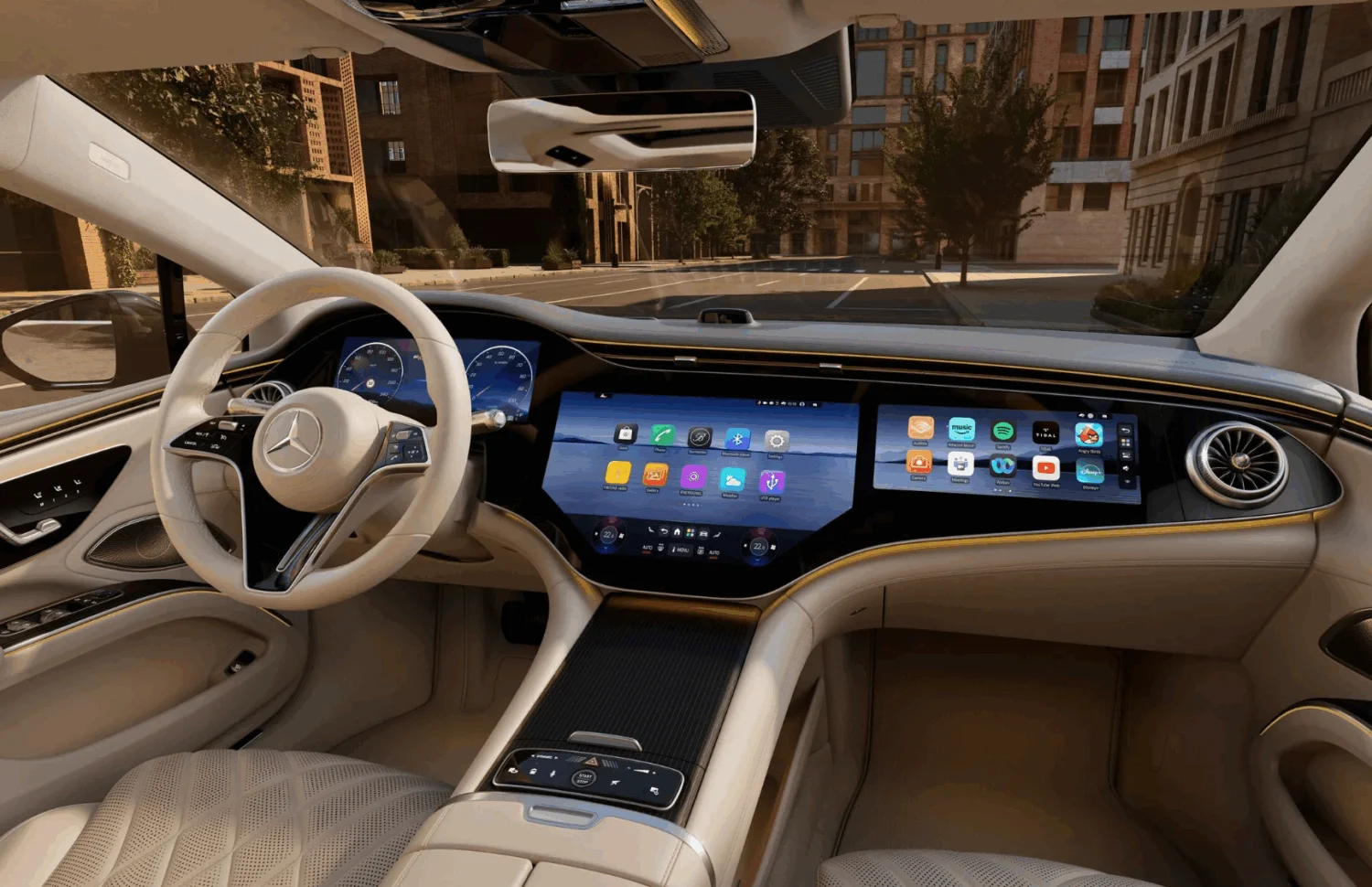
Some adjustments have already been made, with the return of physical buttons on the steering wheels of Mercedes models. However, don’t read too much into the scale of this announcement. Mercedes does not plan to shrink the size of its screens, which its leader regards as perfectly aligned with customer expectations.
The Hyperscreen, an Example of Overreach
The Stuttgart brand has pushed innovation to a remarkable extreme with the MBUX Hyperscreen, a three-screen system installed in Mercedes’ luxury lineup, which spans more than 1.40 meters (over 55 inches) across the dashboard, from one side to the other of the windshield.
This pursuit of ever-larger screens has ended up turning against the manufacturers. Today, infotainment has become the primary source of dissatisfaction among owners of new cars, a turnaround for a technology once seen as a major selling point.
Studies have also highlighted the distraction caused by using a screen while driving, at a time when a century of automotive ergonomics had established common standards across all vehicles, regardless of make or model.
Voice control was supposed to be the solution. Mercedes adopted this technology very early, but it remains imperfect in the automotive context. Källenius emphasizes the enormous work that has gone into the interfaces.
“We spend countless hours on the user interface. I personally spend hours each year discussing it with our engineers, and we joke that it should be simple enough for a five-year-old or a Mercedes board member to use,” he explains.
But that logic runs up against a simple reality: a car carries multiple people. Passengers don’t always know the required voice commands, and it’s sometimes necessary to interrupt a conversation to adjust the climate a few degrees.
It remains to be seen which controls will be reintroduced in Mercedes vehicles. Managing temperature, airflow, and a volume knob seem like obvious choices. In short, the bare minimum. How long will it take for the rest of the industry to follow suit?
Comparison Table
| Model / System | Numeric Feature |
|---|---|
| Mercedes MBUX Hyperscreen | over 1.40 meters wide (just over 55 inches) |
Key Takeaways
- The Mercedes boss admits the industry has removed too many physical buttons from interiors.
- Mercedes is poised to reintroduce physical controls in its future models.
- The return of buttons will focus on climate control and volume.
- Large screens like the Hyperscreen (over 55 inches wide) will remain a core feature at Mercedes.
- Touch interfaces have led to dissatisfaction and distraction behind the wheel, according to several studies.
- Voice control, though improved, does not fully replace traditional buttons for all tasks.
FAQ
Why is Mercedes moving back to physical buttons?
Mercedes is reintroducing physical buttons after finding that an excess of tactile controls harms the user experience and leaves customers dissatisfied.
Which functions will be affected by the return of buttons?
Temperature, climate ventilation, and the volume are cited as priority candidates for physical controls.
Will Mercedes shrink the size of its screens?
No, Mercedes believes the current size of its screens, including the Hyperscreen, remains well-suited to its customers.
What problems do all-screen systems pose in cars?
100% touchscreen interfaces can cause driver distraction and have become a source of dissatisfaction for new-car owners.
Does voice control effectively replace physical buttons?
According to Mercedes, voice control, while improved, remains imperfect and does not always meet the needs of all onboard users.