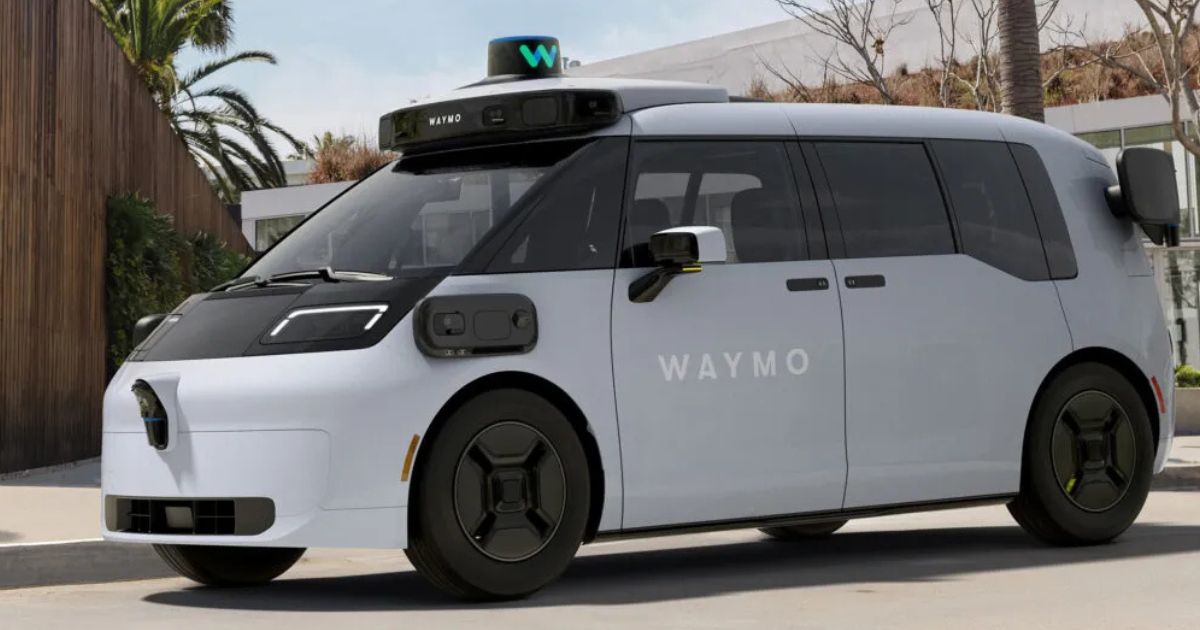
Picture the scene. You roll up early to a farmers market as the tents go up, trucks unload, and coffee steam still rises. And there, between two stalls, a chauffeurless white taxi glides by with its headlights blinking. It looks as if it’s cruising down an open street. That’s exactly what happened in Denver. A Waymo robotaxi wandered through the South Pearl Street Farmers Market during Sunday setup. No one was hurt. Nothing was touched. Yet everyone wondered how to coax a car that wouldn’t respond to human signals to back up or stop.
The incident unfolded on Sunday, September 20, 2026, between 8:15 and 8:40 a.m., in the Platt Park neighborhood. The South Pearl Street Farmers Market was in the thick of its installation, with roughly 160 stalls being set up. Exhibitors’ trucks rolled in through a food-truck zone, a street that was supposed to be closed yet was partially open for logistics. The autonomous Waymo followed one of those vehicles, passed a barricade and a stop sign, and turned onto the 1400 block of South Pearl Street, right amid the tents and pallets. Organizers quickly realized they had no simple way to back a driverless vehicle away. They had to improvise on the spot to shield pedestrians and vendors. Behind this episode, which ended with a calm exit toward Arkansas Avenue, lurks another question. It’s far from anecdotal for the future of robotaxis.
How a Waymo ended up in the middle of Denver’s farmers market
The scene was captured by Hearth Denver, a neighborhood bakery and coffee shop with a terrace facing South Pearl Street. In the footage, the Waymo autonomous vehicle threads its way between stalls mid-setup, stops, signals, and proceeds at a crawl. It looks as if it’s following a perfectly ordinary route. Hearth accompanies the clip with a snarky caption that went viral: “Waymo dear, it’s a farmers market,” the sign company noted on social media, cited by Ucook.org. Vendors nearby glance up from their crates as the car passes, then return to their preparations—surprised, but not panicked.
For market officials, the surprise is the complete absence of a human to talk to. Marilyn Kahlich, Farmers Market and Event Coordinator, tells local media that the car moved very slowly and followed the flow of the exhibitors. She notes that it avoided obstacles and pedestrians without anyone feeling truly endangered. Nicole Jarman, the market’s production director, describes a straight-line route along South Pearl Street to the exit toward Arkansas Avenue. To her, the robot seemed simply to be following the line of service vehicles. But neither she nor her team knew how to make a robotaxi reverse course. They paced along the street in front of the Waymo, shouting warnings to stalls to clear a path. Theodore Subbotin, Hearth Denver’s market manager, sums up the moment for reporters. He says they merely escorted the car on foot to the exit while phones captured the scene.
A live test of autonomous driving and Colorado law
From Waymo’s side, the incident is framed as a boundary case properly managed by the system. The company states the robotaxi was heading to an address on South Pearl Street when the market began to crowd the area around it. It “identified the situation” and then maneuvered to leave the perimeter. In a release carried by Denver7, Waymo emphasizes that “trust and safety of the community are our priority.” The company also says it will draw lessons from the event. According to its own data, its autonomous vehicles would yield 94% fewer severe crashes than human drivers—figure used to bolster the case for deploying its robotaxi service, which had opened to the public in Denver just prior to the incident. Academics and experts, including Missy Cummings, remind that temporary and unpredictable environments remain challenging for current algorithms. Markets, construction sites, or crime scenes create layouts that aren’t always mapped. Several documented incidents show autonomous vehicles arriving in the middle of closed streets or getting stuck in dead ends.
The episode also highlights a legal blind spot in Colorado. Colorado Senate Bill 17-213, passed in 2017, authorizes Level 4 and 5 autonomous driving systems, effectively opening Colorado roads to driverless vehicles. But it does not clearly spell out how to penalize a vehicle operating without a human driver. The Denver Police Department and the Colorado State Patrol acknowledge they have “no legal mechanism” for issuing a ticket in such cases, according to GadgetReview. In this instance, no physical person could be cited aboard the Waymo. By contrast, California’s Department of Motor Vehicles employs a “notice of autonomous vehicle noncompliance” that lets an officer identify the infraction and notify the manufacturer directly. The DMV can then restrict or suspend the service’s operating license. In the field, that leaves event organizers feeling a bit stranded. At the South Pearl Street Farmers Market, they mainly chose to step aside and guide the car by voice. They then reached out to Waymo teams to report the incident. Until there is a clear, shared language among pedestrians, cities, and autonomous vehicles, this reflex remains the most immediate option.