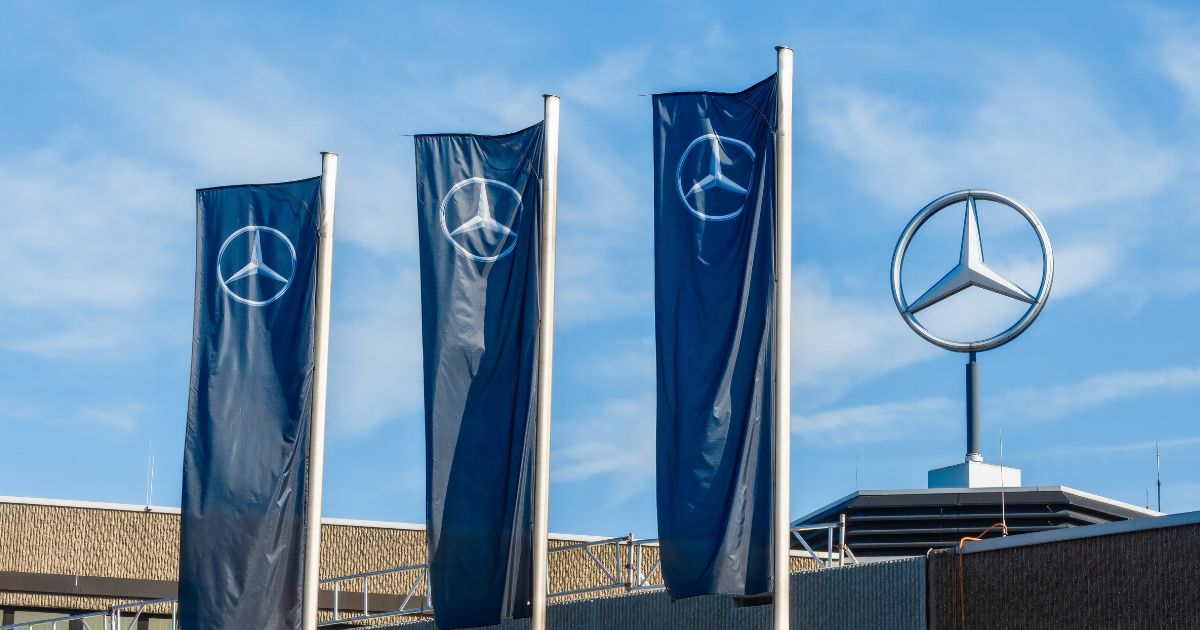
When a automaker like Mercedes starts talking about closing plants, Germany immediately pricks up its ears. At a meeting with workers in Sindelfingen, management delivered a very clear threat. If certain costs do not come down, an assembly plant and a powertrain plant could disappear. For thousands of jobs and for the symbol of “Made in Germany,” the stakes are high.
On September 22, 2026, production chief Michael Schiebe laid out this scenario in front of the teams. According to him, the alternative boiled down to achieving cost savings acceptable to all, or losing capacity. No specific site was named, no timetable advanced, which keeps the pressure up. In this context, Mercedes-Benz warned that it threatens to close two plants in Germany if costs do not come down. A statement that tightens the talks on jobs and pay even further.
Two Mercedes plants in Germany in the crosshairs over costs
Schiebe’s message remains conditional, but it targets an assembly plant and a powertrain plant. For finished vehicles, Mercedes builds in Sindelfingen, Rastatt and Bremen, with a capacity of 900,000 cars per year. Seven other sites produce engines, gearboxes or electrical components: Untertürkheim, Affalterbach, Berlin, Hamburg, Kamenz, Kölleda and Arnstadt. None of these ten German sites has been officially named a candidate for closure, which fuels broad uncertainty.
For management, the problem isn’t one of temporary overcapacity, but the level of costs in Germany. According to Eurostat figures, an hour of work costs €49.50 in Germany, versus €15.60 in Hungary. Mercedes notes that its Kecskemét plant in Hungary shows costs about 70% lower than German sites. Its capacity has been raised to 400,000 vehicles per year, making it its largest European site. This gap has weighed in decisions like moving smaller Mercs and the G-Class to Hungary. Since 2024, the automaker has already shaved roughly a tenth of its assembly capacity in Germany. It plans to reduce capacity from 2.4 million to 2.0–2.2 million by 2028 or 2029. A productivity drive aims for €5 billion in savings and a 10% cut in production costs.
Working hours, IG Metall and the future of Mercedes plants in Germany
To bring its costs closer to those in Hungary, Mercedes is pressing on working conditions in Germany. Management has tabled a 40-hour workweek paid as if it were 35, and a review of benefits. The IG Metall union and employee representatives rejected these proposals, deeming them too unbalanced. IG Metall even described the package as a “horror catalog,” Autonext reports, to characterize the list of measures under consideration.
The tension rose during an IG Metall action day, with 175,000 workers mobilized in the automotive sector and among suppliers. In Sindelfingen alone, 20,000 people gathered, a sign that the threat to the plants is being taken seriously. Yet Mercedes still has an employment-security agreement in Germany through 2034, which complicates outright plant closures. And yet. Schiebe’s statement about two threatened plants also serves as leverage in the cost talks. And workers know that Volkswagen and Audi have begun similar restructurings in Germany, which further feeds the uncertainty.