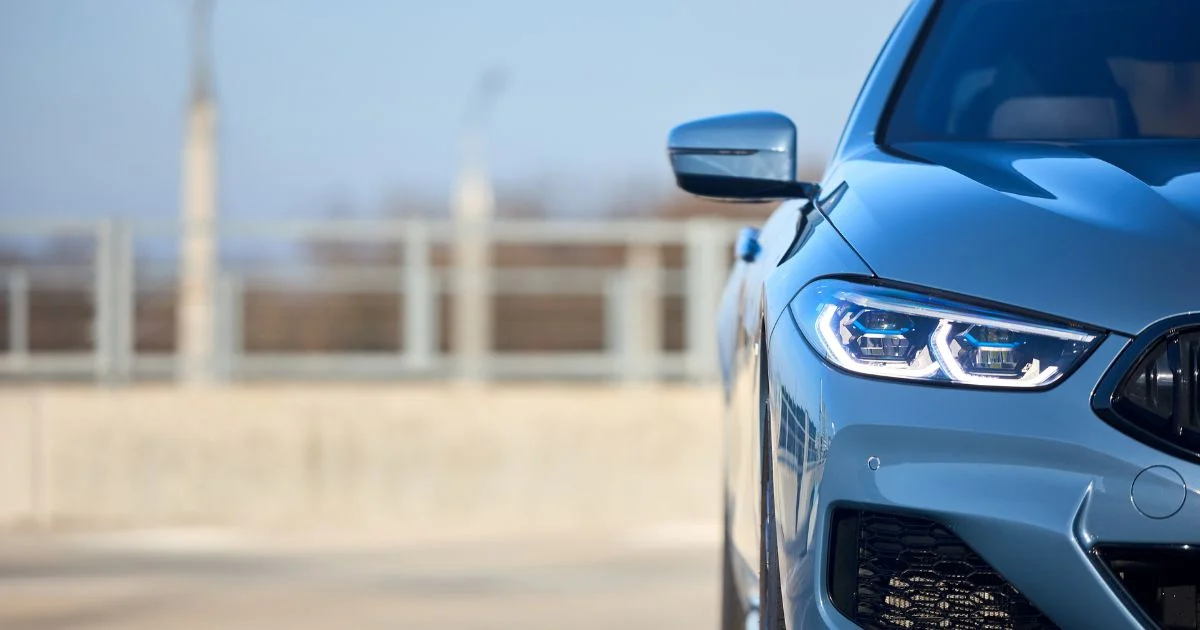
Seeing a car film the road is no longer unusual with today’s driver-assistance features. But when those images primarily serve the manufacturer, the questions shift a bit. That’s exactly what BMW Group is planning in Europe, using customers’ on-board cameras. The stated goal: fine-tune the driver-assistance systems and the partially automated driving features. A detail that could mean a lot for thousands of BMW owners.
Since April 2026, the automaker says it has been collecting image data from roadways within the European Union member states. For the United Kingdom, Fleet News says BMW UK has been asked about a potential local application, though no specifics are available yet. From mid-September 2026, BMW is expanding this setup to short video clips from exterior cameras. The first models affected are the new BMW iX3 and i3, the X5 and the 7 Series, before rolling out to other updates. And the big question for drivers remains: what exactly is the car filming, and for what purpose?
When and why BMW activates the cameras on your trips
BMW stresses one point: this is not a blanket, continuous video surveillance of every trip. The automaker explains that data collection is triggered in scenarios that are useful for developing the driving-assistance systems. It applies only to vehicles in this generation that are equipped with the necessary sensors and whose drivers have given consent. Examples include collisions averted during a highway lane change. BMW also cites the activation of the emergency braking assist, a particularly forceful manual braking, or a sudden evasion maneuver.
In practice, when one of these events occurs, the car records technical data and images of the scene. Only the elements deemed necessary to understand the situation are sent to BMW. The automaker references images captured by the exterior cameras, environmental sensor data, and information about driving dynamics. This includes, for example, speed, direction of travel, and steering angle. These inputs then feed the software, and updates can be sent remotely to customers’ cars.
What data BMW collects and what privacy guarantees
The new phase of the program introduces the collection of unedited video, limited to 120 seconds per event. These clips are linked with the sensor data already noted, then used by BMW’s development teams. The manufacturer notes that the VIN is removed immediately after transmission. According to the company, “Under no circumstances do BMW systems identify individual road users.” This line appears verbatim in a document cited by Fleet News.
BMW stresses that the use of image data is conditioned on consent and compliance with data-protection rules. In the cited document, it states: “Unedited image data are used to further develop the driving-assistance systems and semi-automated driving functions through machine learning.” It also specifies: “If authorized BMW employees need to access individual recordings for development purposes, the faces or license plates of other road users contained in the image data are masked before viewing to the extent technically possible.” The brand adds: “The processing of data collected for this purpose is carried out in accordance with all applicable data-protection requirements.” According to BMW notices, this consent is managed in the privacy settings, either onboard or in the My BMW/MINI app.