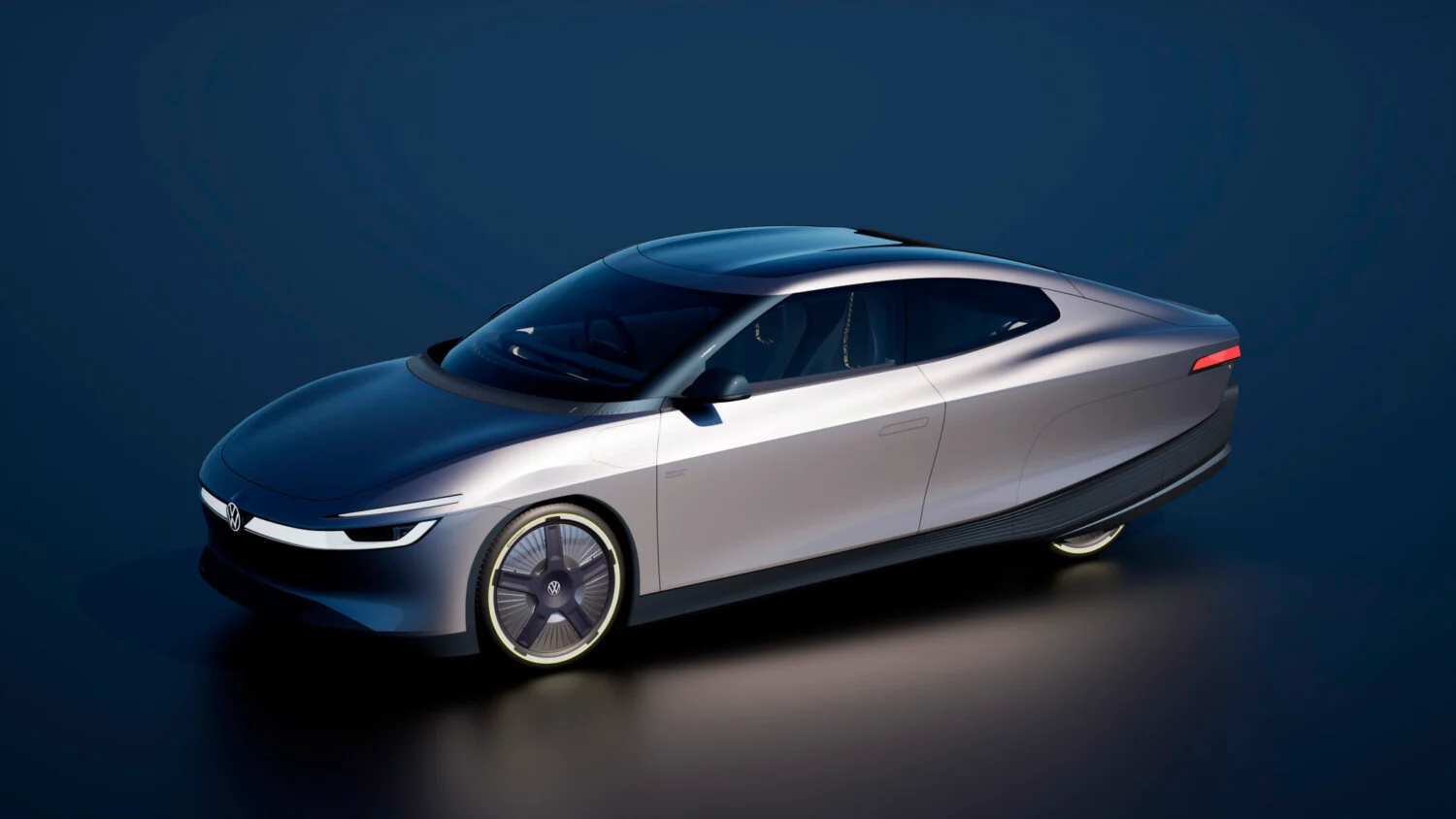
The German automaker Volkswagen is exploring energy efficiency for electric vehicles with its Mission Efficiency concept, built around components from the Volkswagen ID. Polo. This drivable, highly refined concept could reach production, and that’s good news for electric cars.
Volkswagen Has Been There Before
Efficiency is Volkswagen’s playground. The German maker has already pulled off impressive feats in the past, such as the Audi A2, a compact aluminum MPV capable of sipping less than 3 L/100 km of diesel and sold in sizable numbers. More recently, the Volkswagen XL1 moved beyond the concept stage to become the first car marketed with consumption under 1 L/100 km.
So when you see that Volkswagen used 80% of production parts derived from the ID. Polo—still fairly new—to put Mission Efficiency on wheels, you start to think production isn’t far off. Indeed, the running gear and the motor of the Mission Efficiency concept are the same as those in the ID. Polo, notably the APP290 motor in its 135-horsepower version. The battery is also that of the ID. Polo, boosted here from 52 to 54 kWh since the engineers essentially unlocked the battery—the reliability constraints aren’t the same for a concept as for a production car.
The path to mass production and market launch doesn’t seem difficult or unrealistic. And it would benefit Volkswagen, but also all electric-vehicle buyers.
A New Path Forward?
By bringing the Mission Efficiency into production, Volkswagen would stake a claim to the title of the most efficient commercially available electric car. Engineers have recorded consumption as low as 6.48 kWh/100 km and up to 8.4 kWh/100 km (the latter in WLTP), and it would also claim the title of the most aerodynamic car.
Moreover, it would show the world that it’s possible to offer substantial range in a four-seat car without resorting to gigantic battery packs that add weight, thereby increasing the size of many ancillary systems and driving up the car’s price. A car as efficient as Mission Efficiency could aid the democratization of electric driving by delivering more range for the same price, or by lowering the price of EVs without sacrificing range.
Mission Efficiency demonstrates that staying reasonable with relatively lightweight, compact cars has real ecological benefits.